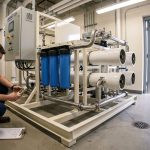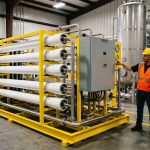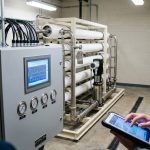

On this International Women’s Day, this article explores further on how involving females of a family can accelerate the water distribution and security process. Research and studies over the years indicate on a global level, women are the key to water security in the world. Several studies and government interventions to improve existing water distribution systems have shown that the involvement of the female gender has an effect on the efficiency of the operations. The role of a woman in a typical household is limited to collecting water in third world countries. This article discusses how the scope can be increased by more participation and involvement of women in water management.
How Women Are Important For Water Management
Even before the light hits the house in the morning, an old woman in a rusty old attire gears up for a long hard day of walking. She packs her food and joins other women in their struggle to fetch water which is miles away from their village, with ripped-out footwear and nothing but their skin to protect from the sun. This is the story of thousands of women in Sub-Saharan Africa.
In this area and rural Asia, the responsibility of water collection is left to the women in 62% of the households as compared to other members of the family. When looked closely at the situation, one realizes the reason why women are not able to complete their education or have longer lives due to the hard-hitting effects of physical exhaustion over the years. Even today, water collection is the responsibility of the women and water management is the role of the men in the household. But the roles can be changed to distribute responsibilities equally and give the households better control over the daily operations.
More than just collecting water
In the 1980s, the government of Malawi came up with a system where they provided water through pipes to 50 districts and set up community operated tap water committees for bill collection and management. The system saw 90% membership from men in all the districts which quickly led to several problems. Even though women were handling the water in the households, bills were not being paid on time as men used to be away for long times. Committee meetings became irregular because of low attendance and the system was on the verge of being closed down. To salvage the project, the government recruited women into the committees and trained them.
Just a simple inclusion let to reliable bill payments, regular committee meetings and improvement in the management system. In a few years, over 24,000 low-income families in Malawi now had access to a reliable water supply.
Role of women in better water management
In developing countries particularly, men and women have different priorities when it comes to using water. While for men it is just for agricultural purposes, for women the purpose goes ahead in the household for regular chores like washing, cooking, and cleaning. They are the decision makers in the family when it comes to household water management. Communities have been found to be benefited by involving women, from better functioning water systems, easy access and environmental benefits it covers wider areas than thought before. A research by UNDP on 44 projects across Africa and Asia found that the involvement of men and women saw better policies and institutions for water management. The communities were able to sustain the water services for longer.
At national levels, inclusion at key positions helps raise important issues. When Maria Mutagamba served as the Minister of State for Water, for example, she created strategies and policies that specifically 5-year gender plan that placed women at key positions on decision-making committees. This resulted in increasing Ugandans access to safe water from 51 percent to 61 percent.
Water management to reduce conflict
With increasing water stress and demand, the world is now seeing conflicts due to water shortage. New research from WRI shows that water shortage causes world conflict and social instability. It finds that the instability is not only based on droughts or floods but also due to the inability to govern over these hazards. A lot of communities across the world have devised plans to ensure better water management systems through pre-decided timings to fill water, designated places for equal access among all the families.
Research on this topic will provide more insight on how to involve people in better roles for the communities and train them to get better outcomes for water management. Policymakers now are collaborating to understand how both the genders experience conflicts over water differently.
Better research is needed with important statistics that point straight to the impact the above points have on water security and management.
About the author:
Ampac USA is a water treatment systems manufacturing company that has been securing safe water for people all over the world through better and advanced reverse osmosis systems for 28 years. They manufacture reverse osmosis systems for residential, commercial and industrial purposes.
Frequently Asked Questions
Why are women considered key to global water security?
Research consistently shows that women are pivotal to global water security, especially in developing regions. Their direct involvement in daily water collection and household management positions them uniquely to ensure efficient distribution and sustainable use of vital water resources within their communities.
What specific challenges do women face regarding water collection in many parts of the world?
In areas like Sub-Saharan Africa and rural Asia, women often bear the primary responsibility for water collection, walking miles daily. This strenuous task leads to physical exhaustion, limits their access to education, and can negatively impact their health and lifespan, hindering overall community development.
How does women’s participation improve the efficiency of water distribution systems?
Involving women in water management committees and decision-making significantly enhances system efficiency. For instance, in Malawi, including women in community-operated tap water committees led to more reliable bill payments, consistent meeting attendance, and overall improved operational stability for piped water systems.
What percentage of households in regions like Sub-Saharan Africa rely on women for water collection?
In Sub-Saharan Africa and rural Asia, approximately 62% of households rely on women for the crucial task of water collection. This statistic underscores their disproportionate burden and essential role in ensuring daily water access for their families and communities.
Beyond collection, what expanded roles can women play in water management?
Women can expand their roles beyond collection to active participation in water management committees, financial oversight, and community education. Their direct experience with daily water needs makes them highly effective managers, contributing to the long-term sustainability and equitable distribution of water resources within their communities.
Related Articles
- Women Own Close To 10 Million Businesses, Do You Believe? International Women's Day 2019
- The Fight For Clean Water Women’s Day Special
- Understanding Tannin in Water: Causes, Effects, and Effective Filtration Solutions
- What Happens If My Water Softener Runs Out of Salt?
Conclusion
This post reviewed the production methods, health considerations, and commercial opportunities associated with alkaline water systems. For businesses and organizations looking to offer premium alkaline water products, AMPAC USA provides turnkey purification and remineralization solutions. Contact our team at info@ampac1.com or (909) 548-4900 to discuss your alkaline water project.
AMPAC USA engineers custom water purification systems for commercial, industrial, and emergency applications — from 500 GPD to multi-million GPD. Trusted by municipalities, military, and industry worldwide.