Quick Answer: Many residents distrust or cannot safely drink tap water due to aging infrastructure (lead pipes, corrosion), industrial contamination, agricultural runoff, inadequate treatment capacity, or regulatory enforcement failures. Even in the US, communities in low-income and rural areas, and those with aging lead service lines, face legitimate tap water safety concerns that justify home point-of-use filtration.
Water is an essential need of the human body and is required in huge amounts for the growing population in the world. Health benefits of water aside, without it, the body begins to shut down its functions. Now consider if the water being supplied to you doesn’t taste right, would you have it even if there was a chance for it to risk your health? More than half of the Americans don’t think so.
In a phone interview with Lucy Schouten from the Christian Science Monitor, Peggy Schwartz, aged 56 from Phoenix describes how her daily life involves bottles. “I use, for drinking, all bottled water and have forever,” says Ms. Schwartz. “But I have never had anything tested, I don’t know statistically if it’s good, bad or what.” This sudden change in lifestyle came in Ms. Schwartz’s life when one fine day the tap water did not taste right.
After the Flint water crisis garnered global attention, NSF International, a global public health and safety organization conducted a survey, results of which revealed that, while 71% of Americans drink tap water,
More than half (55%) of Americans are concerned about contaminants in their drinking water.
All cities are required to provide water quality reports to its consumers, but after Boston, very few cities have mapped the presence of lead pipes in their city supply system. Before 1950, lead pipes were in use for the supply of water from treatment plants to homes and businesses. Now the pipes used are mostly copper, but cities do not know which ones have been replaced.
Recently, Andrew Flett quit his job as an assistant operator at the water treatment plant in Garden Hill First Nation, to be a cargo driver. In an exclusive to CBC News, Flett said he was confident about the water when it left the treatment plant, that it was safe and drinkable.
“It was severe with my daughter and my wife because when they would eat they couldn’t keep anything down. So I started boiling the water from our tap. They seemed fine after that.”
This led to his family and hundreds like him take out the plumbing of water supply. His pipes are not connected to the treatment plant, instead, water is drawn from storage tanks which are refilled by truck deliveries bringing in water from the plant.
“There’s like a film that settles at the bottom of every tank. It’s full of bacteria and you can get sick. It causes diarrhea, eating problems and all that,” adds Flett.
Even water quality, like most public services, seems to differ for different income families. In a poll by AP/GfK suggested Americans are aware of it. In households with more than $100,000 annual income, 6 out of 10 people trusted the tap water. As the level goes down, the poll found out, in a household with less than $50,000, the number decreased to 4 out of 10.
Whether water is tasty or not is difficult to quantify. Although Boston, which has some of the oldest pipes in the country was awarded the 2014 Tastiest Tap Water title by American Water Works Association that conducts the tap water taste test. A lot of such cities use corrosion control treatment chemicals to purify the water passing through the lead pipes. A crucial step like this was neglected by Flint for 3 years. With time, lead mixes with the water and poisons those who drink it.
Even as the country shivered with the horror of poisoned lead water discovered in Flint, even more scary news came out of NBC earlier this month. In a report from Government Accountability Office found 41 percent of the country’s schools hadn’t tested for lead in water and, 37 percent found elevated levels of lead in the school drinking water.
Even with the difference in lead levels in the water, its presence is harmful to people, causing irreversible nerve damage and permanent brain damage in babies and children. Adults can face high blood pressure and other problems due to consumption. Even the Food and Drug Administration does not allow lead more than 5 parts per billion for bottled water.
With so much going on around, there is a high need for the authorities to look into the safety standards of water supply in each city to avoid another Flint crisis from happening. It is only to see then if the citizens are ready to accept water coming in from their taps.
Tap water safety varies enormously both between countries and within countries. Globally, the WHO defines “safely managed” drinking water as water from an improved source, accessible on premises, available when needed, and free from fecal and chemical contamination. By this definition, nearly a third of the global population lacks safely managed drinking water — including hundreds of millions who have tap connections but receive intermittent, inadequately treated, or chemically contaminated water. Infrastructure failure, insufficient treatment chemicals, power outages affecting pumping and treatment, and corruption in water utility management all contribute to unsafe delivered water even where treatment capacity theoretically exists.
Within high-income countries, tap water safety is not uniform. In the United States, communities with aging infrastructure, private well dependence, near industrial or agricultural contamination, or financial stress limiting treatment system maintenance face real water quality deficits. The water crisis in Flint, Michigan — where corrosive river water leached lead from aging infrastructure into drinking water for 18 months before public acknowledgment — exposed the intersection of infrastructure age, regulatory failure, environmental injustice, and public health consequences. Jackson, Mississippi faced complete treatment plant failure in 2022. More commonly, hundreds of small communities across the US serve water with elevated lead, nitrates, arsenic, or PFAS above MCLs without significant public attention.
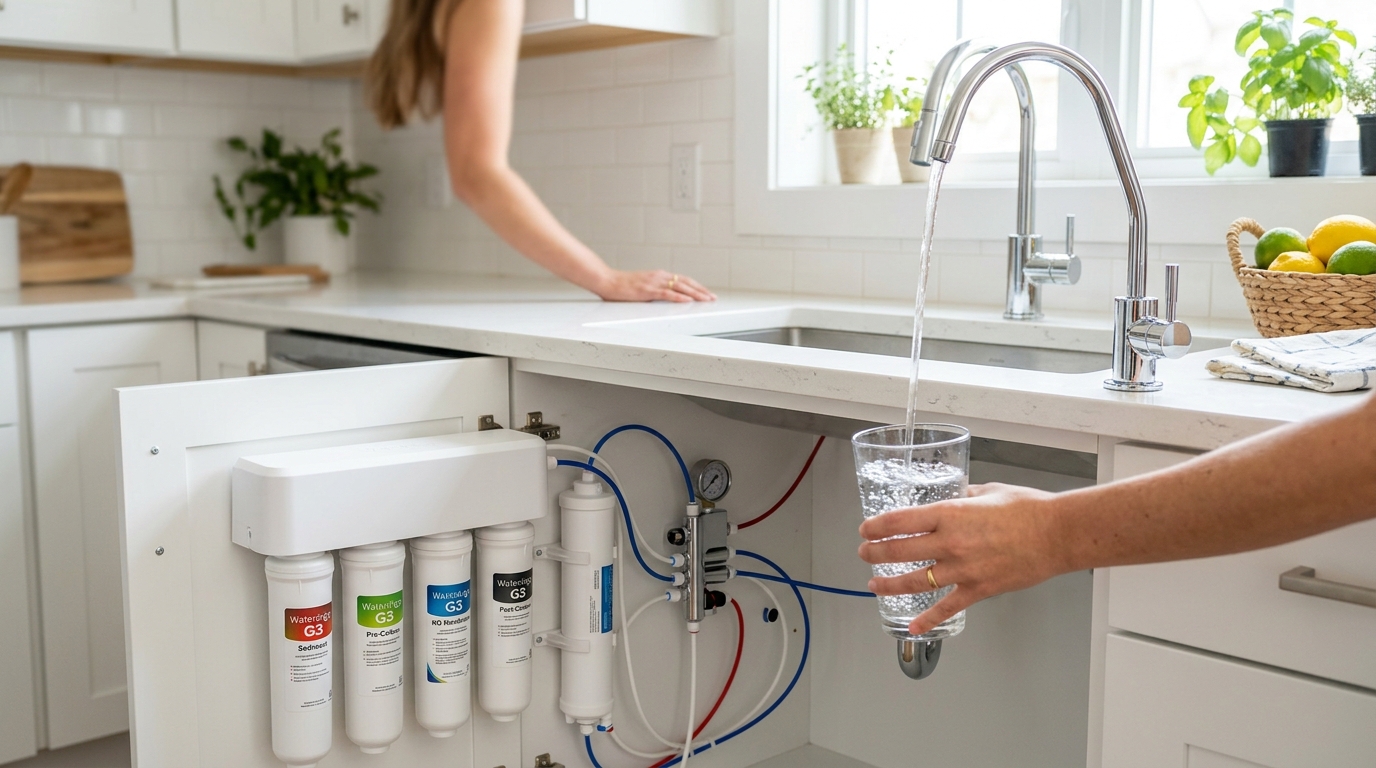
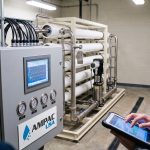
The individual protective response to documented or suspected tap water quality concerns is point-of-use treatment. NSF/ANSI 58-certified reverse osmosis systems provide verified lead, arsenic, nitrate, and PFAS reduction to below EPA MCLs — providing consistent protection regardless of upstream infrastructure condition. For families in communities with known water quality problems, a home RO system is not optional comfort but practical public health protection. AMPAC USA designs residential and community-scale systems specifically for populations with legitimate infrastructure-based tap water concerns.
Frequently Asked Questions
Why do many communities distrust or find their tap water unsafe?
Many residents distrust tap water due to legitimate concerns stemming from aging infrastructure, such as lead pipes and corrosion, industrial or agricultural contamination, and inadequate municipal treatment capacity. Regulatory enforcement failures can also contribute to unsafe conditions. AMPAC USA engineers understand these complex challenges from direct field experience, designing robust purification systems for diverse environments.
Are lead pipes still a common problem in US water infrastructure?
Yes, lead pipes remain a significant concern. They were widely used for water supply lines before 1950, and many cities still lack comprehensive maps detailing their presence. This aging infrastructure can leach lead into drinking water, posing serious health risks, particularly in older homes and communities.
How can tap water become contaminated after leaving the treatment plant?
Even if water is safe at the treatment plant, it can become contaminated en route to homes through aging service lines, lead pipes, or faulty household plumbing. Corrosion within these private and public lines can introduce heavy metals and other substances. This ‘last mile’ contamination often necessitates point-of-use filtration for complete safety.
What is the public perception of tap water safety in the US?
Public concern about tap water safety is high. An NSF International survey revealed that while 71% of Americans drink tap water, over half (55%) are concerned about contaminants. This widespread apprehension is often fueled by high-profile incidents like the Flint water crisis and ongoing issues with infrastructure.
Why do some residents choose bottled water over tap water, even without testing?
Many residents opt for bottled water due to concerns about taste, odor, or a general distrust of tap water safety, even without specific test results. Experiences like sudden changes in water quality or awareness of broader infrastructure issues, such as those highlighted by the Flint crisis, lead individuals to perceive bottled water as a safer alternative.
Need a Water Treatment Solution?AMPAC USA engineers custom water purification systems for commercial, industrial, and emergency applications — from 500 GPD to multi-million GPD. Trusted by municipalities, military, and industry worldwide.