

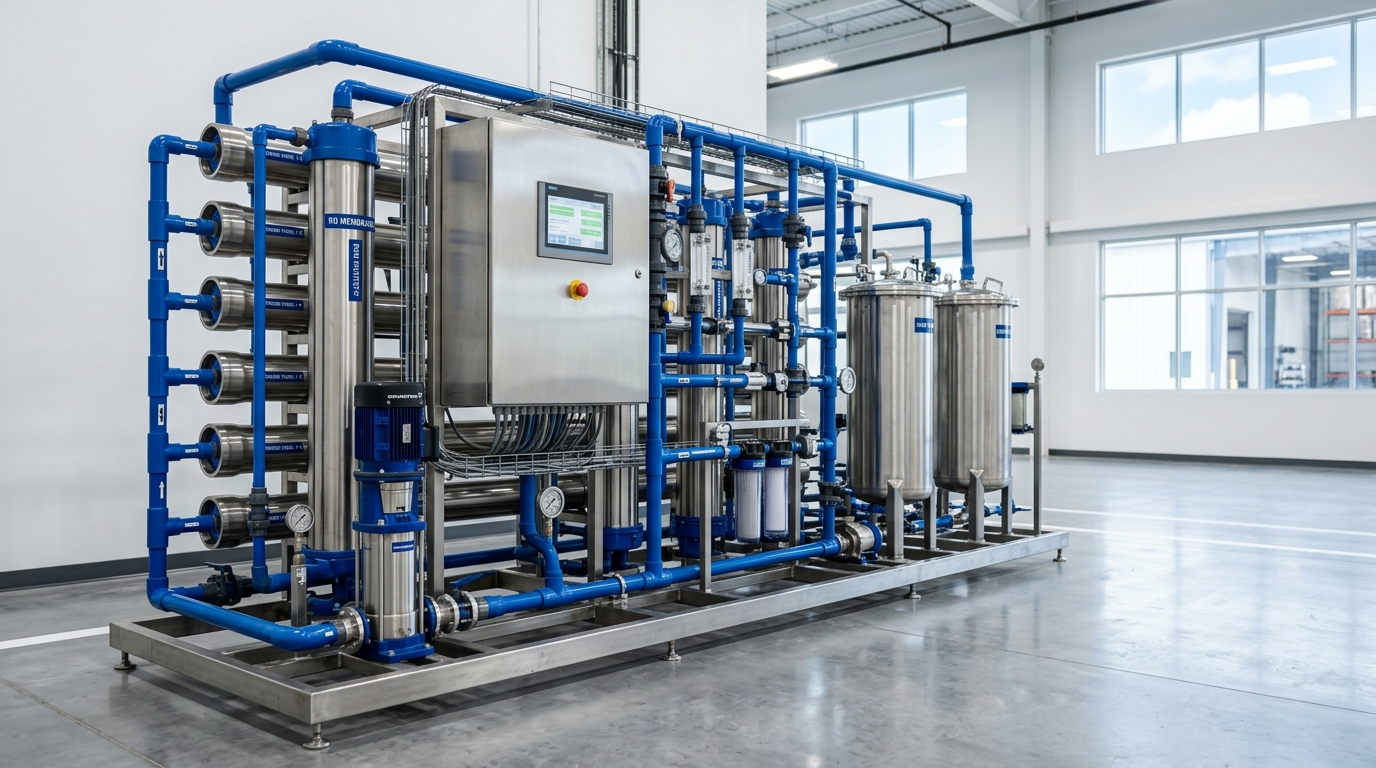

At the height of its popularity now, reverse osmosis remains the most effective methods for water filtration. Having said that, along with searching for alternative methods, steps are being taken to make sure it remains one of the best solutions yet for filtration systems. The process has a few drawbacks including energy consumption, rejected water and for large scale industries, cost of operation. Reverse osmosis is the core system used in seawater desalination plants in almost all of the world. The process dominates the traditional method of water filtration, namely distillation. One particular area where reverse osmosis faces challenges are in membrane fouling.
Membrane fouling is when chemicals, microorganisms, and other substances either form a layer over the membrane requiring it to consume lots of energy without any output or degrade the membrane material. Membrane anti fouling techniques are being worked upon so that the cost of maintaining such membranes is less. In any case, maintenance of membrane for industries like desalination is very high. On an average, a desalination plant has more than 40,000 membranes. Maintaining all those big membranes can be a huge task. Which is why the water which is passed through it, is now pre-treated to get rid of all the elements that degrade the material. This elongates the life of the membrane.
On the list of many pretreatment solutions, given below are some of the best in eliminating fouling, scaling and chemical attack:
- Multimedia filtration (MMF):
This technique has three major layers. One is of anthracite coal, other is of sand and garnet and the final layer contains a well-supporting layer of gravel. The large particles are trapped above near anthracite coal that floats and the smaller particles run deep down in the gravel filters. A well operated ideal MMF will filter particulates of the size 15-20 microns. In case of coagulants used for combining small particles together, it can eliminate sizes up to 5-10 microns. - Microfiltration (MF):
This process is helpful in removing the majority of dust particles and bacteria. It has a pore size of 0.1-10 micro meter. It has the capacity of reducing fouling material from the membrane. The idea is to pass water through the membrane itself which will contain hollow fibers. The water passed would be impure and full of sediments. The water on the other side of the fiber will have no such impurities and will be passed through the membrane for further filtration. - Antiscalants:
Are solutions added to the feed water before it is filtered. It reduces the potential of the feed water to scale the membrane away. These and scale inhibitors work by interfering in the process of scale and crystal formation. The amount of such a solution to be used completely depends on the make of the Reverse Osmosis system and more importantly the chemistry of the feed water. - Water softeners:
These can be added to the water that would replace scale forming ions with non-scale forming ions. However, it is important to keep another filter layer like a 5-micron cartridge to be sure of under drains in case the water softener does not work. - Sodium bisulfate:
This is very useful in removing residual chlorine from the water which gives odor and in high amounts can damage the membranes. When added in proper amounts to the feed water it is capable of removing all of the chlorine. - Granular Activated carbon (GAC):
This method is effective in removing both residual chemicals and organic material. The GAC media is made up of either carbon, wood or nutshells. The activated carbon is responsible for reacting chemically with chlorine and chloramine to reduce them to chlorine ions that are not oxidizing. And therefore the effect is not seen on membranes. The microorganisms, however, are collected at the bottom of the bed because there is nothing left from the carbon to be reactive towards organic materials. This is why a layer of bacteria forms and GAC might be required to be replaced again and again. This might not be the best solution for pretreatment of feed water in RO.
Removing the chemicals are as important as the pure water itself. Scalants and degraders put a hefty sum of the bill on our desks for membrane repairs and especially if you are running a business. For large scale RO, specialized experts decide which solution will be the best for reducing scaling. For residential RO, it is suggested to get a local expert who will profile the water supply carefully before installing any such system. Preferably, get an expert from the company of the RO you purchased as they have more knowledge on the make and how would certain solutions react to the RO.
Author’s Bio:
Ampac USA is a leading manufacturer of advanced reverse osmosis water treatment systems. For over 30 years the company has been providing its customers and clients around the world solutions to their water treatment problems. With years of an impressive track record, Ampac strives to develop solutions to make reverse osmosis systems, advanced for improved quality and cost efficiency.
Frequently Asked Questions
Why is pre-treatment crucial for Reverse Osmosis systems?
Pre-treatment is essential to protect RO membranes from fouling, scaling, and chemical attack, which can degrade the membrane material and significantly increase operational costs. By removing harmful elements beforehand, pre-treatment elongates the life of the membrane, reducing the high maintenance burden associated with systems that can contain over 40,000 membranes in a single desalination plant.
What causes membrane fouling in Reverse Osmosis systems?
Membrane fouling occurs when chemicals, microorganisms, and other suspended substances accumulate on or within the RO membrane surface. This accumulation forms a layer that impedes water flow, requiring increased energy consumption without output, or directly degrades the membrane material itself.
How does Multimedia Filtration (MMF) prepare water for Reverse Osmosis?
Multimedia Filtration (MMF) employs a layered bed typically consisting of anthracite coal, sand, and garnet, supported by gravel, to physically remove suspended solids. Larger particles are trapped by the lighter anthracite layer, while progressively smaller particles are captured deeper within the sand and garnet layers. An ideal MMF system can filter particulates ranging from 15-20 microns, or even 5-10 microns when coagulants are utilized.
What is the effectiveness of Microfiltration (MF) in RO pre-treatment?
Microfiltration (MF) is highly effective in removing the majority of dust particles and bacteria from the feed water, significantly reducing the fouling potential for downstream RO membranes. With a typical pore size ranging from 0.1 to 10 micrometers, MF systems pass water through hollow fibers, retaining impurities on one side while allowing purified water to pass through for further treatment. This process directly minimizes the accumulation of fouling material, extending membrane longevity.
What are the primary challenges Reverse Osmosis systems face without proper pre-treatment?
Without adequate pre-treatment, Reverse Osmosis systems face significant challenges including high energy consumption, substantial rejected water volumes, and elevated operational costs, particularly for large-scale industrial applications. The most critical issue is severe membrane fouling and degradation caused by untreated contaminants, which necessitates frequent and costly membrane cleaning or replacement. This directly impacts the efficiency and economic viability of RO systems, especially those with thousands of membranes like desalination plants.
Related Articles
- How Reverse Osmosis Works: The Complete Technical Guide | AMPAC USA
- Water Softener vs Reverse Osmosis: Which Do You Need? | AMPAC USA
- Brackish Water Treatment Processes & Solutions by Ampac USA
- The Pros and Cons of Reverse Osmosis Filtration Process-Ampac USA
Conclusion
Pre-treatment isn’t a nice-to-have for reverse osmosis systems — it’s what keeps membrane fouling from turning into a five-figure maintenance bill. With a single desalination plant running upwards of 40,000 membranes, even small gains in fouling resistance translate into real savings over the life of the system. The right combination of filtration and chemical dosing ahead of the membrane stage does more for uptime than almost any other design decision. If you’re evaluating pre-treatment options for an RO installation, our guide to how reverse osmosis works covers where pre-treatment fits into the process, or call (909) 548-4900 to talk through your specific water source.
AMPAC USA engineers custom water purification systems for commercial, industrial, and emergency applications — from 500 GPD to multi-million GPD. Trusted by municipalities, military, and industry worldwide.
