
In short: Roughly 1 in 5 U.S. adults says they don’t trust their tap water at all, and only 20% say they “totally trust” it. Yet a meaningful share of households still drink it straight from the faucet, either because they can’t afford filtration, don’t know what to buy, or have simply stopped thinking about it. The gap between distrust and action isn’t about ignorance. It’s about cost, confusion over which filter actually solves which problem, and, for a measurable slice of the population, a quiet shift toward sugary drinks instead of water at all.
That gap matters more than it sounds like it should. When people stop trusting what comes out of the tap, they don’t automatically start filtering it. Some buy bottled water. Some switch to soda or fruit drinks. Some just keep drinking the tap water anyway, distrust and all. Each of those choices carries a different cost, and none of them is free.
How Many Americans Actually Distrust Their Tap Water?
A 2025 nationally representative survey of 1,200 U.S. adults (conducted via Pollfish for LeafHome’s Better Water Together report) found that just 20% of respondents “totally trust” their tap water, while 43% “somewhat trust” it. The remaining third is split between outright distrust (30%) and uncertainty (7%). Put plainly, most Americans hold some level of doubt about what’s coming out of their faucet, even if it isn’t full-blown rejection.
That distrust isn’t paranoia without cause. Aging lead service lines, PFAS contamination showing up in local water systems nationwide, and periodic boil-water notices have all made national news in the past few years. The EPA’s own Lead and Copper Rule Improvements, finalized in 2024, gave utilities a 10-year deadline to replace remaining lead pipes precisely because millions of older service lines are still in the ground. People aren’t wrong to wonder what’s in the water. What’s more surprising is what they do, or don’t do, about it.
Do People Who Distrust Tap Water Actually Filter It?
Not consistently, and the data shows an odd split between concern and action. The same 2025 survey found 63% of respondents currently use some form of water filter at home, 40% who filter consistently and 23% who filter only sometimes. That leaves roughly 1 in 5 households with no filtration at all, despite the trust numbers above.
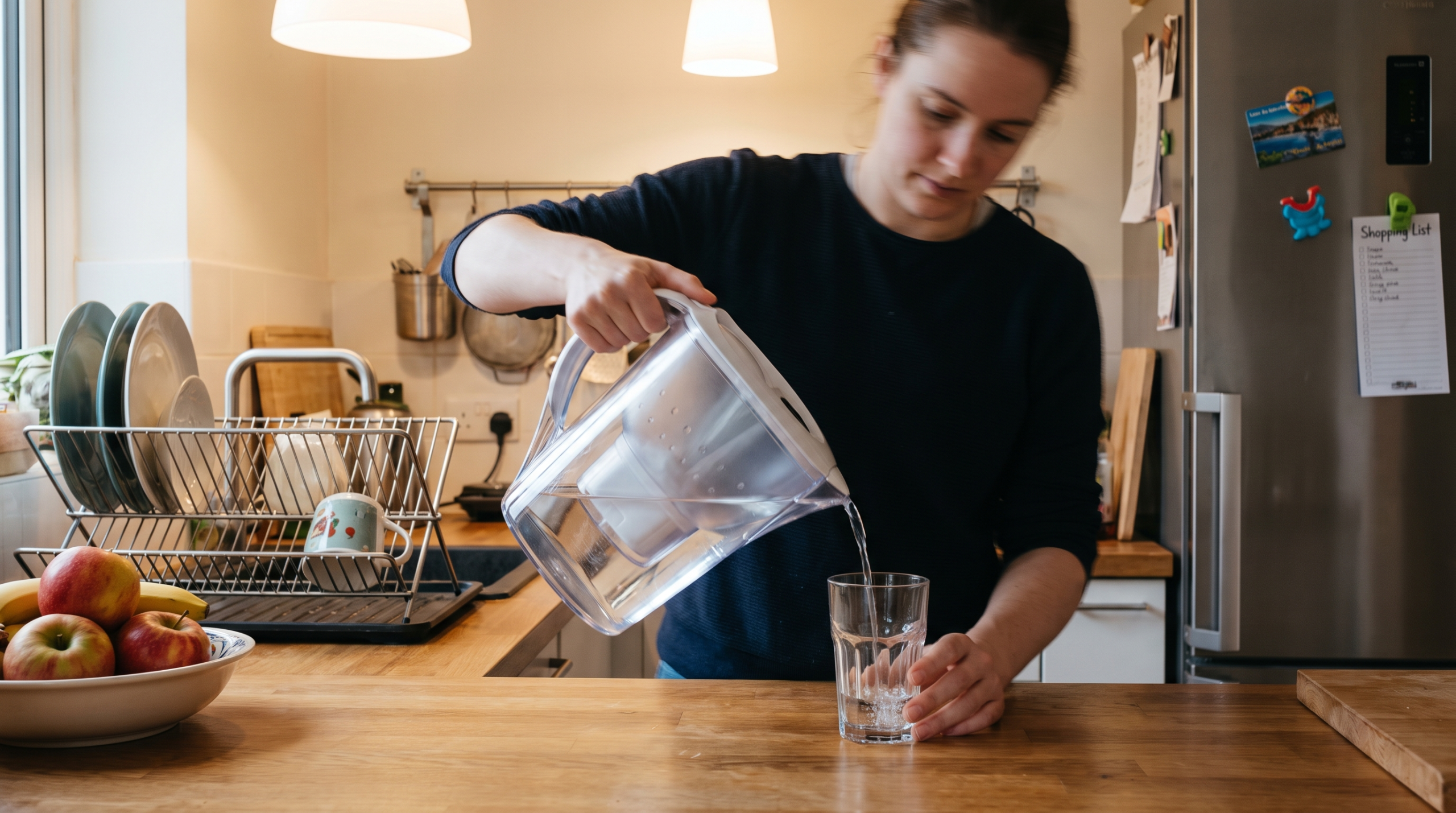
Interestingly, filtration habits shifted fast between 2024 and 2025. In the 2024 version of the same survey, bottled water was the leading response to tap water concerns at 73%, ahead of refrigerator filters (50%) and pitcher filters (41%). By 2025, that pattern had flipped: pitcher filters (Brita, PUR, and similar) became the most common choice at 31%, with refrigerator filters close behind at 27%, and reliance on bottled water falling. That’s a real behavior change, likely driven by cost. Bottled water adds up fast at grocery-store prices, while a pitcher filter is a one-time purchase plus a cartridge every couple of months.
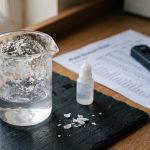
One more number worth sitting with: only 10% of Americans have actually tested their home’s water in the past year, according to the same report. Most people are guessing about water quality based on taste, smell, news headlines, or how their neighborhood looks, not on any direct measurement.
Why Do So Many People Skip Filtration Even When They’re Worried?
Three barriers show up again and again in the research: cost, confusion about what actually works, and simple habit. None of them are irrational, and none of them are solved by just telling people to “drink more water.”
Cost is the biggest one for lower-income households specifically. Peer-reviewed research published in Public Health Nutrition and in the American Journal of Preventive Medicine has found that adults and children who distrust or avoid tap water consume significantly more sugar-sweetened beverages, sodas, fruit drinks, sports drinks, than people who trust their tap water. A study of low-income Michigan mothers found that negative perceptions of tap water were directly linked to higher bottled water and sugary drink intake in both mothers and their young children. Bottled water and soda are both available at the corner store for a few dollars. A pitcher filter is available too, but it requires upfront cash, a trip to a bigger store, and remembering to replace the cartridge, three small frictions that add up when a household is already stretched.
Confusion is the second barrier. Walk down a filtration aisle and you’ll see pitcher filters, faucet-mount filters, refrigerator filters, under-sink systems, whole-house systems, and reverse osmosis units, all claiming to solve “water quality” without explaining that they solve genuinely different problems. A carbon pitcher filter improves taste and reduces chlorine. It does very little against dissolved heavy metals, nitrates, or PFAS. Most people don’t know that distinction exists, so they buy whatever’s cheapest and assume the job is done.
And for a lot of households, it’s just habit. Renters in particular are less likely to install anything permanent, and even homeowners who’ve had the same tap for a decade tend to treat water quality as a background concern rather than something with a specific fix.

What Does Each Type of Filter Actually Solve?
This is the part most coverage skips, and it’s the part that actually matters for a buying decision.
– Pitcher and faucet filters (carbon-based): Best for taste, odor, and chlorine reduction. Cheap, no installation, replace every 2 to 3 months. Do not meaningfully remove dissolved solids, heavy metals, nitrates, or most PFAS compounds.
– Refrigerator filters: Similar carbon-based technology to pitcher filters, convenient but limited to the same narrow scope.
– Under-sink reverse osmosis (RO) systems: Remove dissolved solids, heavy metals like lead, fluoride, nitrates, and most PFAS through a semi-permeable membrane. This is the category that actually addresses the contaminants people say they’re worried about. According to 2026 industry pricing data from HomeGuide and Modernize, under-sink RO systems typically run $150 to $600 for the unit, or $300 to $950 fully installed, with ongoing filter and membrane costs of roughly $100 to $300 a year.
– Whole-house systems: Treat water at the point it enters the home, covering every tap and appliance, not just the kitchen sink. General whole-house filtration runs $500 to $5,000 installed depending on the technology, while whole-house systems built around reverse osmosis run closer to $3,000 to $5,000 or more given the added plumbing and storage tank requirements.
The honest answer for most households worried about contamination, not just taste, is that a pitcher filter alone won’t cover it. If lead, PFAS, or nitrates are a real concern in your area (your local Consumer Confidence Report from your utility will say), an RO system is the category built to actually remove them.
Is Reverse Osmosis Worth the Extra Cost for a Home?
For households with specific contamination concerns, yes, and it’s the gap between “tastes fine” and “tested clean” that makes the difference. Reverse osmosis membranes are rated to reduce dissolved solids, lead, arsenic, fluoride, and PFAS at a level pitcher and refrigerator filters simply aren’t designed to reach. That’s a meaningful upgrade for a household with older plumbing, a private well, or a utility with known PFAS or lead issues in its service area.
AMPAC USA builds residential reverse osmosis systems designed for exactly this gap, sized for a single kitchen tap up through whole-home filtration, with membrane technology that matches what utility-scale treatment plants use, just built for a household budget. If you’re deciding between a $30 pitcher filter and something that actually addresses what’s showing up in a water quality report, our residential reverse osmosis systems page breaks down the tiers by home size and water source. For buildings with higher volume needs, apartment complexes, small offices, medical or dental practices, the commercial reverse osmosis and water purification line covers that scale instead. And if you want the general mechanics of how reverse osmosis actually works before deciding anything, that’s the page to start with.
What Should Someone Do If They’re Worried About Their Tap Water Right Now?
Start with the Consumer Confidence Report your water utility is legally required to publish annually, it lists what’s actually been detected in your local supply and at what levels. From there, match the filter to the actual problem: taste and chlorine complaints call for a basic carbon filter, while concerns about lead, PFAS, nitrates, or a private well call for reverse osmosis or a certified whole-house system. A home water test kit, sold for $15 to $50, can confirm what’s actually in your water before you spend money on the wrong solution. And if cost is the barrier rather than confusion, a pitcher filter is still meaningfully better than drinking distrusted water unfiltered or replacing it with sugary drinks, it’s a real improvement, just not a complete one for every contaminant.
The bigger takeaway from all this data: distrust without action doesn’t protect anyone. The households seeing the most benefit are the ones that matched their filter to their actual water quality, not the ones that bought whatever was on the endcap.
Frequently Asked Questions
What percentage of Americans don’t trust their tap water?
About 30% say they don’t trust it at all, and only 20% say they “totally trust” it, according to a 2025 nationally representative survey of 1,200 U.S. adults conducted for LeafHome’s Better Water Together report.
Does not trusting tap water actually change what people drink?
Yes. Peer-reviewed studies, including research published in Public Health Nutrition and the American Journal of Preventive Medicine, have found that people who distrust or avoid tap water consume more sugar-sweetened beverages and bottled water, an effect that shows up most strongly in lower-income households and among children.
Is a pitcher filter enough, or do I need reverse osmosis?
It depends on what’s actually in your water. Pitcher filters handle taste, odor, and chlorine well but don’t meaningfully remove lead, PFAS, nitrates, or other dissolved contaminants. If your utility’s Consumer Confidence Report or a home test shows any of those, reverse osmosis is the category designed to remove them.
How much does a home reverse osmosis system cost?
Under-sink RO systems typically run $150 to $600 for the unit or $300 to $950 fully installed, according to 2026 industry pricing data. Whole-house RO systems run higher, generally $3,000 to $5,000 or more, given the additional plumbing and storage requirements.
How do I find out what’s actually in my tap water?
Your local water utility is required to publish an annual Consumer Confidence Report listing detected contaminants and their levels. A home water test kit ($15 to $50) can supplement that with a direct reading from your own tap, which matters if your home has older internal plumbing the utility report wouldn’t capture.
Sources: LeafHome Better Water Together 2025 Survey (Pollfish, 1,200 U.S. adults) via Stacker; American Journal of Preventive Medicine; Public Health Nutrition (Cambridge Core); WIREs Water (Wiley, Jaffee et al.); U.S. EPA Lead and Copper Rule Improvements; HomeGuide; Modernize.
AMPAC USA engineers custom water purification systems for commercial, industrial, and emergency applications — from 500 GPD to multi-million GPD. Trusted by municipalities, military, and industry worldwide.