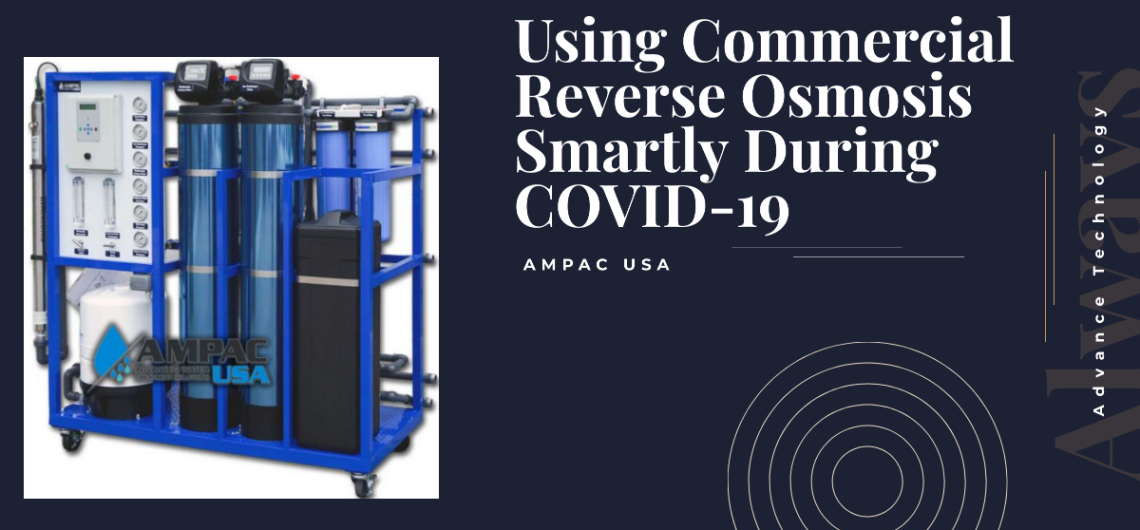

Commercial RO During COVID-19 isn’t just a buzzword. It’s really important for public health and keeping things running. Here at AMPAC USA, we build strong systems. We make sure you get safe, clean water for your home, business, or industry. Our systems are made to pull out the most contaminants and be super reliable. We know you can’t afford downtime.
The COVID-19 pandemic really showed us how crucial cleanliness is. That’s a lesson we won’t forget. Demand for Commercial Reverse Osmosis Systems shot up. Businesses needed more purified water to make customers feel safe. This made it clear we need to manage our commercial reverse osmosis water smartly. Here’s what we suggest.
Educate Your Team
First off, make sure your team knows how to use water smartly. It’s just common sense. Every surface needs a good scrub for safety. But using thousands of gallons isn’t smart. What we’ve found is that clear rules stop waste. Staff should know exactly how much water each task needs. No guessing. This saves you money.
Monitor and Control
Once your team is clued in, set some limits. Figure out the most water you’ll allow for specific jobs: washing, cooking, cleaning. We often tell people to use sub-meters or flow restrictors. This helps avoid shortages. No one should go over their assigned amount, especially when a system is built for a certain daily output, like 10,000 GPD.
Explore Water Recycling
If your business uses a lot of water every day- think big laundry facilities or manufacturing plants- you should really look into recycling. Managing wastewater isn’t just good for the planet; it’s smart business. In our experience, reusing greywater for things you don’t drink can cut your fresh water use by 30% or more. By treating and reusing water, you’ll dramatically cut how much new water you bring in, lower your operating costs, and depend less on city water.
Prioritize Water Needs
Honestly, most buyers miss this point. Use as little water as possible for things that aren’t essential. Cleaning a whole fleet of vehicles? Keeping big, green gardens? You might want to rethink those. Is RO-purified water truly needed for every single use? We ask clients this all the time. Water scarcity is a big problem globally; millions don’t have clean water just for basic handwashing. If your facility has plenty of pure water, use it wisely.
Invest in the Right Equipment
When you need a commercial reverse osmosis system that works well and lasts, choose AMPAC USA. We’re not just a supplier; we’re a top manufacturer with over 30 years in this business- building systems for offshore oil rigs, military bases, and fancy resorts all over the world. We offer residential, commercial, and industrial reverse osmosis systems. We custom-build every system to your exact needs, right here in our California facility, and ship it following strict cleanliness and safety rules. Call us at 909-548-4900 to talk about your project. We’ll help you get the right size.
Related Articles
- COVID-19 Boosts Residential and Commercial Reverse Osmosis
- Whole House Reverse Osmosis System for Commercial & Industrial Water Treatment
- Cannabis Water Treatment: Why Commercial Grows Use Reverse Osmosis
- Commercial Reverse Osmosis System Buyer's Guide: 100 to 10,000 GPD
Frequently Asked Questions
How does commercial RO support enhanced hygiene during a pandemic?
Commercial reverse osmosis systems provide a consistent supply of highly purified water, essential for increased cleaning, sanitization, and handwashing protocols. This ensures that commercial establishments can meet elevated hygiene standards, assuring end-customers of cleanliness. AMPAC USA systems are engineered for maximum contaminant removal, delivering safe, clean water for critical applications.
What are effective strategies for conserving water with a commercial reverse osmosis system?
Effective water conservation involves educating staff on efficient usage, setting maximum water limits for specific tasks like washing or cooking, and consistently monitoring consumption. Additionally, consider implementing water recycling programs for non-potable uses. These practices minimize waste and optimize your valuable purified water resource.
Can commercial RO system wastewater be recycled for other applications?
Yes, commercial RO wastewater can often be recycled for various non-potable applications, such as landscape irrigation, cooling tower makeup, or toilet flushing. Implementing wastewater management hacks reduces overall water consumption and lessens environmental impact. AMPAC USA advises clients on smart water use, including strategies for responsible wastewater management.
What key features define a reliable commercial reverse osmosis system?
A reliable commercial RO system is characterized by optimal performance, long-term durability, and superior contaminant removal capabilities. Look for customizable systems built with robust components that can withstand demanding operational environments. AMPAC USA, with over 30 years of field experience, designs and manufactures systems engineered for maximum reliability and efficiency across diverse applications.
Why is monitoring water usage crucial for businesses with commercial RO systems?
Monitoring water usage is crucial to prevent shortages, ensure efficient resource allocation, and promote responsible water stewardship. By setting and adhering to usage limits for tasks like cleaning or cooking, businesses can avoid excessive consumption. This smart management ensures a consistent supply of pure water, especially vital during periods of heightened hygiene demands.
AMPAC USA engineers custom water purification systems for commercial, industrial, and emergency applications — from 500 GPD to multi-million GPD. Trusted by municipalities, military, and industry worldwide.