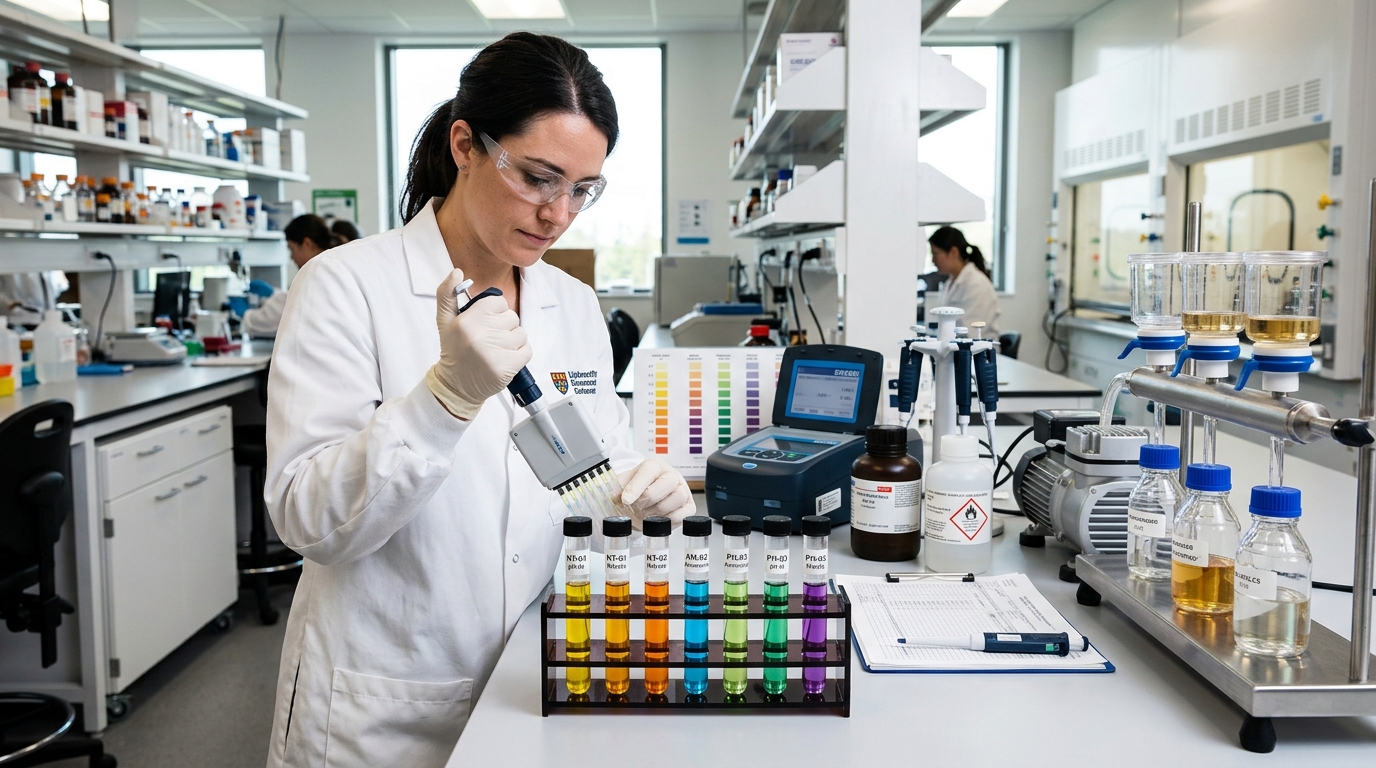

Quick Answer: Over 43 million Americans rely on private wells for drinking water, receiving no federal water quality oversight or mandatory treatment requirements. Research quantifying the health and economic burden of undetected private well contamination makes a compelling evidence-based case for universal scre. Advanced water treatment technologies including reverse osmosis provide effective solutions for water quality challenges in this area. AMPAC USA’s commercial and industrial systems are engineered to address these specific water treatment needs with certified, documented performance.
Yan Zheng; Flanagan, S. V.
Environmental Health Perspectives, 125 (8):085002; 10.1289/EHP629 2017
Abstract:
BACKGROUND:The 1974 Safe Drinking Water Act (SDWA) regulates >170,000 public water systems to protect health, but not >13?million private wells. State and local government requirements for private well water testing are rare and inconsistent; the responsibility to ensure water safety remains with individual households. Over the last two decades, geogenic arsenic has emerged as a significant public health concern due to high prevalence in many rural American communities.
OBJECTIVES:We build the case for universal screening of private well water quality around arsenic, the most toxic and widespread of common private water contaminants. We argue that achieving universal screening will require policy intervention, and that testing should be made easy, accessible, and in many cases free to all private well households in the United States, considering the invisible, tasteless, odorless, and thus silent nature of arsenic.
DISCUSSION:Our research has identified behavioral, situational and financial barriers to households managing their own well water safety, resulting in far from universal screening despite traditional public health outreach efforts. We observe significant socioeconomic disparities in arsenic testing and treatment when private water is unregulated. Testing requirements can be a partial answer to these challenges.
CONCLUSIONS:Universal screening, achieved through local testing requirements complemented by greater community engagement targeting biologically and socioeconomically vulnerable groups, would reduce population arsenic exposure greater than any promotional efforts to date. Universal screening of private well water will identify the dangers hidden in America’s drinking water supply and redirect attention to ensure safe water among affected households. https://doi.org/10.1289/EHP629
The post The Case for Universal Screening of Private Well Water Quality in the U.S. and Testing Requirements to Achieve It: Evidence from Arsenic appeared first on Facts About Water.
Source: Water Feed
AMPAC USA engineers custom water purification systems for commercial, industrial, and emergency applications — from 500 GPD to multi-million GPD. Trusted by municipalities, military, and industry worldwide.

![Reverse Osmosis Membrane Lifespan: How Long Do RO Membranes Last? [Maintenance Guide]](https://www.ampac1.com/blog/wp-content/uploads/2026/03/membrane-lifespan-150x150.png)