
Flint changed the conversation about lead in water. But Flint wasn’t the outlier people assumed — it was a highly public version of a problem that affects millions of homes across the US. The EPA’s own data shows over 9 million lead service lines still in active use nationwide.
Here’s what you need to know, updated for 2026.
Quick Facts
| Item | Current Status |
|---|---|
| EPA Action Level for Lead | 15 parts per billion (ppb) — triggers utility response requirements |
| EPA proposed new Action Level (LCRI 2024) | 10 ppb — phased compliance by 2037 |
| WHO guideline value | 10 ppb |
| Safe blood lead level for children | No safe level exists — CDC uses 3.5 µg/dL as a reference value |
| Lead service lines in US | ~9.2 million (EPA estimate, 2024) |
| Most effective residential treatment | Reverse osmosis (97–99% removal) |
Where Does Lead Come From in Tap Water?
Municipal water leaving the treatment plant is almost never the source of lead. The problem is what the water picks up on the way to your tap.
Lead service lines — the pipe connecting the utility main to your home’s internal plumbing. Roughly 9.2 million US homes still have lead service lines. When water sits in the line (especially overnight), it leaches lead from the pipe walls. First-flush water can contain lead levels 10–100x higher than water that’s been running for 30 seconds.
Solder — homes built before 1986 commonly used lead-tin solder on copper pipe joints. The Safe Drinking Water Act Amendments of 1986 banned lead solder for plumbing, but homes built before that date can still have it.
Fixtures — faucets, valves, and fittings labeled “lead-free” under pre-2014 federal law were allowed to contain up to 8% lead. The 2011 Reduction of Lead in Drinking Water Act tightened this to 0.25% lead by weighted average, effective January 2014. Fixtures installed before 2014 may contribute more lead than currently sold hardware.
Premise plumbing in older commercial buildings — schools, hospitals, apartment buildings, and office buildings built before 1986 often have extensive internal lead solder in plumbing systems. This is why schools are a high-priority testing location.
Health Effects: Why There Is No Safe Level
Lead is a neurotoxin. It damages brain development in children at any measurable blood concentration. The Centers for Disease Control (CDC) previously used a “level of concern” of 10 µg/dL; in 2021, they revised the childhood blood lead reference value down to 3.5 µg/dL — acknowledging that harm occurs at lower concentrations than previously recognized.
For children and pregnant women:
– Cognitive impairment, reduced IQ
– Learning disabilities and behavioral problems
– Delayed development (speech, motor skills)
– Increased risk of ADHD
– Irreversible neurological damage at high exposures
For adults:
– Increased blood pressure and cardiovascular risk
– Kidney damage with long-term exposure
– Reproductive effects in both men and women
– Anemia
Critical point: boiling water does NOT remove lead. It concentrates it. As water evaporates from boiling, the lead per unit volume of remaining water increases. This is a common misconception that leads people to take ineffective protective action.
Source: CDC, “What Do Parents Need to Know to Protect Their Children?” Lead Poisoning Prevention, updated 2023; U.S. EPA, “Basic Information About Lead in Drinking Water,” epa.gov/ground-water-and-drinking-water.
What the 2024 EPA Lead and Copper Rule Improvements (LCRI) Changed
In October 2024, the EPA finalized the Lead and Copper Rule Improvements (LCRI), the most significant update to lead in drinking water regulations in 30 years.
Key changes:
-
Service line replacement timeline: Utilities must replace all lead service lines within 10 years — by 2037. This is the most impactful provision.
-
New Action Level: Reduces from 15 ppb to 10 ppb. When more than 10% of tap samples at high-risk homes exceed 10 ppb, utilities must take corrective action.
-
Mandatory testing at schools and childcare facilities — utilities are now required to provide sampling and assistance to schools served by their system.
-
Improved public notification — utilities must notify residents when lead service lines are present on their property.
What this does NOT change: The utility-side service line replacement is the utility’s responsibility. The in-home portion of the lead service line, internal plumbing solder, and fixtures remain the property owner’s responsibility. The LCRI does not require utilities to replace privately-owned lead service line segments.
Source: U.S. EPA, Lead and Copper Rule Improvements, 40 CFR Parts 141 and 142, Final Rule, October 2024.
How to Test Your Water for Lead
Step 1: Find out if you have a lead service line.
Request your utility’s service line inventory (LCRI requires utilities to make this public). If your home was built before 1986, check whether your service line is lead — it’s a dull gray metal that scratches easily to reveal a shiny silver surface, unlike copper (orange-red) or galvanized iron (rough, dark gray).
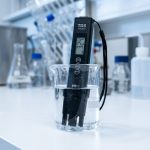
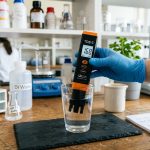
Step 2: Test your tap water.
Options:
– EPA-certified lab test: Most accurate. Available from state health departments or private labs. Cost: $20–$60. Specify “first draw” test (water sitting in pipes overnight) to capture worst-case lead exposure.
– NSF/ANSI 61-certified home test kits: Less accurate than lab tests but fast and inexpensive.
– Free utility testing: Many utilities offer free lead testing for residents, particularly in older housing.
Step 3: Test first-draw, not running water.
Collect your sample first thing in the morning before running any water. This represents what your household has been drinking — water that sat in the pipes overnight. Running the tap for 30 seconds before sampling dramatically reduces lead levels and gives a false sense of safety.
How to Remove Lead From Drinking Water
Reverse Osmosis — Most Effective (97–99% Removal)
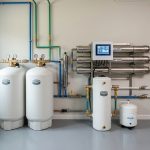
The most reliable residential technology. An under-sink RO system processes water through multiple stages including a semi-permeable membrane that physically rejects lead ions.
NSF/ANSI Standard 58 certifies RO systems for lead reduction. Look for systems certified under this standard. AMPAC’s under-sink RO systems remove 97–99% of lead along with arsenic, nitrates, PFAS, and most other dissolved contaminants.
For households concerned about lead throughout the home (not just drinking water), a whole-house RO system addresses all water entry points.
Lead-Specific Carbon Block Filters
Certain NSF/ANSI Standard 53-certified carbon block filters are rated for lead reduction. These are less comprehensive than RO but appropriate if lead is the primary concern and cost is a factor. Verify the filter is specifically NSF/ANSI 53 certified for lead — not all carbon filters reduce lead.
AMPAC carries lead reduction replacement filter cartridges rated for lead.
What Does NOT Work for Lead
- Standard pitcher filters (Brita basic, etc.) — not all remove lead; check for NSF/ANSI 53 certification specifically for lead
- Boiling water — concentrates lead, makes it worse
- Water softeners — primarily address hardness ions; do not reliably remove lead
- Standard sediment filters — remove particles, not dissolved lead ions
Temporary Measure: Flushing
If you can’t install a filter immediately, flush your cold water tap for 30–60 seconds before using water for drinking or cooking. This pushes the stagnant water (highest lead concentration) out of the line. Not a long-term solution, but reduces exposure while permanent treatment is arranged.
For Industrial and Commercial Facilities
Lead contamination in industrial water affects not just worker health but product quality. Pharmaceutical, food and beverage, and semiconductor manufacturing require feed water with essentially zero heavy metals. Lead at even trace levels (> 0.01 ppb) will compromise product quality and regulatory compliance.
AMPAC designs industrial reverse osmosis systems for commercial and industrial facilities requiring lead-free process water, along with complete water characterization and treatment system design services.
Talk to our engineers about your facility’s water quality requirements →
Frequently Asked Questions
Q: Is lead in drinking water dangerous at low levels?
A: Yes. The CDC recognizes no safe blood lead level, particularly for children. Even concentrations below the EPA action level of 15 ppb pose risk with repeated daily exposure over months and years. The 2024 LCRI reduces the action level to 10 ppb, acknowledging the need for stricter standards.
Q: Does boiling water remove lead?
A: No — boiling concentrates lead as water evaporates. Never boil water as a lead removal strategy.
Q: What is the EPA limit for lead in drinking water?
A: The current EPA Action Level is 15 ppb. When more than 10% of tap samples at high-risk homes exceed this level, utilities must take action including source water monitoring, treatment optimization, and service line replacement. The 2024 LCRI reduces this to 10 ppb, phased in over several years.
Q: How do I know if I have a lead service line?
A: Contact your utility — LCRI requires them to publish service line inventories. You can also check the pipe entering your home: lead is dull gray, soft enough to scratch with a key revealing shiny metal underneath, and won’t attract a magnet.
Q: Which water filter removes lead?
A: Reverse osmosis systems certified to NSF/ANSI 58 remove 97–99% of lead. Carbon block filters certified to NSF/ANSI 53 for lead reduction also work for point-of-use protection. Always verify NSF certification — not all filters rated for general contaminants are rated for lead specifically.
References
- U.S. EPA, “Basic Information About Lead in Drinking Water” — epa.gov/ground-water-and-drinking-water
- U.S. EPA, Lead and Copper Rule Improvements (LCRI), 40 CFR Parts 141 and 142, Final Rule (October 2024)
- CDC, “Childhood Lead Poisoning Prevention” — revised reference value 3.5 µg/dL (2021) — cdc.gov/nceh/lead
- NSF International, NSF/ANSI 53 — Drinking Water Treatment Units — Health Effects
- NSF International, NSF/ANSI 58 — Reverse Osmosis Drinking Water Treatment Systems
- American Water Works Association (AWWA), “Lead Service Line Replacement Collaborative” — lcrr.awwa.org
- Pieper, K.J., et al. (2017). “Evaluating water lead levels during the Flint Water Crisis.” Environmental Science & Technology, 52(15), 8124–8132.
Updated May 2026. Original post: September 2019.
AMPAC USA engineers custom water purification systems for commercial, industrial, and emergency applications — from 500 GPD to multi-million GPD. Trusted by municipalities, military, and industry worldwide.