

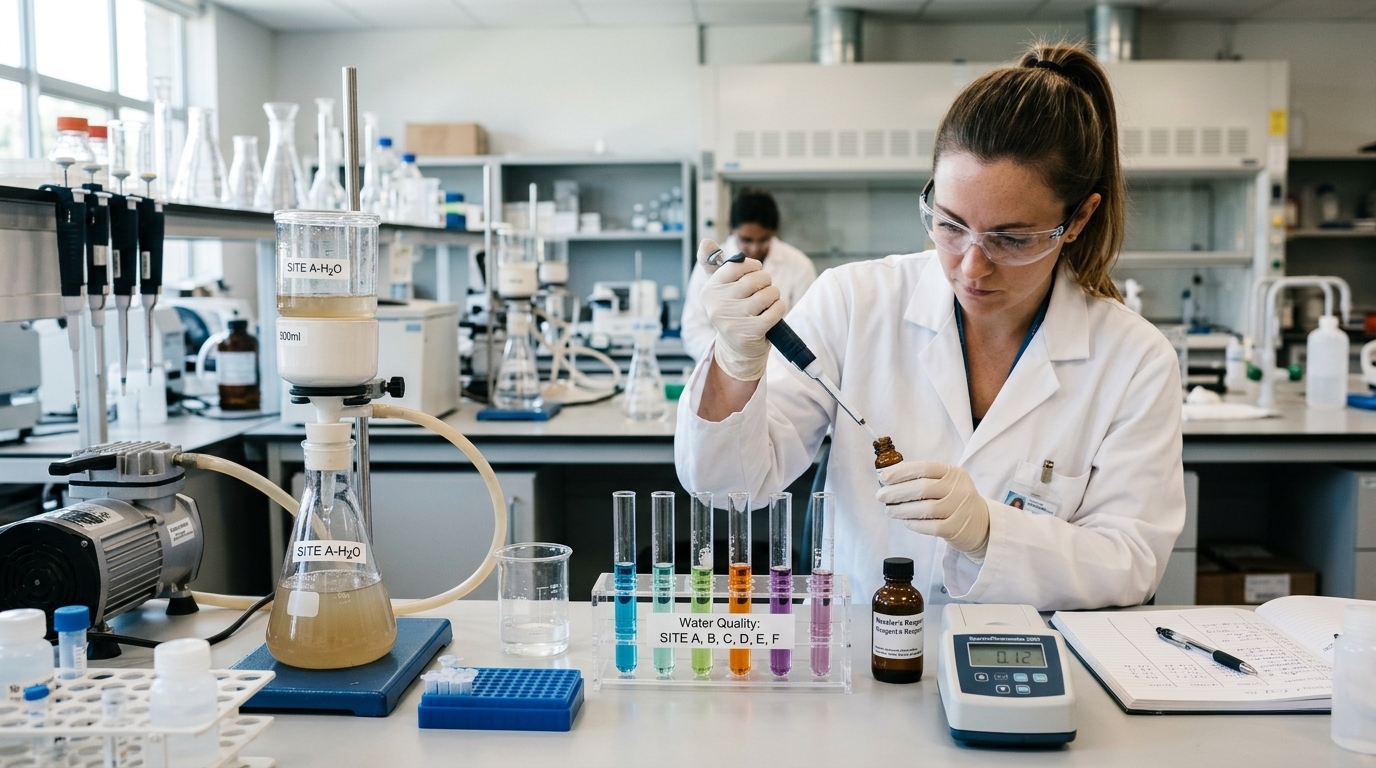

Summary: Millions of North Carolina residents rely on private wells as their sole drinking water source, with no regulatory testing requirements after installation. This study highlights significant contaminant exposures—including arsenic, nitrates, coliform bacteria, and industrial compounds—and identifies the critical public health role well testing and point-of-use treatment play for this underserved population.
Contaminant Risks for North Carolina Private Well Users
North Carolina ranks among the top five states for private well reliance, with approximately 2 million residents—including large rural and agricultural communities across the Piedmont, Coastal Plain, and Mountain regions—dependent on unregulated groundwater. Unlike municipal customers who receive EPA-enforced water quality reports, private well users have no mandatory notification when aquifer conditions change and no regulatory backstop if their well exceeds a safe contaminant level.
Arsenic in NC bedrock aquifers: Geogenic arsenic (naturally occurring, not from industrial sources) is elevated in North Carolina’s crystalline bedrock aquifers, particularly in the piedmont region. Long-term low-dose arsenic exposure at concentrations between 5 and 50 µg/L increases lifetime cancer risk for bladder, lung, and skin cancers and has been associated with cardiovascular and neurological effects. Yet surveys consistently find that fewer than 15% of NC private well owners have ever tested for arsenic.
Agricultural and CAFO-related contamination: North Carolina’s hog and poultry industry generates significant manure lagoon waste that can infiltrate shallow wells following heavy rainfall or flooding events. Nitrate from these sources—along with row-crop fertilizer application—is the leading chemical contaminant in shallow agricultural aquifers statewide. Coliform bacteria from animal waste provide a direct indicator of fecal contamination pathways.
Industrial legacy contamination: Hexavalent chromium (Cr-6) from industrial sites, GenX compounds (PFAS precursors) discharged historically by the Chemours Fayetteville Works plant, and 1,4-dioxane from textile and industrial facilities represent emerging threats to private well users in affected corridors. Most NC well owners are unaware that their wells may be in proximity to these contamination plumes, and standard well tests do not screen for these compounds without explicit request.
Public health infrastructure gaps: The study identifies local health departments as the underutilized first line of defense for private well guidance. Pairing routine well testing with distribution of point-of-use treatment information—particularly RO systems for inorganic contaminants and certified carbon filters for PFAS—at county health department visits represents a cost-effective intervention to reduce documented exposure disparities between municipal and well-reliant populations.
Crystal Lee Pow Jackson, PhD, North Carolina Department of Health and Human Services
Max Zarate-Bermudez, MSc, MPH, PhD, Centers for Disease Control and Prevention
Description
North Carolina has the second highest number of residents who rely on private wells for their drinking water supply. Studies report that about 3.3 million North Carolina residents (35% of the population) use private wells, with the highest county having 85.4% of the residents using private wells. Unlike public water systems that benefit from the regulatory safeguards of the Safe Drinking Water Act, there are no federal regulations for private wells in the U.S. Testing, treating, maintaining, and managing private wells are up to well owners, often with little to no technical or financial support.
In 2015, the Private Well and Health Program (PWHP) of the North Carolina Department of Health and Human Services received funding from the Centers for Disease Control and Prevention’s Safe Water for Community Health (Safe WATCH) Program to enhance services to private well users. PWHP was understaffed, had limited access to water quality data, and lacked established partnerships, which prevented it from enhancing services for private well users to better protect their health.
This month’s column highlights how PWHP used the funding to address vulnerabilities in its private wells and water quality, as well as initiatives to close the gaps in ensuring safe drinking water for its residents.
https://www.neha.org/node/60627
The post Exposure to Contaminants Among Private Well Users in North Carolina: Enhancing the Role of Public Health appeared first on Facts About Water.
Source: Water Feed
AMPAC USA engineers custom water purification systems for commercial, industrial, and emergency applications — from 500 GPD to multi-million GPD. Trusted by municipalities, military, and industry worldwide.


![Reverse Osmosis Membrane Lifespan: How Long Do RO Membranes Last? [Maintenance Guide]](https://www.ampac1.com/blog/wp-content/uploads/2026/03/membrane-lifespan-150x150.png)