

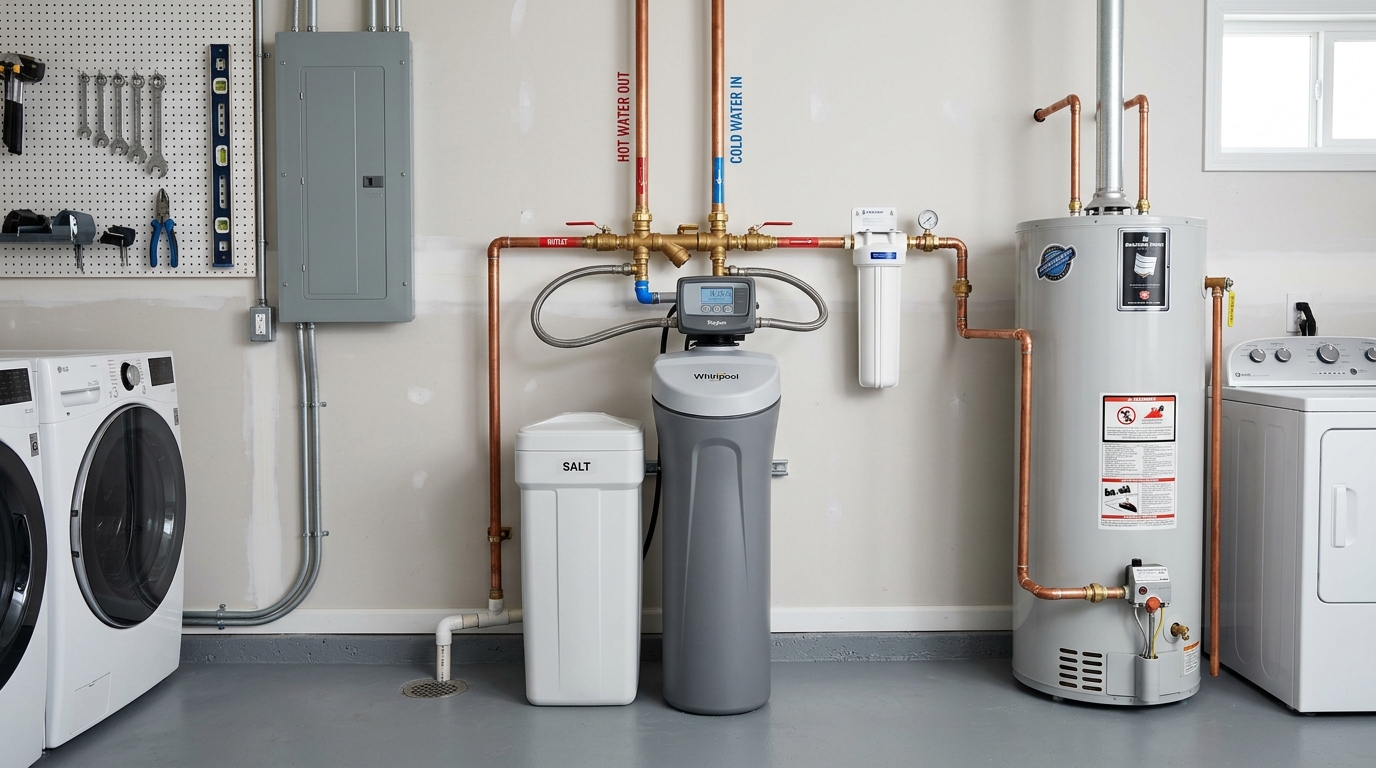

Seasonal Well Water Quality Variation is a big deal in today’s water treatment world. Here at AMPAC USA, we build systems that make sure homes, businesses, and industries get safe, clean water. Our systems are made to pull out as many contaminants as possible and keep working reliably for a long time.
no-margin-top Abstract
In the U.S., up to 14% of people rely on private wells for their drinking water. The thing is, the U.S. government doesn’t regulate contaminants in these private wells. This study wanted to check the water quality of unregulated private wells within one mile (1.6 kilometers) of an effluent-dominated river in the arid Southwest. We also wanted to see how contaminant levels changed between wet and dry seasons, and if human sources were contributing by specifically measuring man-made organic contaminants like PFOA, PFOS, and sucralose. We collected samples during two dry seasons and two wet seasons over two years. Then, we checked for microbial contaminants ( concentrations were higher than what’s considered safe: 0.01 mg/L, 10 mg/L, and 1 colony forming unit (CFU)/100 mL, respectively. The PFOA and PFOS levels we measured were also higher than the Public Health Advisory level. Arsenic, PFOA, PFOS, and sucralose were significantly higher during the dry seasons, but Why does well water quality vary seasonally?
Well water quality fluctuates seasonally due to environmental factors. Dry seasons can lead to higher concentrations of contaminants like arsenic and PFAS as water tables drop, while wet seasons often introduce microbial pollutants such as E. coli through surface runoff and increased infiltration. No, the U.S. government does not regulate contaminants in private wells, which serve up to 14% of the population. Unlike public water systems, private well owners are responsible for monitoring and ensuring the safety of their drinking water. According to a study in the arid Southwest, arsenic, PFOA, PFOS, and sucralose concentrations were significantly higher during dry seasons. Reduced water levels can concentrate these pollutants, leading to increased health risks. The study indicated that E. coli concentrations were higher during wet seasons. Increased rainfall can wash surface contaminants, including bacteria, into well systems, especially if wellheads are not properly sealed or maintained. AMPAC USA provides advanced reverse osmosis and water purification systems engineered for maximum contaminant removal, including seasonal threats like arsenic, nitrates, E. coli, PFOA, and PFOS. With over 30 years of field experience, our solutions ensure reliable, safe water despite seasonal quality variations. AMPAC USA engineers custom water purification systems for commercial, industrial, and emergency applications — from 500 GPD to multi-million GPD. Trusted by municipalities, military, and industry worldwide.Are private drinking water wells regulated in the United States?
Which contaminants are more prevalent in private wells during dry seasons?
Which contaminants are more common in private wells during wet seasons?
How can AMPAC USA help address seasonal well water contamination?

About AMPAC USA
AMPAC USA manufactures advanced reverse osmosis and water purification systems for industrial, commercial, marine, and residential applications worldwide.
Visit AMPAC USACategories
Recent Posts
-
 RO Antiscalant: What It Does and How to Choose One
-
 How to Start a Water Refill Station or Water Store
-
 Does Reverse Osmosis Remove PFAS? What Commercial Operators Need to Know
-
 How to Choose a Water Treatment Plant Manufacturer
-
 Best Water for Baby Formula: Tap, Distilled, Nursery, Bottled or Filtered?