
In short: the EPA doesn’t wait for a compound to show up in a headline before it starts tracking it. It runs a formal pipeline, the Contaminant Candidate List and the Unregulated Contaminant Monitoring Rule, that flags chemicals years before they become enforceable limits. Utilities that watch this pipeline and invest in flexible treatment capacity early avoid the compliance scramble that hits everyone else. The current fifth Contaminant Candidate List (CCL 5) already names 66 chemicals, 3 chemical groups, and 12 microbial contaminants that aren’t regulated yet but are being watched closely, PFAS chief among them.
That’s the practical shape of “emerging contaminant” risk. It’s not a mystery. It’s a known list, a known monitoring schedule, and a known lag between detection and regulation, usually measured in years, not months. The utilities and industrial facilities that treat that lag as planning time, instead of a surprise waiting to happen, are the ones that aren’t scrambling when the rule finally lands.
What Actually Counts as an “Emerging Contaminant”?
An emerging contaminant is a substance found in water that isn’t yet subject to a federal drinking water standard but is suspected, or already shown, to pose a health or environmental risk. It’s not a vague catch-all. The EPA maintains a specific, published list.
CCL 5 covers 66 individual chemicals plus three chemical groups: cyanotoxins, disinfection byproducts, and PFAS. PFAS alone is treated as a class rather than chemical-by-chemical, partly because there are more than 4,000 distinct PFAS compounds and regulating them one at a time would take decades. The list also names specific named-of-concern chemicals like 1,4-dioxane and 1,2,3-trichloropropane, both industrial solvents that show up in groundwater near manufacturing and dry-cleaning sites.
None of this is speculative chemistry. Every compound on CCL 5 got there because it’s already been detected in public water systems, or is expected to be, and there’s enough toxicological data to justify watching it. The list gets revised roughly every five years, so a compound’s status can shift from “candidate” to “regulated” or get dropped entirely, based on new data.
How Does the EPA Actually Decide What to Watch?
The EPA runs two connected processes: it identifies candidate contaminants through CCL, then it measures how widespread they actually are through the Unregulated Contaminant Monitoring Rule (UCMR), before deciding whether regulation is warranted.
UCMR is the data-collection half of the equation. Roughly every five years, EPA requires a representative sample of public water systems, including all large systems and a statistical sample of smaller ones, to test for a defined list of unregulated contaminants and report results back to the agency. The current round, UCMR 5, tested for 29 PFAS compounds plus lithium. As of the EPA’s most recent data release, the agency had collected roughly 95% of expected results and confirmed detectable PFAS at 3,539 additional sites, pushing the total number of known PFAS-contaminated sites nationally past 9,700, with an estimated 176 million people in communities where drinking water has tested positive for at least one PFAS compound.
That’s the mechanism. A contaminant lands on CCL because there’s reason to suspect it’s a problem. UCMR data confirms how widespread it actually is. Then EPA makes a regulatory determination, either it warrants a national primary drinking water regulation, or it doesn’t, based on occurrence, exposure, and health-effects data. In January 2025, EPA announced preliminary determinations on nine CCL 5 contaminants, including some pesticides and cyanotoxins, that ultimately did not meet the threshold for regulation. Not everything on the watch list becomes a rule. But everything that becomes a rule was on the watch list first.
Why Should Facilities Care Before a Contaminant Is Actually Regulated?
Because the gap between “on the watch list” and “legally enforceable” is exactly the window where a facility can plan a treatment upgrade on its own schedule instead of a court-ordered one.
The PFAS drinking water rule is the clearest recent example. EPA finalized enforceable limits for PFOA, PFOS, and four other PFAS compounds in April 2024, with an original compliance deadline of April 2029. As of mid-2026, EPA has proposed extending that deadline to 2031 for systems that formally request it, explicitly citing the time needed for treatment costs to come down as technology matures. EPA’s own estimate is that between 6% and 10% of the roughly 66,000 public water systems subject to the rule will need to take action to meet it.
That’s not a small number of facilities standing in line for engineering, procurement, and construction all at once, against a hard federal deadline. Systems that started evaluating advanced treatment, membrane filtration, granular activated carbon, ion exchange, before the rule was final are the ones negotiating equipment lead times and contractor availability on their own terms. Systems that waited are now competing for the same limited pool of qualified installers and treatment capacity as everyone else with the same 2029 or 2031 deadline.
AWWA’s 2025 State of the Water Industry report, based on responses from 3,575 water professionals, found nearly 45% of respondents citing PFAS as a significant concern, driven directly by this regulatory pressure and the capital investment it forces. That’s not fear of the unknown. It’s utilities that already know the compliance math and are trying to figure out where the money and the engineering capacity come from.
Does This Only Apply to Municipal Utilities, or Does It Touch Industrial Facilities Too?
It touches both, and often in the same water. Industrial facilities that discharge process water, or that pull from the same groundwater and surface sources municipal utilities serve, are subject to the same underlying contaminant pressure, even when the direct regulatory hook is different (NPDES permits and pretreatment standards rather than the Safe Drinking Water Act).
A manufacturing site sitting near a documented PFAS plume, and EWG’s interactive PFAS map shows over 9,700 such confirmed sites across all 50 states, faces two separate exposure points. One is regulatory: if the facility’s water source or discharge is affected, permit renewals and pretreatment requirements can tighten with little warning once a contaminant crosses from “candidate” to “regulated.” The other is operational: process water quality that degrades due to contamination upstream can affect product quality, equipment fouling, and membrane life in ways that have nothing to do with compliance paperwork and everything to do with uptime.
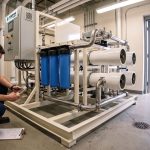
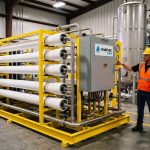
Facilities running industrial reverse osmosis systems for process water or wastewater reuse are already positioned to absorb a lot of this risk, because RO membranes reject a wide spectrum of dissolved contaminants, including many PFAS compounds and other emerging organics, well before those substances have individual regulatory limits. The point isn’t that RO makes a facility immune to future rules. It’s that a facility already running high-rejection membrane treatment for other reasons, water reuse, scale control, discharge quality, has a real head start when a new contaminant moves from candidate to regulated, instead of starting a capital project from zero.
What Does “Planning Ahead” Actually Look Like in Practice?
It looks less like predicting the future and more like tracking a published schedule and sizing treatment capacity with margin instead of building exactly to today’s minimum requirement.
The CCL and UCMR cycles are public and roughly predictable: a new candidate list about every five years, monitoring data released in rolling batches, regulatory determinations following a few years after that. A facility or utility that reviews the current CCL, checks whether any of its named contaminants are plausible in its own water source, and asks what treatment step would address them if they were regulated tomorrow is doing real risk management, not guesswork.
Practically, that tends to mean a few concrete choices: specifying membrane systems with rejection performance that exceeds current regulatory minimums, not just meets them; building in enough hydraulic and footprint capacity to add a polishing stage, like granular activated carbon or ion exchange, without a full plant redesign; and treating water quality monitoring as an ongoing signal rather than a once-a-year compliance checkbox. None of that requires guessing which specific chemical gets regulated next. It requires building a treatment train that isn’t brittle when the answer changes.
AMPAC USA designs industrial reverse osmosis systems and commercial reverse osmosis systems built around that kind of margin, membrane trains sized for real operating headroom, not the bare minimum a current permit requires. For a facility trying to get ahead of a regulatory curve it can see coming but can’t predict exactly, that headroom is often the difference between a planned upgrade and an emergency one.
What Happens to Facilities That Don’t Plan Ahead?
They end up compressing years of lead time into months, competing for the same engineering firms, membrane suppliers, and installation crews as every other facility hitting the same deadline at once, usually at a cost premium and with far less flexibility in system design.
This isn’t hypothetical. It’s the pattern EPA’s own compliance-extension proposal implicitly acknowledges: the agency is pushing PFAS deadlines out partly because treatment costs and contractor capacity haven’t caught up with the number of systems that waited to act. Utilities and facilities that treated the 2024 rule announcement as their starting gun, rather than the CCL and UCMR data that had been public for years before it, are the ones now asking for more time.
The honest takeaway is that regulatory risk in water treatment isn’t really unpredictable. It’s published, tracked, and updated on a known cycle. The facilities that come out ahead aren’t the ones with better information. They’re the ones that actually read the information that was already public and sized their treatment systems for where the rules were heading, not just where they stood on the day the equipment was purchased.
Frequently Asked Questions
What is the EPA Contaminant Candidate List (CCL)?
It’s a published list of contaminants, currently 66 chemicals, 3 chemical groups (cyanotoxins, disinfection byproducts, and PFAS), and 12 microbial contaminants under CCL 5, that aren’t yet subject to a federal drinking water regulation but are known or suspected to occur in public water systems at levels that could warrant one.
How does a contaminant move from “candidate” to actually regulated?
EPA uses Unregulated Contaminant Monitoring Rule (UCMR) data, collected from a representative sample of public water systems roughly every five years, to measure how widespread a candidate contaminant actually is, then makes a formal regulatory determination based on occurrence and health-effects data. Not every candidate ends up regulated; some are formally determined not to warrant a rule.
Why does the PFAS drinking water rule matter for industrial facilities, not just municipal utilities?
Industrial sites often draw from or discharge into the same water sources municipal systems serve, so contamination and tightening standards affect both. EPA estimates 6% to 10% of the roughly 66,000 public water systems subject to the 2024 PFAS rule will need treatment upgrades to comply, and industrial facilities near known PFAS sites face parallel pressure on permits and process water quality.
Can reverse osmosis treat contaminants before they’re officially regulated?
Yes. High-rejection RO membranes remove a broad range of dissolved contaminants, including many PFAS compounds and other emerging organics, as a function of how the technology works, not because a specific regulation requires it. Facilities already running RO for other purposes have a practical head start when new contaminants move from candidate to regulated status.
How often does the EPA update its list of emerging contaminants?
The Contaminant Candidate List is revised roughly every five years, with the current CCL 5 finalized in November 2022 and its regulatory determinations still being finalized as of 2026. UCMR monitoring cycles run on a similar roughly five-year rhythm, feeding new occurrence data into each revision.
Sources: EPA, Fifth Drinking Water Contaminant Candidate List (CCL 5); EPA, Preliminary Regulatory Determinations for CCL 5; ASDWA, EPA Publishes Eleventh Set of UCMR 5 Data; EPA, Proposed PFOA and PFOS Compliance Extension Rule; AWWA, State of the Water Industry; EWG, PFAS Contamination Interactive Map.
AMPAC USA engineers custom water purification systems for commercial, industrial, and emergency applications — from 500 GPD to multi-million GPD. Trusted by municipalities, military, and industry worldwide.