
Twenty-five years ago, Drs. Needleman and Jackson wrote in Pediatrics, asking if we’d still be dealing with lead poisoning in the 21st century. Sadly, despite real progress, our public health system isn’t doing enough to stop kids from getting lead poisoned. Lead poisoning still hangs over the country: over 500,000 American kids have blood lead levels higher than 5 mcg/dL (that’s >50 ppb). 23 million homes have at least one lead hazard. We don’t even know how many Americans drink water from lead service lines. Plus, federal rules for lead in house dust, soil, and water aren’t quite strong enough to fully protect children. We’ve rightly focused on the kids in Flint, Michigan, but hundreds of other cities have children with even higher blood lead levels.
Source: Pediatrics – Still Treating Lead Poisoning After All These Years |
Lead in Drinking Water: What Causes It, The Dangers, and How to Fix It
Lead gets into your drinking water mostly when old plumbing corrodes. Think lead service lines that connect water mains to your house, or lead solder used in copper pipes (super common in homes built before 1986). Even brass fixtures can have up to 8% lead. The EPA’s Lead and Copper Rule (LCR) sets an action level at 15 ppb, but the CDC and the American Academy of Pediatrics (AAP) are clear: there’s no safe level of lead exposure for kids. Even low levels, well below the EPA’s action level, can measurably hurt a child’s IQ, attention span, and school performance.
This isn’t just about cities like Flint. The Natural Resources Defense Council (NRDC) has found lead problems in water systems in all 50 states. Newark, NJ, Pittsburgh, PA, Chicago, IL, and many smaller towns have tested positive for high lead in tap water. This often hits lower-income communities hardest, places with older homes and old pipes. The EPA guesses it would cost between $28 billion and $47 billion to replace all lead service lines in the U.S. That could take decades.
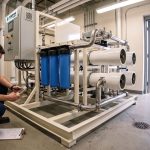
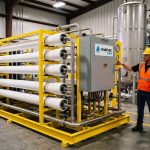
So, what can you do right now? Point-of-use water treatment is the most practical and immediate solution for homes and businesses worried about lead plumbing. Reverse osmosis systems use special membranes with tiny pores, about 0.0001 microns. These membranes pull out dissolved lead ions with 95-98% efficiency. That’s way better than standard carbon block filters, which only cut lead by 50-70%. An NSF/ANSI 58-certified RO system means independent labs have confirmed its performance. AMPAC USA builds NSF-component RO systems for homes, businesses, and industrial needs. They offer reliable protection against lead and over 99 other regulated contaminants.
Frequently Asked Questions
Is lead in drinking water still a significant problem in the United States?
Yes, lead poisoning from drinking water remains a critical public health issue. Over 500,000 American children have elevated blood lead levels, and an estimated 23 million homes contain lead hazards, indicating widespread exposure despite regulatory efforts.
What are the main sources of lead contamination in tap water?
Lead primarily enters drinking water through the corrosion of lead-containing plumbing materials. This includes lead service lines connecting water mains to homes, lead solder used in copper pipe joints (common before 1986), and brass fixtures that may contain up to 8% lead.
What is considered a safe level of lead in drinking water for children?
While the EPA’s Lead and Copper Rule sets an action level at 15 ppb, the CDC and American Academy of Pediatrics (AAP) unequivocally state there is no safe level of lead exposure for children. Even concentrations below the EPA action level can cause measurable reductions in IQ and attention span.
What is the most effective way to remove lead from household drinking water?
Reverse osmosis (RO) water treatment is the most effective point-of-use technology for removing lead from drinking water. AMPAC USA’s RO systems are engineered to reduce lead concentrations by over 95%, ensuring water quality well below EPA and WHO action levels for safety.
Is the lead in water crisis limited to specific cities like Flint, Michigan?
No, the lead in water crisis is not limited to specific cities. The Natural Resources Defense Council (NRDC) has documented lead exceedances in water systems serving communities in all 50 states, with cities like Newark, NJ, Pittsburgh, PA, and Chicago, IL, also reporting elevated lead levels.
AMPAC USA engineers custom water purification systems for commercial, industrial, and emergency applications — from 500 GPD to multi-million GPD. Trusted by municipalities, military, and industry worldwide.