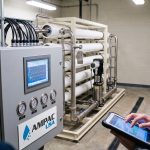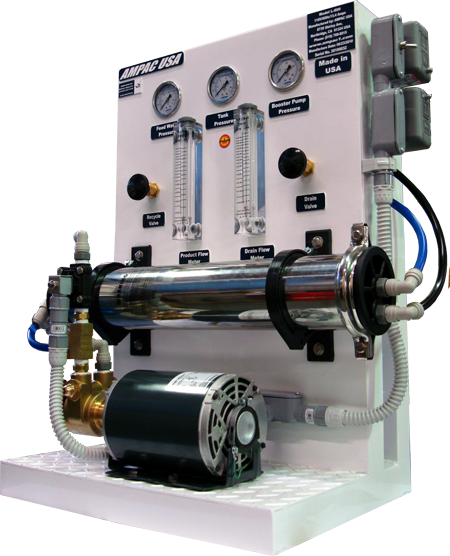

A whole house reverse osmosis system is a significant infrastructure investment — typically $2,500–$8,000 installed. Like any mechanical system designed for continuous operation, its long-term performance depends entirely on maintenance discipline. The good news: whole house RO maintenance is far simpler than most homeowners expect, and the cost of staying on schedule is a fraction of the cost of neglecting it.
Here’s exactly what to do, when to do it, and what to watch for.
Understanding Your Whole House RO System
Before getting into the maintenance schedule, it helps to know what you’re maintaining and why each component matters:
- Sediment pre-filter(s): Coarse filtration (typically 5–20 micron) to remove sand, silt, rust particles, and debris. Protects downstream filters and the membrane from physical damage and clogging.
- Carbon pre-filter: Removes chlorine and chloramines from the feed water before the RO membrane. Critical because polyamide TFC membranes are permanently damaged by free chlorine exposure.
- RO membrane: The core purification stage. Removes 97–99.5% of dissolved solids, heavy metals, nitrates, PFAS, and virtually all other dissolved contaminants.
- Post-filters: Carbon polish stage for final taste improvement and any trace contaminant removal. Sometimes includes a remineralization cartridge to restore calcium and magnesium.
- Storage tank: Pressurized vessel (typically 20–80 gallons for whole house systems) that stores treated water for on-demand delivery.
- Booster/distribution pump: Maintains system pressure for whole house delivery — different from under-sink systems where pressure from the storage tank is usually adequate.
Whole House RO Maintenance Schedule
Every 3–6 Months: Pre-Filters
Sediment and carbon pre-filters are your first line of protection. Replace on schedule, not based on appearance — sediment filters look dirty when they’re spent, but carbon filters show no visual signs of exhaustion even when they’ve lost effectiveness. A spent carbon filter that allows chlorine breakthrough is the fastest way to ruin an RO membrane.
Signs the pre-filter needs replacement sooner than scheduled:
- Noticeable drop in system flow rate (differential pressure indicator confirms this)
- Return of chlorine taste or odor to the treated water (carbon exhaustion)
- Discolored filter housing indicating heavy sediment load
Pre-filter replacement cost: $15–$40 per filter, depending on size and type. DIY replacement takes 10–15 minutes per filter housing.
Every 6–12 Months: Post-Filters and Remineralization Stage
Post-carbon polish filters and remineralization cartridges are lower-intensity maintenance than pre-filters but should be replaced annually or at the manufacturer’s recommended interval. Post-carbon exhaustion won’t damage the membrane (no upstream role), but it allows taste and odor compounds to pass through that the carbon was previously removing.
Annually: Full System Inspection
Once per year, do a comprehensive walkthrough of the system:
- Check all filter housings for cracks or weeping connections
- Inspect pump seals for moisture — early signs of seal wear before failure
- Verify all tubing connections are seated and leak-free
- Check storage tank pressure (empty tank should read 5–8 PSI via Schrader valve)
- Test permeate TDS and compare to baseline — declining rejection indicates membrane degradation
- Check booster/distribution pump for unusual noise or vibration
Every 2–5 Years: RO Membrane Replacement
The membrane is the most expensive replacement component but lasts the longest. The range is wide (2–5 years) because membrane life depends heavily on feed water quality:
- Pre-treatment maintained precisely + low-TDS feed water: 4–6+ years
- Moderate TDS, good pre-treatment: 3–4 years
- High TDS, seasonal variation, imperfect pre-treatment: 2–3 years
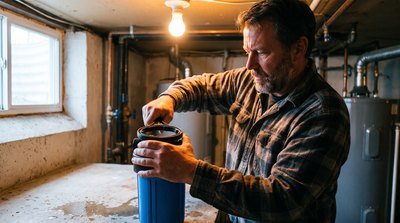
Don’t wait for system failure to replace the membrane. Monitor TDS rejection quarterly — when it drops below 90% consistently, it’s time to replace regardless of calendar age.
Membrane replacement cost for whole house systems: $150–$400 for commercial-grade membranes, depending on GPD rating.
How to Test Your System’s Performance
A TDS meter is the most useful tool for any whole house RO owner. Test quarterly:
- Measure feed water TDS from a nearby tap (before any filtration)
- Measure RO permeate TDS from a post-system tap
- Calculate rejection: 1 – (permeate TDS ÷ feed TDS) × 100 = rejection %
- Log the result with the date
A healthy system: 93–98% rejection. Below 90%: membrane degrading. Below 85%: replace immediately.
Tracking this over time gives you early warning of membrane degradation and helps confirm that pre-filter replacements are happening on the right schedule.
Troubleshooting Common Maintenance Issues
Low flow from RO system:
- Check sediment pre-filter — replace if clogged
- Check RO membrane — compare current TDS rejection to baseline
- Verify storage tank pressure (low bladder pressure reduces delivery pressure)
- Check booster pump operation
TDS creeping up over time:
- If happened suddenly: carbon pre-filter exhausted, allowing chlorine to damage membrane — check and replace carbon filter, then membrane if rejection is below 85%
- If gradual: normal membrane aging — replace when rejection falls below 90%
Chlorine taste returning:
- Carbon pre-filter exhausted — replace immediately
- Check replacement interval — may need to shorten schedule for your feed water
System not producing water:
- Check feed water shutoff valve — must be fully open
- Check automatic shut-off valve (ASO) — may be stuck closed
- Check for kinked or frozen feed line
- Verify adequate feed water pressure (minimum 40 PSI for whole house systems)
DIY vs. Professional Service
Most routine maintenance — filter replacement, TDS testing, storage tank pressure checks — is DIY-appropriate for anyone comfortable following manufacturer documentation. Annual inspections and troubleshooting that involves the pump or pressure vessel seals are worth professional service.
Many AMPAC USA dealers offer annual service contracts that cover scheduled filter replacement and system check — typically $200–$400/year for whole house systems. This is often the most practical approach for homeowners who want the performance assurance without tracking the schedule themselves.
Need a whole house system that performs reliably with straightforward maintenance? Explore AMPAC USA’s whole house RO systems — designed for long service life and owner-accessible maintenance intervals.
Related Articles
- Whole House Reverse Osmosis Benefits: Why Every Home Should Have One
- How Whole House and Under Sink Reverse Osmosis Drinking Water Filtration Systems Works?
- Whole House Reverse Osmosis System for Commercial & Industrial Water Treatment
- Whole House Reverse Osmosis Systems: 2026 Sizing & Buyer's Guide
Frequently Asked Questions
Do reverse osmosis systems need maintenance?
Yes. A whole house reverse osmosis system needs maintenance on a fixed schedule to keep water quality and flow consistent. Skipping pre-filter changes or annual sanitization is the most common reason a system underperforms.
How do I maintain a reverse osmosis system myself?
Most whole house RO maintenance is DIY-friendly: swap pre-filters every 6-12 months, replace post-filters annually, sanitize the system once a year, and watch for pressure drops or taste changes that signal the membrane needs attention. Follow the steps above in order and log each service date so you know what is due next.
How often do I need to replace the filters in my whole house RO system?
Pre-filters should be replaced every 6 to 12 months, depending on your water quality and usage. Post-filters typically require replacement annually, around every 12 months. Regular filter replacement is crucial to protect the RO membrane and maintain overall system efficiency.
How long does an RO membrane last, and how can I extend its life?
An RO membrane typically lasts 2 to 3 years, though this can vary based on water quality and system usage. You can extend its lifespan by ensuring pre-filters are replaced on schedule, regularly checking for signs of fouling, and performing periodic cleanings with a compatible RO membrane cleaner.
Why is annual sanitization important for my whole house RO system?
Annual sanitization is essential to prevent bacterial growth within your system and ensure the safety and purity of your drinking water. AMPAC USA recommends sanitizing your system once a year to maintain optimal hygiene and performance, especially after prolonged disuse.
What are the main components of a whole house reverse osmosis system?
A whole house RO system typically includes pre-filters to remove larger particles, an RO membrane for molecular-level filtration, post-filters to polish water taste, a storage tank for filtered water, and a distribution pump for consistent pressure. These components work together to deliver purified water throughout your home.
What indicates that my RO membrane might need cleaning or replacement?
Key indicators include a noticeable reduction in water pressure from your taps, changes in the taste or odor of your purified water, or an increase in the Total Dissolved Solids (TDS) levels. Addressing these signs promptly, often by cleaning or replacing the membrane, is vital for maintaining water quality and system efficiency.
What’s the difference between industrial and whole-house reverse osmosis system maintenance?
Industrial reverse osmosis system maintenance involves higher-volume components — larger membrane arrays, higher-pressure pumps, and more frequent chemical cleanings — typically scheduled by run-hours rather than calendar months. Maintenance on reverse osmosis systems built for residential whole-house use is lighter: filter swaps every 6-12 months and an annual sanitization are usually sufficient. If you’re comparing options for a business or facility, see our industrial RO maintenance guide for the commercial-scale schedule.
Can I do DIY whole house reverse osmosis system maintenance myself?
Yes. A diy whole house reverse osmosis system routine covers three tasks most homeowners can handle without a technician: swapping pre- and post-filters on schedule, checking pressure gauges monthly, and sanitizing the system annually. Whether you call it maintenance of reverse osmosis system components or simply learning how to maintain reverse osmosis system parts yourself, the steps are the same — more involved work like membrane replacement is reasonable to hand off to a professional.
AMPAC USA engineers custom water purification systems for commercial, industrial, and emergency applications — from 500 GPD to multi-million GPD. Trusted by municipalities, military, and industry worldwide.