
Flint isn’t the only place struggling with lead contamination. Two recent news investigations found some shocking numbers. A Reuters report on blood lead levels showed nearly 3,000 areas in the country had higher contamination than Flint…
Source: Water Feed
Understanding Lead in U.S. Drinking Water
The Reuters investigation really opened our eyes, showing lead contamination in drinking water is a widespread problem with our infrastructure, hitting every state. Lead service lines, those pipes installed before 1986, are still in millions of American homes, schools, and businesses. When water chemistry changes or pipes start to rust, lead leaks right into your tap water. This means even if your city’s water supply is perfectly clean, it can still have dangerous lead levels by the time it reaches your faucet.
The EPA’s Lead and Copper Rule sets an action level of 15 micrograms per liter (ppb), but even they admit there’s no safe amount of lead exposure, especially for kids under six. High lead levels in children’s blood can cause permanent brain damage, lower IQs, and behavior problems. For adults, long-term lead exposure is linked to high blood pressure, kidney issues, and problems with reproductive health.
How Reverse Osmosis Gets Rid of Lead from Drinking Water
Reverse osmosis (RO) technology is still the best way to remove lead right at your tap. RO systems push water through a special membrane. Its pores are tiny, small enough to block lead ions and other nasty stuff like arsenic, nitrates, chromium-6, and dissolved solids. NSF International, an independent group, has tested and confirmed that certified RO systems remove 95-99% of lead from drinking water.
AMPAC USA designs and builds all sorts of reverse osmosis systems for homes, businesses, and industrial use. Our systems include multi-stage pre-filters, with activated carbon and sediment stages, before the water even hits the RO membrane. This ensures we don’t just remove lead, but improve overall water quality too. If your community has confirmed lead contamination, AMPAC USA’s point-of-use RO systems offer immediate, certified protection while your city works on fixing its pipes.
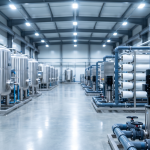
For bigger places like schools, hospitals, and city buildings, AMPAC USA’s commercial reverse osmosis systems can treat thousands of gallons a day. This protects many people from lead and other heavy metal contamination. Our systems meet NSF/ANSI 58 certification standards and we can even configure them with specific lead removal validation testing.
What Communities and Homeowners Can Do Now
If your home was built before 1986, or if your community has an old water system, testing your tap water for lead is the first crucial step. The EPA’s Safe Drinking Water Hotline and certified labs can give you testing kits. Once you confirm contamination, putting in a certified RO system at your kitchen tap or under the sink is the quickest, most affordable solution for families. We even have whole-home filtration systems with RO technology if you need complete protection at every faucet.
AMPAC USA offers consulting for both homeowners and water managers looking to fix lead contamination. Our engineering team can look at your water quality data and suggest the right size, certified treatment systems. Contact AMPAC USA at www.ampac1.www.ampac1.com to talk about water treatment solutions for lead and other contaminants.
Frequently Asked Questions
How widespread is lead contamination in U.S. drinking water?
Lead contamination is a nationwide public health crisis, affecting nearly 3,000 U.S. communities, far exceeding isolated incidents like Flint, Michigan. A Reuters investigation revealed this systemic infrastructure problem, primarily due to aging lead service lines installed before 1986.
What are the health risks of lead exposure from drinking water?
There is no safe level of lead exposure, particularly for children under six, who risk irreversible neurological damage and reduced IQ. For adults, chronic exposure is linked to hypertension, kidney dysfunction, and reproductive issues, even at levels below the EPA’s action level of 15 ppb.
How effective is reverse osmosis (RO) at removing lead from tap water?
Reverse osmosis (RO) is the gold standard for lead removal, utilizing a semi-permeable membrane with pores small enough to block lead ions. Certified RO systems, like those from AMPAC USA, are independently tested by NSF International to remove 95–99% of lead, ensuring water is well below the EPA action level.
What is the EPA’s recommended safe level for lead in drinking water?
The EPA’s Lead and Copper Rule sets an action level of 15 micrograms per liter (ppb) for lead in drinking water. However, the agency itself acknowledges that there is no truly safe level of lead exposure, especially for vulnerable populations like young children.
What are the primary sources of lead contamination in tap water?
Lead primarily enters tap water from aging lead service lines, which are pipes installed before 1986, and certain brass plumbing fixtures. Corrosion and changes in water chemistry can cause lead to leach directly into the water as it travels from the municipal supply to your faucet.
AMPAC USA engineers custom water purification systems for commercial, industrial, and emergency applications — from 500 GPD to multi-million GPD. Trusted by municipalities, military, and industry worldwide.