
People are getting more health-conscious these days. They want to know what they’re putting into their bodies and how it affects them. If that sounds like you, remember: one of the best ways to stay healthy is to drink truly clean water. Here, we’ll explain the main types of drinking water contaminants and how the EPA groups them.
What Exactly is a Water Contaminant?
The Safe Drinking Water Act defines “contaminant” really broadly. It means any physical, chemical, biological, or radiological substance or matter in water. Basically, anything that isn’t a water molecule itself.
Most drinking water will have a tiny amount of contaminants. They might be harmful if there’s too much, but sometimes they’re completely harmless if the quantity is low.
So, if your drinking water has some contaminants, it doesn’t automatically mean it’s a health risk. Still, it’s always smarter to remove as many as you can.
You should especially pay attention to contaminants on the Contaminant Candidate List (CCL). This list helps the EPA figure out which unregulated contaminants might need more research into their health effects and how much of them are actually in our drinking water.
Water Contaminant Categories and Examples
The EPA breaks down drinking water contaminants into these general categories, with a few examples for each:
- Physical Contaminants
These mainly mess with water’s look or physical traits. Think of sediment or organic bits floating in rivers, streams, and lakes from soil erosion. Those are physical contaminants.
- Biological Contaminants
These are living things in water. Sometimes we call them microbiological contaminants or microbes. Viruses, bacteria, parasites, and protozoa all fit into this category.
- Chemical Contaminants
These are elements or compounds, either natural or human-made. Common examples include metals, salts, nitrogen, pesticides, and toxins from bacteria. Even human or animal drugs can be chemical contaminants.
- Radiological Contaminants
These are chemical elements with an imbalanced number of protons and neutrons. This makes them unstable atoms that can give off ionizing radiation. Uranium, cesium, and plutonium are a few examples.
The Easiest Way to Get Rid of Contaminants – Water Treatment from AMPAC USA
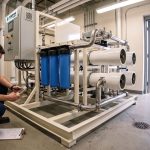
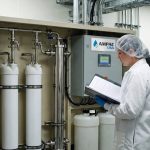
Looking for the easiest way to get all contaminants out of your drinking water? Trust AMPAC USA. We’re a top manufacturer and distributor of high-quality, American-made water treatment systems. We started in 1990, building water purification equipment. Over the years, we’ve grown into a large-scale manufacturer, making all types of major purification equipment and handling full-scale water infrastructure projects.
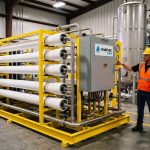
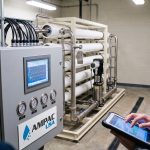
AMPAC USA is especially known for its great technical services. We get tough marine conditions. We use military and marine-grade certified parts in our off-shore and on-shore reverse osmosis watermakers. We build heavy-duty, reliable equipment that’s easy to operate. No compromises here. AMPAC USA custom-engineers, designs, fabricates, and manufactures systems to handle the hardest water treatment conditions anywhere.
To learn more about us, click hereor call us at 909-548-4900.
Reference:
https://www.epa.gov/ccl/types-drinking-water-contaminants
Related reading: Nationwide reconnaissance of contaminants of emerging concern in source and treated drinking waters of the United States, Recently detected drinking water contaminants: genX and other Per- and polyfluoroalkyl ether acids., Toxicological risk assessment and prioritization of drinking water relevant contaminants of emerging concern.
Frequently Asked Questions
How does the EPA define a water contaminant?
According to the Safe Drinking Water Act, the EPA broadly defines a water contaminant as any physical, chemical, biological, or radiological substance or matter present in water, excluding water molecules themselves. This comprehensive definition allows for the regulation and monitoring of a wide array of impurities that could impact public health.
Are all contaminants found in drinking water harmful?
No, not all contaminants in drinking water are inherently harmful. The potential for harm depends on the specific contaminant type and its concentration. The EPA sets Maximum Contaminant Levels (MCLs) for regulated substances, and only quantities exceeding these levels typically pose a health risk. However, reducing contaminant levels as much as possible is always a prudent approach for optimal water quality.
What are common examples of physical contaminants in water?
Physical contaminants primarily impact water’s aesthetic properties, such as its appearance, taste, or odor. Common examples include sediment, turbidity, and organic materials like silt or clay from soil erosion, which can make water cloudy or discolored. While often not directly toxic, their presence can indicate other water quality issues and necessitates filtration.
Why is the EPA’s Contaminant Candidate List (CCL) significant?
The EPA’s Contaminant Candidate List (CCL) is significant because it identifies unregulated drinking water contaminants that may pose health risks and require further investigation. This list helps prioritize research into potential health effects and occurrence levels, enabling the EPA to determine if new regulations are necessary to protect public health proactively.
What types of contaminants are effectively removed by reverse osmosis systems?
Reverse osmosis (RO) systems, like those engineered by AMPAC USA, are highly effective at removing a broad spectrum of chemical contaminants, including heavy metals, salts, nitrates, and PFAS. They also significantly reduce microbial contaminants such as bacteria and viruses. Our industrial RO systems are designed to achieve over 99% reduction of total dissolved solids, crucial for critical applications across 150+ countries.
AMPAC USA engineers custom water purification systems for commercial, industrial, and emergency applications — from 500 GPD to multi-million GPD. Trusted by municipalities, military, and industry worldwide.