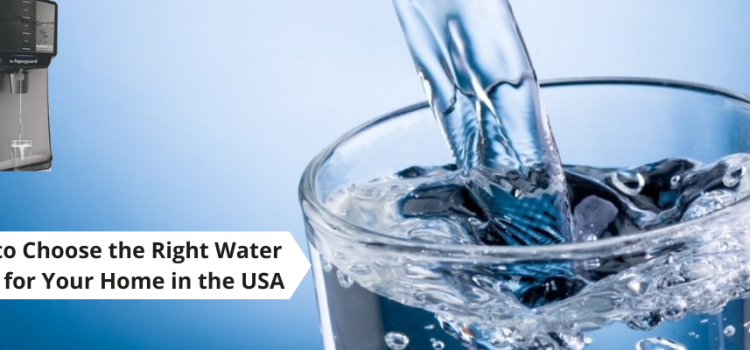

Many people think there is no need for a water filter at home in the USA as the tap water is clean enough. It is a misconception. People living in the USA should realize that tap water isn’t as safe as they believe it to be. They need to buy a water filter by being a smart buyer to ensure they get a value-for-money deal. Here are a few tips on how to choose the right water filter for your home in the USA.
Why Water Matters So Much?
Water is life. It is an essential nutrient that plays a key role in our body. Everything in our body, from tissues to cells to vital organs, needs water to function properly. It allows your body to absorb vitamins, minerals, glucose, amino acids, and other crucial substances. Water also helps cleanse the body from the inside out by flushing out the toxins. It also helps regulate body temperature and acts as a lubricant for muscles and joints.
Is Tap Water Safe in the USA?
The tap water in the USA is not safe but laced with contaminants. Water can contain everything from industrial chemicals to pharmaceutical residues and from pesticides to heavy metals. Some of the most common contaminants found in the tap water in the USA are:
- Lead
It can leak from the pipes and other plumbing fixtures.
- Arsenic
It occurs naturally from arsenic-rich soil and rocks, forest fires, volcanic activity, etc. Human activities like manufacturing, mining, and improper disposal of paints can also lead to arsenic.
- Pharmaceuticals
Pharmaceuticals like anti-anxiety meds, antibiotics, painkillers, and hormones can also contaminate water.
- Agricultural Chemicals
Chemicals used in farming like pesticides, herbicides, nitrates, or fertilizers can also contaminate water.
- Pathogens
Bacteria, viruses, and parasites can also contaminate water coming through your taps.
- Fluoride
Added to ensure dental health, an excess of it can be harmful to humans.
- Cleaners
Chlorine, ammonia, and other by-products of the water chlorination process can also contaminate tap water.
- Radioactive Materials
They can occur naturally or from activities involved in oil & gas production.
- Other Impurities
Some other commonly found water contaminants are PFAS and Perchlorates.
How to Know If Your Tap Water is Safe?
If you want to know if your home’s tap water is safe or you want to find out which contaminants it might contain, you should start by doing a water test. There are four options available when it comes to water testing First are the municipal water tests that the EWG or Environmental Working Group does. You can search their database and get results from more than 20 million tests conducted in more than 47,000 American municipalities. The second option is to check the yearly water quality report published by the water supplier and utilities in your vicinity. This test is not very reliable as the water might pick up contaminants on the way to your tap.
The third water testing option is to go for a home water test that will include a simple water test at home using a kit. If DIYs are not your thing, you can go for the fourth option and get the water tested from a local lab. The last two tests are highly recommended for people who have wells in their backyard or directly get water from a nearby water body.
Kinds of Water Filters
Before you start choosing the right water filter for your home in the USA, you should know that there are different kinds of water filters available in the market. Here are a few kinds of them and their uses.
- Pitcher Filters
These are the most inexpensive filters you can find easily. They are good for locations where the water is mostly contamination-free, and the only problem is substances like chlorine that are easy to remove. These filters can enhance the taste and odor of your water. The water dispensing refrigerator filters are also the same. There are a few risks of using these filters. The first is that the water will sit in plastic for an extended period and might pick up contaminants from the pitcher itself. Secondly, they can remove only a small number of contaminants.
- Faucet-Mount Filters
As the name suggests, these filters are mounted on the faucets of your home and try to make water contaminant-free as water flows through them. The performance of these filters is also limited to a few contaminants only. So, you would be smart to check whether they can remove the contaminants you want them to remove. Some homeowners prefer these filters as they are cheap, easily replaced, and have a low replacement filter cost. It would help if you kept an eye on how often replacements are needed to calculate the total cost of ownership.
- Countertop Water Filters
If you have a space crunch in your kitchen and still need a water filter, you should go for this option. These filters can be hooked up to a faucet, or they can be free-standing and gravity-fed. They can be installed by anyone on their own. These filters also don’t need much maintenance, and the filters can last up to months, depending on the contaminants in the water. Some filters also prefer it as they are light and portable. You can take them with you when you go on a camping trip.
- Under the Sink Filters
Some people don’t prefer to ruin the look of their kitchen by adding a bulky filter to it. Such people prefer to choose an under-the-sink filter that can help save counter space. These kinds of filters don’t need refilling. The main problem with this kind of filter is that it might not work during an emergency.
- Reverse Osmosis Filters
These filters are an ideal choice for people who want their water to be contamination-free and pure. Though quite expensive, these filters are also low maintenance and easy to operate. They waste 3 gallons of water to get you just one gallon of pure water. These can be customized as per customer needs, and additional filtration stages can be added as per client expectations.
- Shower Filters
If there is an excess of chlorine, chloramines, and chloroform in water, it can harm your skin and hair when you take a shower. These compounds can also be sent in the air, and regular intake can harm a person’s health. The shower filters help get rid of this problem by removing such elements from water and making it safe for you to take a shower.
- Whole House Water Filters
In case the water in your home has too many contaminants like chlorine, you might want to pick whole house water filters. As the name denotes, these filters can ensure that water coming from every tap or faucet is as clean as possible. These filters are recommended for people who are not worried about the costs as they can be quite expensive at times. These are great for reducing all sorts of contaminants, be it lead or chlorine.
Types of Filters Used in Water Treatment Systems
There are a few types of filers used in water purification or water treatment systems. The key ones are listed below.
- Particulate Filters
These filters are ideal for removing large particles from water such as rust, dirt, and loose scale. They can even help make cloudy water clearer. But these filters are not very effective when it comes to removing bacteria.
- Adsorption Filters
These filters, like activated charcoal, trap the particles of volatile organic compounds such as benzene and formaldehyde, chlorine, pesticides, and polyfluoroalkyls that can make water taste bad.
- Water Softeners
You can trust these filters to remove metals from water. They can also help reduce scale in the appliances and pipes and extend their lives. They can also reduce lead and copper as well.
- Membranes
Water treatment technologies like reverse osmosis and forward osmosis use an electrically charged membrane to ensure that water is separated from contaminants. It might not be very effective against VOCs.
- UV Filters
If the water has biological contaminants like viruses, bacteria, and protozoa cysts, a UV filter could be the right choice
- Distillation
It is a unique process in which water is heated to transform into steam. After the water is vaporized, only solids are left behind while the heat kills bacteria. The system collects clean and evaporated water.
Is Bottled Water Suitable for Home Use?
When thinking about how to choose the right water filter for your home in the USA, people also wonder whether they can use bottled water regularly. The answer to that is no. You should know that it doesn’t mean that the water is safer if the water is bottled. Much of the bottled water is tap water from the municipality. Also, as the water sits in plastic for a long time, it might absorb compounds that might harm your health. Bottled water is also bad for the environment as it increases the use of single-use plastics. So, make sure you don’t over-depend on bottled water for home use in the USA.
Which is the Right Water Filter for Home Use in the USA and Where to Get It?
The right water filter for home use in the USA is a reverse osmosis filter. AMPAC USA is a brand that can be trusted to find the best residential reverse osmosis systems, which include everything from countertop water filters to whole house water filters. AMPAC USA houses a wide range of reverse osmosis systems made specially to cater to the needs of residences across the globe. These systems are designed by top experts at AMPAC USA with experience of more than 30 years. Every system in the line of residential RO is based on Advanced Reverse Osmosis, which is a proven technology for eliminating 99% of the contaminants. The range of products offers solutions to hard water, brackish sources, well, and even seawater. It also offers choices that can help to meet various other water challenges. The line involves single systems for low capacities and whole-house systems for higher capacities. The company also offers a range of RO accessories compatible with the brand systems and almost every other model on the market.
AMPAC USA’s residential RO systems are very well known in the industry for their strength, durability, and reliability. The products are made with standard practices at a state-of-the-art facility under the supervision of experienced personnel. Every purchase with AMPAC guarantees a 24×7 after-sale customer support and manufacturer’s warranty. AMPAC also sends experts to inspect water quality who help you choose the right solution to your problem. For expert consultation, contact AMPAC USA at (909) 548 4900 today or view the products here.
Final Words- Ampac USA
When looking for the crucial answer to how to choose the right water filter for your home in the USA, you should educate yourself on what contaminants might be present in the water by doing some basic testing, consider your budget, water needs, and maintenance of the available options before deciding. The right decision would be healthier for you and your family. When you choose the right filter, the water will not just be contamination-free, but it will also be tastier. Trust AMPAC USA to provide you with a filter that exactly matches your requirements and can last for long.
References
https://learn.eartheasy.com/articles/how-to-choose-a-simple-water-filter-for-your-home/
https://www.ampac1.com/products/residential-reverse-osmosis
https://www.consumerreports.org/cro/water-filters/buying-guide/index.htm
https://www.waterfilteradvisor.com/choosing-a-water-filter/
https://www.washingtonpost.com/realestate/water-filtration-systems-a-consumers-guide-to-avoid-getting-soaked/2020/06/16/22b0ce78-572f-11ea-9b35-def5a027d470_story.html
Frequently Asked Questions
How quickly can an emergency water purification unit be deployed?
AMPAC USA's EPRO and mobile RO units can be operational within 30–60 minutes of arrival on-site. Trailer-mounted and skid-mounted systems are pre-plumbed and pre-wired, requiring only connection to a power source and water source. Units treat river water, lake water, or brackish groundwater.
What flow rates are available for emergency water treatment?
AMPAC USA's emergency systems range from 1,500 GPD portable units to 50,000+ GPD trailer-mounted systems. Military-specification units are available for forward operating base deployment, producing potable water meeting EPA and WHO drinking water standards from virtually any source.
Are emergency RO systems suitable for disaster relief operations?
Yes. AMPAC USA's emergency systems are used by FEMA, the U.S. military, and international NGOs for disaster relief. They treat flood water, contaminated groundwater, and brackish sources, removing bacteria, viruses, and chemical contaminants to produce safe drinking water on-site.
What power sources can emergency water purification systems use?
AMPAC USA's emergency systems can run on generator power (120/240V or 480V 3-phase), solar panels with battery backup, or vehicle power take-off (PTO). Low-power models consume as little as 0.5 kW, making them viable for off-grid deployment.
How durable are military-grade water purification systems?
AMPAC USA's military systems are built to MIL-SPEC standards with stainless steel frames, powder-coated components, and UV-resistant materials. They are designed to operate in temperatures from -20°F to 120°F and are vibration-tested for transport in military vehicles.
Related Articles
- Home Water Filter Guide: How to Choose the Right System in the USA
- Water Softener vs Reverse Osmosis: Which Do You Need? | AMPAC USA
- RO Water Filter Maintenance: The Complete Guide for Clean and Healthy Water
- Brackish Water Treatment Processes & Solutions by Ampac USA
Conclusion
This post highlighted how emergency and military-grade water purification systems provide safe drinking water rapidly in the most challenging field conditions. For organizations requiring deployable water treatment capability, AMPAC USA engineers portable and trailer-mounted systems built to perform wherever they are needed. Contact our team at info@ampac1.com or (909) 548-4900 to discuss your emergency water treatment requirements.
AMPAC USA engineers custom water purification systems for commercial, industrial, and emergency applications — from 500 GPD to multi-million GPD. Trusted by municipalities, military, and industry worldwide.