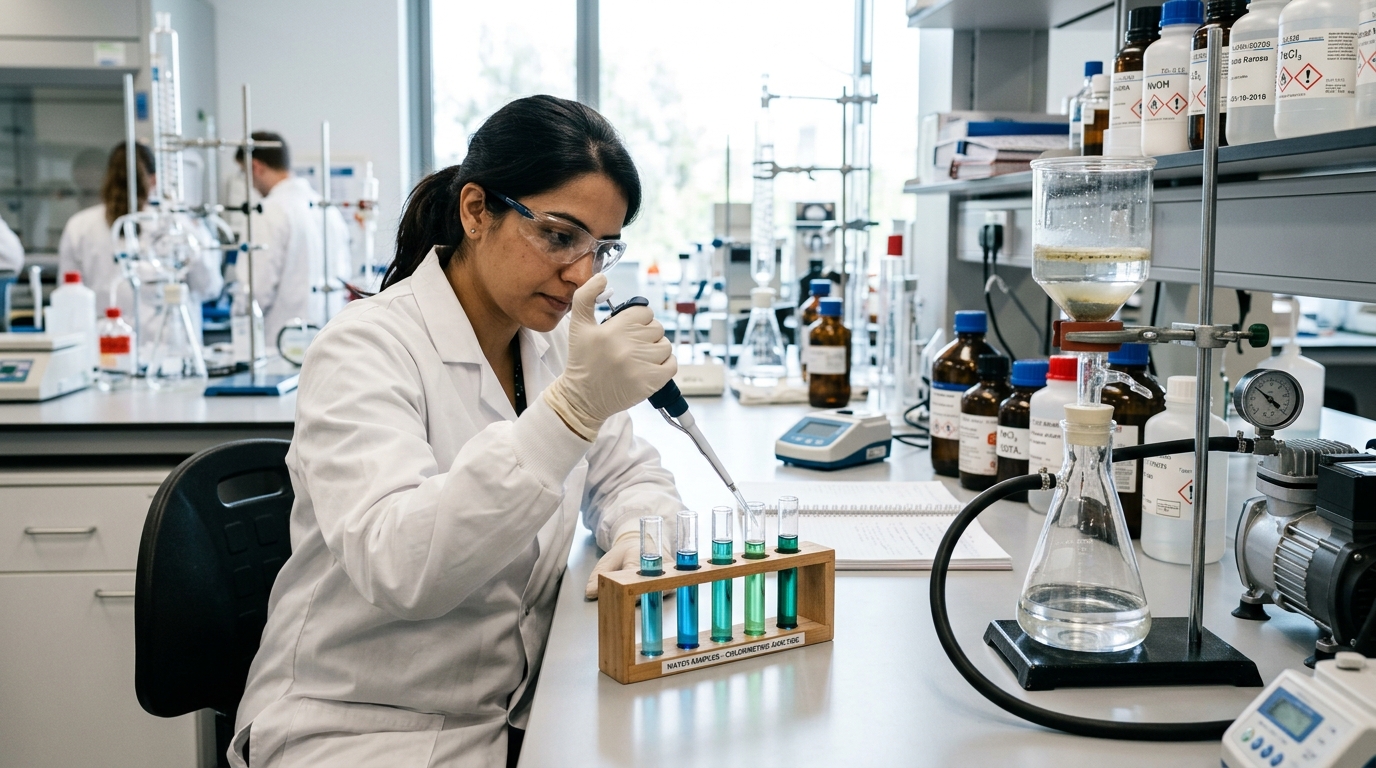

The post appeared first on . Source: Water Feed The study found that while disinfection of EDCs and PPCPs produces a large number of transformation products (TPs), it is unlikely to increase specific toxicity like endocrine activity. However, it may lead to increased reactive and non-specific toxicity. This highlights the complex nature of disinfection byproducts in water treatment. The study investigated eight common EDCs and PPCPs frequently detected in source waters, including acetaminophen, bisphenol A, carbamazepine, estrone, 17 alpha-ahinylestradiol, gemfibrozil, naproxen, and triclosan. These compounds originate from various human activities and waste streams, posing challenges for water purification. Using a Stepped Forced Molecular Dynamics (SFMD) method, the study detected 911 unique transformation products (TPs) resulting from the disinfection of EDCs and PPCPs. Notably, 36% of these TPs had been previously reported in scientific literature, indicating a significant and complex array of new compounds. The study performed batch experiments using three common disinfectants: chlorine, chlorine dioxide, and chloramine. These are widely utilized in municipal water treatment, and the research assessed their role in transforming endocrine disrupting chemicals and pharmaceuticals into various byproducts. Researchers employed a combination of computational methods, including Quantitative Structure-Activity Relationship (QSAR) tools, and experimental techniques. This involved chemical analysis and a battery of eleven in vitro bioassays to cover various toxicity endpoints, providing a comprehensive assessment of the transformation products. AMPAC USA engineers leverage such scientific understanding to design robust water purification systems. AMPAC USA engineers custom water purification systems for commercial, industrial, and emergency applications — from 500 GPD to multi-million GPD. Trusted by municipalities, military, and industry worldwide.Frequently Asked Questions
Does drinking water disinfection increase the toxicity of endocrine disrupting chemicals (EDCs) and pharmaceuticals?
What are common endocrine disrupting chemicals (EDCs) and pharmaceuticals found in source water?
How many transformation products are formed when EDCs and PPCPs are disinfected?
Which disinfectants were evaluated for their impact on EDCs and PPCPs?
How was the potential toxicity of disinfection byproducts assessed in this study?