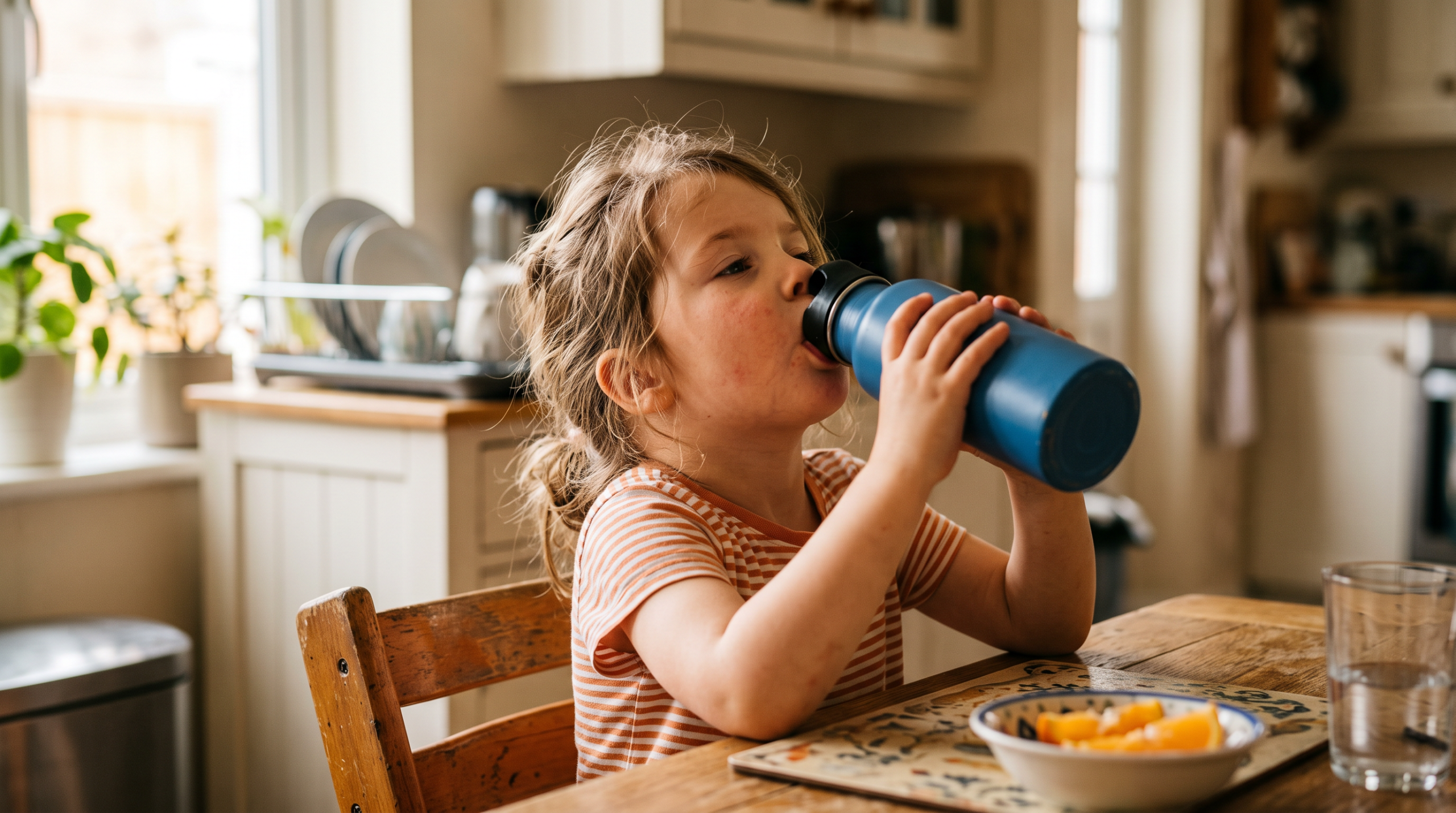

In short: children dehydrate faster than adults because of body chemistry, not habits. Kids carry a higher percentage of body water, lose fluid faster relative to their size, and can’t always recognize or communicate thirst the way adults do. On top of that, more than half of U.S. children and teens aren’t getting adequate hydration, and roughly 1 in 5 drink no plain water at all during a typical day, according to a Harvard-affiliated analysis. Taste is a big part of why. Kids who reject tap water because it smells like chlorine or tastes flat will often drink filtered water without complaint, and drink more of it.
This isn’t a minor parenting inconvenience. Dehydration in children shows up as fatigue, irritability, headaches, and measurable dips in concentration, exactly the symptoms parents and teachers usually chalk up to a bad day. Understanding why kids are more vulnerable, and what actually gets them to drink more, matters more than most families realize.
Why Are Children More Prone to Dehydration Than Adults?
Children dehydrate faster because their bodies are built differently, not because they’re careless about drinking water. Kids have a higher ratio of body surface area to body mass than adults, which means they lose water faster through their skin and through breathing. Infants and young children also have a higher baseline metabolic rate, which drives greater fluid turnover just to keep normal body functions running.
There’s also a communication gap. Younger kids often don’t recognize the early signal of thirst the way adults do, and even when they do notice it, they don’t always stop what they’re doing to act on it. A kid absorbed in recess, a video game, or a soccer practice will run right past the point where an adult would have already reached for a water bottle. The NCBI and StatPearls clinical literature on pediatric fluid management both point to this same combination: greater physiological fluid need paired with weaker self-monitoring, which is exactly the setup for dehydration to sneak up on a child before anyone notices.
How Many Kids Actually Aren’t Drinking Enough Water?
More than half of children and teens in the United States fall short of adequate hydration, and the gap is bigger than most parents assume. A Harvard-affiliated study found that just over 50% of U.S. kids and teens aren’t getting enough fluid, largely because they simply aren’t drinking enough plain water. Even more striking, roughly 20% of American children and teens reported drinking no plain water on a given day at all. Their fluid was coming entirely from other sources: juice, soda, flavored drinks, or nothing close to what they needed.
This isn’t a uniquely American pattern. A cross-sectional survey covering 13 countries found that more than half of the children and adolescents studied were at risk of inadequate total water intake, based on European Food Safety Authority reference values. Whatever the country, the same basic issue keeps showing up: kids aren’t reaching easily for water on their own, and the gap widens the older they get, since younger children in some regional surveys miss recommended intake even more often than adolescents.
What Actually Happens When a Child Gets Dehydrated?
Even mild dehydration in children affects mood, focus, and physical performance well before it becomes a medical emergency. Research on hydration status and school-day performance has tied even modest fluid deficits to reduced concentration, more reported fatigue, and worse mood in kids during the school day. Longitudinal pediatric research has also linked dehydration status to early markers of renal strain that get measurably worse across a school week, a pattern researchers have connected to how little kids drink during a normal school day versus weekends.
None of that requires a dramatic scenario like heat illness or a stomach bug, although those raise the stakes considerably faster in children than adults, which is why pediatric dehydration is treated as a more urgent concern in clinical settings. Most of the dehydration affecting kids day to day is the quieter kind: a kid who’s cranky by 3pm, has a headache during homework, or can’t focus in the last period of the school day, not because something is wrong with them, but because they haven’t had enough water since breakfast.
Why Won’t My Kid Just Drink More Water?
Taste is one of the biggest, most fixable reasons kids avoid water, and it’s more significant than most parents give it credit for. Surveys of parents and teens have found broad agreement that tap water often tastes bad, with chlorine and mineral notes coming up again and again as the specific complaint. Kids have more sensitive palates for these off-notes than adults do, and unlike adults, they don’t have the patience or motivation to push through a taste they don’t like. An adult will drink a glass of chlorine-tinged tap water because they know they need to. A kid will just decide they don’t like water and reach for the juice box instead.
That preference isn’t just anecdotal. Sensory-preference research on children’s taste responses shows kids gravitate hard toward sweetness and are quick to reject water they find unpleasant, for reasons rooted in taste physiology, not stubbornness. When water at home tastes clean and neutral, that resistance tends to disappear. Families who switch to filtered water commonly report their kids drinking more of it and reaching for sugary alternatives less, a pattern that lines up with broader research linking home water filter use to higher tap water consumption and lower sugar-sweetened beverage intake.
Does Filtered Water at Home Really Change How Much Kids Drink?
Yes. Removing the chlorine taste, sediment, and off-notes that make tap water unappealing to kids is one of the most direct ways to get them drinking more of it, without a single lecture about hydration. This is the mechanism, not a marketing claim: kids reject water because of how it tastes and smells, and a properly filtered system addresses that at the source, before the water ever reaches a cup.
A residential reverse osmosis system strips out the chlorine taste, sediment, and dissolved minerals that make tap water taste “off” to a sensitive kid’s palate, while leaving a clean, neutral glass of water behind. For families who’ve already tried the easy stuff, cold water, a fun cup, a reminder chart, and are still fighting to get a stubborn kid to drink water, the taste itself is often the actual barrier, not the behavior. Reverse osmosis filtration is engineered specifically to solve that problem at the tap, not with a workaround.
What Can Parents Do Beyond Fixing the Water?
Filtered water solves the taste barrier, but pairing it with a few habit changes gets kids drinking consistently rather than only when they happen to remember. Keep a filled water bottle within reach during homework, sports, and screen time, since kids won’t walk to the kitchen mid-activity but will drink from something already in front of them. Serve water cold. Temperature preference research and general pediatric hydration guidance both point to cold water being more palatable to kids than room-temperature water, which matters more for children than it does for most adults.
Model it, too. Kids drink what they see their parents drinking. If the household default beverage at meals is water instead of juice or soda, kids adopt that as normal rather than as a rule being enforced on them. None of this requires much effort once the taste problem is solved. The bottleneck for most families isn’t willpower, it’s water that a kid actually wants to drink.
Frequently Asked Questions
How much water does a child need per day?
Needs vary by age, size, and activity level, and pediatric guidance typically expresses fluid needs as a range rather than a single number. As a general reference, younger children need roughly 4-5 cups of total fluids a day and older kids and teens need more, with meaningfully higher needs on hot days or during sports. A pediatrician can give an exact target based on a child’s age and weight.
Why does my child say tap water tastes bad but I don’t notice it?
Children are more sensitive to chlorine and mineral off-notes in tap water than adults, a documented pattern in sensory-preference research on kids. What registers as mildly noticeable to an adult can taste distinctly unpleasant to a child, which is often the real reason a “picky” kid refuses water.
Is bottled water a good substitute for filtered tap water for kids?
It solves the taste problem short-term but isn’t a sustainable daily habit for most families, given the cost and plastic waste of drinking bottled water every day. A home filtration system delivers the same clean taste on demand, at the tap, without the ongoing expense.
Can dehydration really affect a child’s mood and school performance?
Yes. Research on pediatric hydration and school-day performance has linked even mild fluid deficits to reduced concentration, increased fatigue, and worse mood in children during the school day, changes that show up well before dehydration becomes medically serious.
What’s the fastest way to tell if my child is dehydrated?
Common signs include a dry mouth, fewer trips to the bathroom or darker urine, headache, irritability, and unusual fatigue. Persistent or severe symptoms, especially with vomiting, fever, or lethargy, warrant a call to a pediatrician rather than waiting it out at home.
Sources: American Academy of Pediatrics (Pediatric Care Online); NCBI/StatPearls Pediatric Fluid Management; Harvard-affiliated hydration study via CBS News; PMC systematic review, “Total fluid intake of children and adolescents: cross-sectional surveys in 13 countries worldwide”; PMC, “The Role of Hydration in Children and Adolescents”; PMC, “Dehydration Status Aggravates Early Renal Impairment in Children”; ScienceDirect, “Sweetness in a glass: A study on children’s sweet preference and sensitivity”; PMC, “Perceptions of water and sugar-sweetened beverage consumption habits among teens, parents and teachers.”
AMPAC USA engineers custom water purification systems for commercial, industrial, and emergency applications — from 500 GPD to multi-million GPD. Trusted by municipalities, military, and industry worldwide.