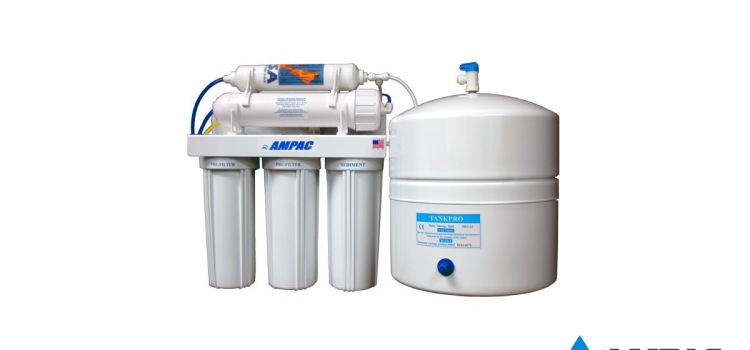

Even in the world of reverse osmosis, there are technologies that give the best results even in the most pollutes waters. A 5 Stage RO water system is by far the most advanced water technology that provides H2O of the utmost superior quality. And why not? It covers almost every impurity known to man and gets it out for safe and quality drinking water.
Reverse Osmosis
The process is an unchallenged champion in purifying water. Since the last few decades, it has proven outcomes to show for its credibility. Using the natural process of osmosis and reversing it for purification was probably the best technological advancement of the 20th century. With an effectiveness of 99%, the process still amazes the industry with its scope and improvements. For a few years now the process is being aided to be able to deal with any kind of impurity which reflects the use of a 5 Stage RO.
What is a 5 Stage RO?
As the name suggests, this particular reverse osmosis system has a total of 5 stages, each stage responsible to make your water better.
Sediment filter: Made of polypropylene, this filter is responsible to take out major impurities that plague the water. Soil, dust, dirt, small pebbles even rust. The filter takes care of impurities over 5 microns.
Carbon filter: Granulated activated carbon is used to filter out chlorine a positively charged elements. This helps to eliminate bad odor and taste of the water.
Second polypropylene layer: This is an extra stage added to the system in case the sediment filter is not enough. It is responsible for eliminating impurities up to 1 micron. This clears out any remaining sediments.
Osmotic membrane: This is where all the major action happens. Water is passed through the semi-permeable membrane that removes fluoride, organic and inorganic compounds, total dissolved salts and more. This gives pure and safe drinking water after purification.
Second carbon filter: A second carbon filter is added to remove the bad taste which comes after the osmotic membrane. Many times this stage is replaced by remineralization filters that add essential calcium and magnesium minerals that are eliminated in the process.
When should this RO be used?
This RO is used for household purposes majorly in areas near factories, brackish sources or coasts. It is because the water obtained in those areas have a high level of impurity and require only the most advanced RO for purification. This is also preferred in aquariums, offices, restaurants, labs, and institutions due to its quality. It boasts of a 99% efficiency in removing various contaminants like chlorine, fluoride, TDS, mercury, microorganisms, lead, cadmium and chromium In the market, no other machine beats the standard Ampac 5 Stage RO water system which comes with quality results and after sale service. If you require an RO for your home, visit Ampac today!
Author’s Bio:
Ampac USA is a leading manufacturer of advanced reverse osmosis water treatment systems. For over 30 years the company has been providing its customers and clients around the world solutions to their water treatment problems. With years of an impressive track record, Ampac strives to develop solutions to make reverse osmosis systems, advanced for improved quality and cost efficiency.
Related Articles
- Commercial vs. Residential Reverse Osmosis Systems: Ampac USA
- Top 5 Commercial Reverse Osmosis Systems by AMPAC USA
- Commercial Property Reverse Osmosis Buying Guide | AMPAC USA
- AMPAC USA Shares Some Most Important Review About Reverse Osmosis
Conclusion
This post explored how reverse osmosis technology delivers high-purity water across a wide range of residential, commercial, and industrial applications. For businesses and organizations requiring reliable RO purification, AMPAC USA engineers custom systems tailored to your specific water quality requirements and flow demands. Contact our team at info@ampac1.com or (909) 548-4900 to discuss your water treatment needs.
5-Stage Reverse Osmosis: Stage-by-Stage Function and Maintenance
The 5-stage reverse osmosis system is the most widely used residential water treatment configuration, providing comprehensive contamination reduction at the point of use for drinking and cooking water. Each stage has a specific function and contaminant target, and the sequential arrangement ensures that each component is protected by the stages before it — extending service life and maintaining consistent performance throughout the system’s operational period.
Stage 1 (sediment filter, 5-10 micron): Removes suspended particles, sand, rust, silt, and sediment. This stage protects all downstream components from physical damage and clogging. Sediment filters require replacement every 3-6 months depending on source water turbidity. A 1-micron absolute sediment filter in Stage 1 is preferred for well water with fine sediment. Stage 2 (carbon block filter, 5 micron): Removes chlorine, chloramines, VOCs, pesticides, and organic contaminants that would otherwise chemically degrade the delicate polyamide RO membrane in Stage 4. This stage also begins improving taste and odor. Stage 3 (second carbon block or GAC): Provides additional chlorine and organic compound removal capacity, ensuring complete dechlorination before the membrane. Some systems use a granular activated carbon (GAC) stage here for cost reduction.
Stage 4 (RO membrane, 0.0001 micron): The core separation stage. Under household water pressure (40-80 PSI), water is forced through the polyamide thin-film composite membrane. Approximately 95-99% of dissolved solids are rejected, including heavy metals (lead, arsenic, barium, cadmium, chromium), TDS, fluoride, nitrates, radium, and most pharmaceuticals and PFAS. Product water flows to the storage tank; concentrated reject water drains. Stage 5 (post-carbon polishing filter, 0.5 micron): Removes any residual taste or odor from the storage tank before water reaches the dispense faucet. This final stage ensures consistently fresh-tasting water. Optional Stage 6 (UV) adds microbial disinfection for well water or any application where bacterial safety is a concern. AMPAC USA residential systems are available in both standard and enhanced configurations.
Frequently Asked Questions
What contaminants does a 5-stage reverse osmosis system effectively remove?
A 5-stage reverse osmosis system is engineered to remove a broad spectrum of impurities. It effectively eliminates sediment, chlorine, volatile organic compounds (VOCs), heavy metals, dissolved salts, nitrates, and fluoride. The system’s advanced filtration, including the 0.0001 micron RO membrane, achieves 95-99% removal of total dissolved solids and most other regulated contaminants, ensuring superior water quality.
What is the function of each stage in a 5-stage reverse osmosis system?
In a 5-stage RO system, each filter serves a specific purpose. Stage 1, a 5-micron sediment filter, removes larger particles like dirt and rust. Stages 2 and 3, carbon block filters, target chlorine, VOCs, and improve taste and odor. Stage 4, the RO membrane, is the core, removing 95-99% of dissolved solids at 0.0001 micron. Finally, Stage 5, a post-carbon polishing filter, refines the water’s taste before consumption.
How effective is a 5-stage reverse osmosis system at purifying water?
A 5-stage reverse osmosis system offers exceptional purification, boasting an effectiveness of up to 99% in removing impurities. The system’s multi-stage approach, particularly the 0.0001 micron RO membrane, ensures the removal of 95-99% of dissolved solids, including challenging contaminants like fluoride and heavy metals. This makes it one of the most advanced water technologies for achieving superior quality H2O, even in highly polluted sources.
Why does a 5-stage RO system include multiple carbon filters?
Multiple carbon filters are crucial in a 5-stage RO system for comprehensive contaminant removal and taste improvement. The initial carbon stages (Stages 2 and 3) primarily remove chlorine, chloramines, and organic chemicals that can damage the delicate RO membrane and cause bad odors or tastes. The final post-carbon polishing filter (Stage 5) ensures any residual tastes or odors from the storage tank or membrane are eliminated, delivering a clean, fresh-tasting water.
What is the micron rating of the RO membrane and what does it remove?
The reverse osmosis membrane in a 5-stage system has an incredibly fine micron rating of 0.0001. This semi-permeable membrane is the system’s powerhouse, capable of removing 95-99% of total dissolved solids (TDS). It effectively filters out fluoride, nitrates, heavy metals, organic and inorganic compounds, and other microscopic contaminants, providing exceptionally pure water.
AMPAC USA engineers custom water purification systems for commercial, industrial, and emergency applications — from 500 GPD to multi-million GPD. Trusted by municipalities, military, and industry worldwide.