
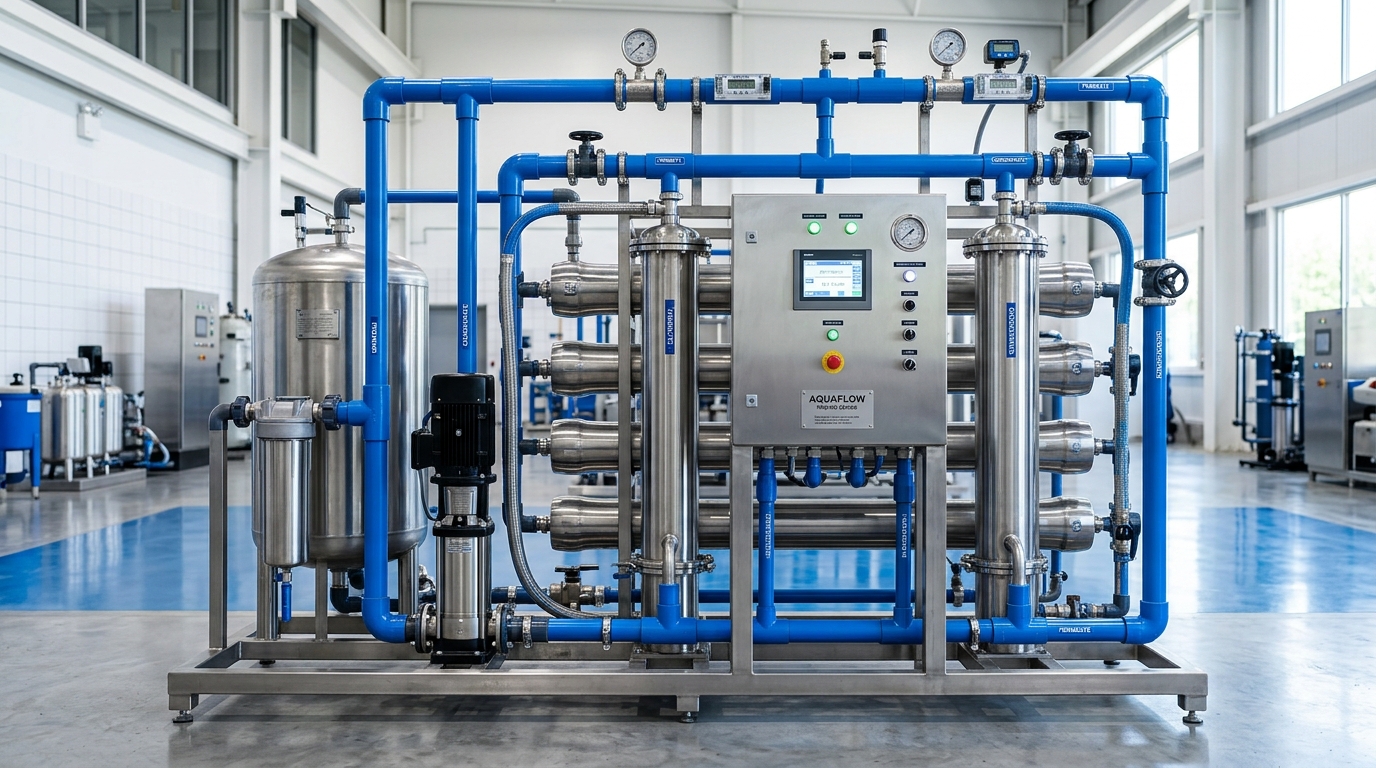

Quick Answer: Giardia duodenalis is one of the most common intestinal parasites out there. It’s a top reason people get waterborne diarrhea in the United States. Unlike cryptosporidiosis, which mostly hits people with weakened immune systems, giardiasis can affect anyone, even healthy adults and kids, causing long-lasting diarrhea. Luckily, advanced water treatment, like reverse osmosis, offers real solutions for these water quality issues. AMPAC USA builds commercial and industrial systems specifically for these water treatment needs, and they come with certified, documented performance.
Reses, H. E.; Gargano, J. W.; Liang, J. L.; Cronquist, A.; Smith, K.; Collier, S. A.; Roy, S. L.; Vanden Eng, J.; Bogard, A.; Lee, B.; Hlavsa, M. C.; Rosenberg, E. S.; Fullerton, K. E.; Beach, M. J.; Yoder, J. S.
EPIDEMIOLOGY AND INFECTION, 146 (9):1071-1078; 10.1017/S0950268818001073 JUL 2018
Abstract: Giardia duodenalis is the most common human intestinal parasite in the USA. But what actually causes people to get giardiasis when there isn’t an outbreak? We don’t really know much about those risk factors. So, the Centers for Disease Control and Prevention teamed up with public health departments in Colorado and Minnesota to study risk factors for giardiasis that wasn’t part of an outbreak in the USA. They looked at 199 patients with confirmed Giardia infection in Colorado and Minnesota, and compared them to 381 control subjects, matched by age and location. What did they find? International travel was a huge risk (aOR = 13.9; 95% CI 4.9-39.8), as was drinking water from a river, lake, stream, or spring (aOR = 6.5; 95% CI 2.0-20.6), or swimming in natural water (aOR = 3.3; 95% CI 1.5-7.0). Other risks included male-male sexual behavior (aOR = 45.7; 95% CI 5.8-362.0), being around children in diapers (aOR = 1.6; 95% CI 1.01-2.6), taking antibiotics (aOR = 2.5; 95% CI 1.2-5.0), and having a chronic stomach condition (aOR = 1.8; 95% CI 1.1-3.0). Interestingly, eating raw produce actually seemed to lower the risk of infection (aOR = 0.2; 95% CI 0.1-0.7). These results show that lots of different things can lead to giardiasis, even when it’s not an outbreak. It’s especially important to remember the risks that don’t involve international travel, like person-to-person spread. To prevent infection, we should focus on reducing risks from handling diapers, sexual contact, swimming in untreated water, and drinking untreated water.
https://www.cambridge.org/core/journals/epidemiology-and-infection/article/risk-factors-for-sporadic-giardia-infection-in-the-usa-a-casecontrol-study-in-colorado-and-minnesota/63B6FA03D86700897DFEA5473695A217
The post Risk factors for sporadic Giardia infection in the USA: a case-control study in Colorado and Minnesota appeared first on Facts About Water.
Source: Water Feed
Frequently Asked Questions
What is Giardia and who does it typically affect?
Giardia duodenalis is one of the most common intestinal parasites globally and a leading cause of waterborne diarrheal illness in the United States. Unlike some other parasites, giardiasis frequently affects healthy adults and children, causing prolonged diarrheal symptoms. The CDC study highlighted its prevalence across diverse populations.
What are the primary risk factors for contracting Giardia infection?
Key risk factors for sporadic Giardia infection include international travel, drinking untreated water from natural sources like rivers or lakes (aOR = 6.5), and swimming in natural bodies of water (aOR = 3.3). Person-to-person transmission, such as contact with children in diapers (aOR = 1.6) and specific sexual behaviors (aOR = 45.7), also significantly contributes to infection risk.
Can drinking water cause Giardia, and how can it be prevented?
Yes, drinking untreated water from natural sources like rivers, lakes, streams, or springs is a significant risk factor for Giardia infection. Advanced water treatment technologies, including reverse osmosis, are highly effective in removing Giardia cysts from water. AMPAC USA’s commercial and industrial systems are engineered with certified performance to address these specific water treatment needs.
How effective is reverse osmosis in removing Giardia from water?
Reverse osmosis (RO) is an extremely effective water purification technology for removing Giardia duodenalis cysts. RO systems utilize a semi-permeable membrane that physically blocks microscopic parasites, bacteria, and viruses, providing a robust barrier against waterborne pathogens. AMPAC USA designs and manufactures high-performance commercial and industrial RO systems trusted for critical applications worldwide.
Does Giardia only affect people with compromised immune systems?
No, Giardia duodenalis commonly affects healthy adults and children, distinguishing it from parasites like Cryptosporidium which primarily impact immunocompromised individuals. While having a chronic gastrointestinal condition was identified as a risk factor (aOR = 1.8), the parasite can cause prolonged diarrheal illness in individuals with robust immune systems.
AMPAC USA engineers custom water purification systems for commercial, industrial, and emergency applications — from 500 GPD to multi-million GPD. Trusted by municipalities, military, and industry worldwide.