


The post appeared first on . Source: Water Feed What are PFAAs and why are they a concern in drinking water? What were the average PFAA levels found in Chinese drinking water according to the study? Which regions in China showed the highest PFAA contamination in drinking water? What factors contribute to PFAA contamination in drinking water? How can PFAAs be effectively removed from contaminated drinking water? AMPAC USA engineers custom water purification systems for commercial, industrial, and emergency applications — from 500 GPD to multi-million GPD. Trusted by municipalities, military, and industry worldwide.Related Articles
Frequently Asked Questions
Perfluoroalkyl acids (PFAAs) are a group of emerging persistent organic pollutants (POPs) ubiquitously detected in environmental media. They are concerning due to their persistence, bioaccumulation potential, and widespread presence in drinking water, posing potential risks to human health. This study investigated 17 priority PFAAs, highlighting their prevalence and distribution across China.
A national study across 79 cities in China found the sum concentrations of 17 PFAAs (Sigma(17)PFAAs) in drinking water ranged from 4.49 to 174.93 ng/L, with a mean value of 35.13 ng/L. Perfluorobutanoic acid (PFBA) was the most abundant individual PFAA, with a median concentration of 17.87 ng/L, followed by PFOA, PFNA, and PFOS.
The study revealed that Southwestern China had the highest average PFAA contamination, with 57.67 ng/L. This was followed by Eastern coastal China (32.85 ng/L), Middle China (29.89 ng/L), Northwestern China (28.49 ng/L), and Northeastern China (22.03 ng/L), indicating significant regional variations in PFAA distribution.
The study identified industrial sources as a positive contributor to PFAA contamination levels in drinking water. Socioeconomic factors like population density and GDP also played a role, with positive correlations observed in towns. Additionally, pollution levels varied by city size, with medium-sized cities generally showing higher PFAA concentrations than big cities or towns.
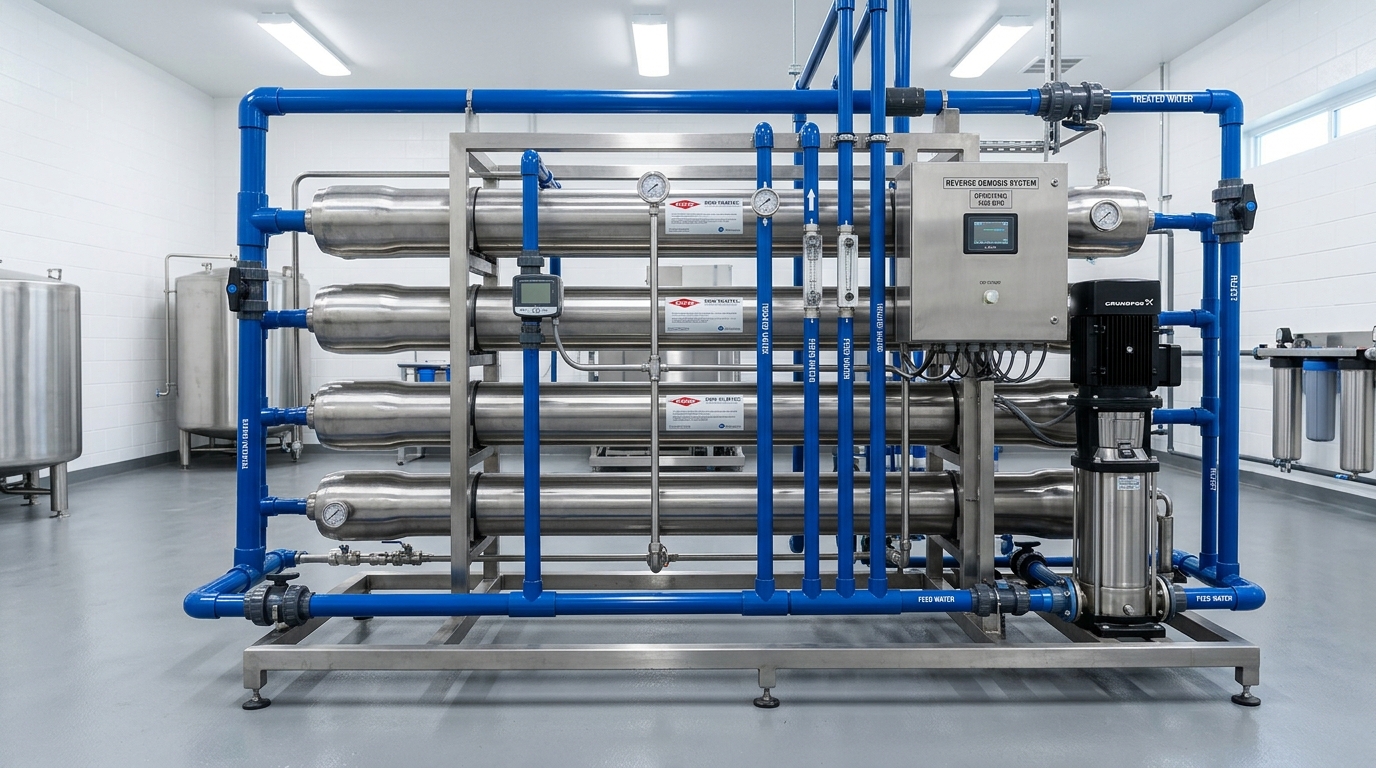
While not explicitly detailed in this study, AMPAC USA’s expertise confirms that advanced water purification technologies are highly effective for PFAA removal. Reverse osmosis (RO) systems, like those designed by AMPAC USA for commercial and industrial applications, are proven to significantly reduce PFAA concentrations. Granular activated carbon (GAC) filtration can also be effective, often used in conjunction with RO for comprehensive treatment.
Need a Water Treatment Solution?

About AMPAC USA
AMPAC USA manufactures advanced reverse osmosis and water purification systems for industrial, commercial, marine, and residential applications worldwide.
Visit AMPAC USACategories
Recent Posts
-
 Why Water Filling Stations Are Replacing Bottled Water on Campuses and in Communities
-
 The Water Behind the Machines: Why Industrial Nations Are Running Short - And What is Being Done About It
-
 PFAS and Endocrine Disruptors in Your Tap Water: What They Are and What Actually Removes Them
-
 What's Actually Living in Your Tap Water - And How UV and RO Stop It
-
 Does Purified Water Strip Out Essential Minerals? What the Research Actually Shows