Sohyun Park 1, Stephen J Onufrak 1, Angie L Cradock 2, Christina Hecht 3, Anisha Patel 4, Jennifer R Chevinsky 1, Heidi M Blanck 1\\n\\nhttps://pubmed.ncbi.nlm.nih.gov/35081754/\\n
Abstract
\\n
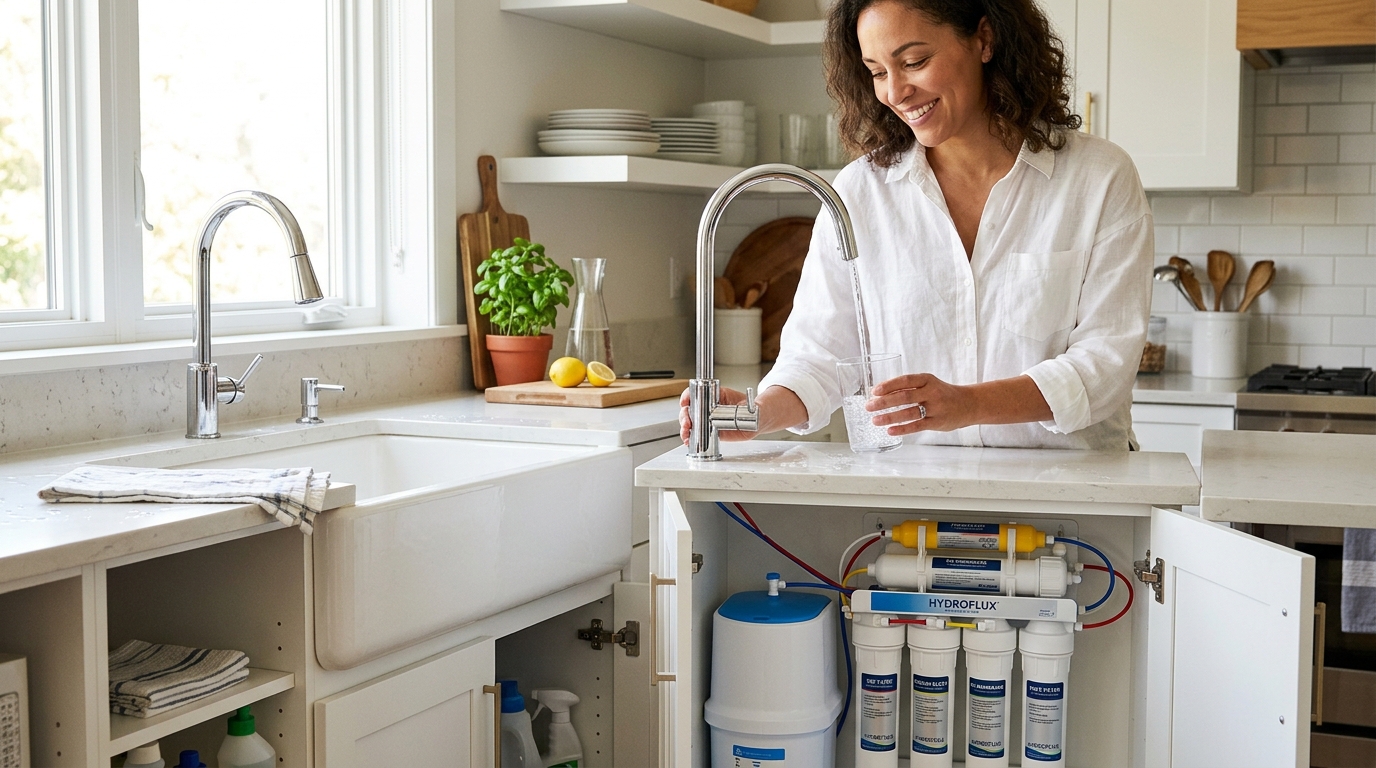
\\n\\nObjective: We wanted to see what makes people use a water filter for tap water at home. We also looked at how that choice affects how much plain water and sugary drinks they consume.\\n\\nDesign: This was a quantitative, cross-sectional study.\\n\\nSetting: We used data from the 2018 SummerStyles survey.\\n\\nSubjects: Our study included 4042 U.S. adults, all 18 years or older.\\n\\nMeasures: We measured how much plain water (tap or bottled) and sugary drinks people drank. Our main focus was whether they used a water filter (yes, no, or didn’t drink tap water at home). We also considered things like their age, where they lived, their weight, and if they owned their home.\\n\\nAnalysis: We ran some statistical tests, called multivariable logistic regressions. This helped us figure out the odds of someone drinking more than 3 cups of tap water, bottled water, or total plain water per day, or drinking sugary drinks at least once a day, based on whether they used a water filter.\\n\\nResults: About 36% of adults said they used a filter for their tap water at home. Another 14% didn’t drink tap water at all. Interestingly, Hispanic adults were more likely to use a water filter (1.50 times higher odds) compared to non-Hispanic White adults. On the flip side, people with less education (0.69 times lower odds for less than high school, 0.78 times lower odds for some college vs. college graduates), those not married (0.81 times lower odds vs. married/domestic partnership), and those with lower household incomes (0.68 times lower odds for under $35,000 vs. over $100,000) were less likely to use a filter. Using a water filter meant people were more likely to drink over 3 cups of tap water daily (1.33 times higher odds) and less likely to drink sugary drinks at least once a day (0.76 times lower odds). If someone didn’t drink tap water at home, they were much more likely to drink over 3 cups of bottled water daily (3.46 times higher odds).\\n\\nConclusions: Using a water filter seems to encourage U.S. adults to drink more tap water and fewer sugary drinks. We also saw that filter use was higher among Hispanic adults, but lower for people with less education, lower incomes, or who weren’t married. While filter use connects to healthier drink choices, we should also think about things like source water quality, dental health, cost, and making sure filters are used correctly.\\n\\n
\\nKeywords: characteristics; plain water; sociodemographic; sugar-sweetened beverages; water filter.\\n\\nThe post Factors Related to Water Filter Use for Drinking Tap Water at Home and Its Association With Consuming Plain Water and Sugar-Sweetened Beverages Among U.S. Adults appeared first on Facts About Water.\\n\\nSource: Water Feed\n
Related reading: Association of Caloric Intake From Sugar-Sweetened Beverages With Water Intake Among US Children and Young Adults in the 2011-2016 National Health and Nutrition Examination Survey, Opposing Consumption Trends for Sugar-Sweetened Beverages and Plain Drinking Water: Analyses of NHANES 2011 – 16 Data, How to Choose the Right Water Filter for Your Home in the USA.
Need a Water Treatment Solution?AMPAC USA engineers custom water purification systems for commercial, industrial, and emergency applications — from 500 GPD to multi-million GPD. Trusted by municipalities, military, and industry worldwide.