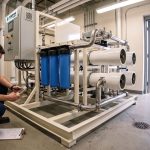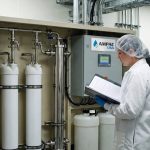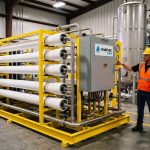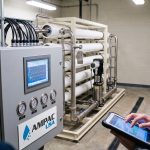

Whenever someone talks about water purification, two terms that pop into the head are Residential Reverse Osmosis and Commercial Reverse Osmosis. The names are quite self-explanatory. Residential reverse osmosis is for meeting the small water needs of a person or a family. In contrast, commercial reverse osmosis is for catering the water needs of a commercial establishment. Here you can know how these technologies differ.
Quantity
The water needs of a house no matter how lavish or extravagant they are would most probably be lower than the needs of a commercial establishment. So, the equipment needs to purify the water needs to produce lower gallons for a home rather than a commercial property.
Specificity
The commercial RO systems are usually designed to meet the water needs of a specific industry. For instance, the requirements of a food processing unit would be different from a pharmaceutical company. So, the RO system must meet those needs. In contrast, the systems designed for home use are usually similar and have menial differences.
Customization
There is hardly any need to customize a RO system built for home use. But a RO system for commercial purposes needs to be customized often to ensure that it meets the quality standards and expectations of the buyer. So, the latter needs more time to be designed, manufactured and installed rather than the former.
Want One? Get One…
Now, if you have understood the residential reverse osmosis vs. commercial reverse osmosis and you want to buy one for your or your company’s needs, feel free to contact the team of AMPAC USA. We are among the leading quality manufacturers of water treatment systems, and we use top of the line technologies to ensure perfect water purity. All the systems can be customized for your needs and made to work perfectly thanks to the stringent quality criterion we have established internally. All the products we design, manufacture, deliver and help install not only meet but exceed customer expectations. Call 909-548-4900 for inquiries and let our customer service team guide you in the right manner.
Frequently Asked Questions
What is the typical water production capacity of residential vs. commercial RO systems?
Residential reverse osmosis systems generally produce 50–100 gallons per day (GPD) for household needs. In contrast, commercial and industrial RO systems, like those from AMPAC USA, are engineered for significantly higher capacities, often thousands of GPD, to support continuous operations in various industries.
How do commercial RO systems differ in design and customization from residential units?
Commercial RO systems are highly customized to meet specific industry standards and water quality requirements, such as those for food processing or pharmaceutical production, often featuring robust components and advanced controls. Residential systems are typically standardized for general home use with menial differences.
Do residential and commercial RO systems use the same purification technology?
Yes, both residential and commercial reverse osmosis systems utilize the same fundamental purification technology, employing TFC polyamide membranes for filtration, along with pre-filtration and post-treatment stages. The primary distinction lies in the scale, durability, and engineering complexity of these components.
What feed pressure is typically required for residential reverse osmosis systems?
Residential reverse osmosis systems typically operate efficiently with a feed pressure ranging from 40 to 80 psi. Commercial and industrial systems, however, are designed to handle a broader spectrum of pressures and often integrate booster pumps to ensure optimal performance in high-demand applications.
Why is customization crucial for commercial reverse osmosis systems?
Customization is crucial for commercial RO systems because industrial applications have unique water quality standards, flow rates, and operational demands. AMPAC USA engineers design bespoke systems to meet these precise requirements, ensuring compliance, efficiency, and reliable performance for specific sectors like military bases or luxury resorts.
Conclusion
This post explored how reverse osmosis technology delivers high-purity water across a wide range of residential, commercial, and industrial applications. For businesses and organizations requiring reliable RO purification, AMPAC USA engineers custom systems tailored to your specific water quality requirements and flow demands. Contact our team at info@ampac1.com or (909) 548-4900 to discuss your water treatment needs.
AMPAC USA engineers custom water purification systems for commercial, industrial, and emergency applications — from 500 GPD to multi-million GPD. Trusted by municipalities, military, and industry worldwide.