
Industrial wastewater isn’t just “dirty water.” It’s a complex mix of chemical, biological, and physical contaminants generated by manufacturing processes – and it requires treatment approaches that bear little resemblance to what a municipal water plant handles. Here are the questions most facilities and engineers ask when starting to work through industrial wastewater management.
What Is Industrial Wastewater?
Industrial wastewater is any water that’s been used in a manufacturing, processing, or industrial operation and changed in quality as a result. This includes:
- Process water (water incorporated into or contacting a product)
- Cooling water (water used for heat exchange, may contain corrosion inhibitors)
- Cleaning and sanitation water (high detergent/sanitizer concentration)
- Boiler blowdown (concentrated dissolved solids)
- Stormwater runoff from industrial sites
Unlike domestic wastewater – which is primarily organic waste and suspended solids – industrial wastewater varies enormously by industry and process. A semiconductor fab’s wastewater contains trace metals and specialty chemicals. A food processing plant’s wastewater is high in biological oxygen demand (BOD) and fats/oils/grease. A power plant’s discharge is primarily thermal (hot water). Each requires different treatment.
What Regulations Govern Industrial Wastewater?
In the U.S., industrial wastewater discharge is primarily regulated under:
The Clean Water Act (CWA): Prohibits unpermitted point-source discharge of pollutants to U.S. waters. National Pollutant Discharge Elimination System (NPDES) permits set specific limits on what can be discharged and require monitoring and reporting.
Effluent guidelines: EPA publishes industry-specific effluent guidelines setting technology-based standards for 56 categories of industries, from petroleum refining to textile manufacturing. These define the minimum treatment required before discharge.
Pretreatment standards: Facilities discharging to municipal sewer systems (indirect discharge) must meet pretreatment standards to avoid interfering with the municipal treatment plant’s operations or pass-through of regulated pollutants.
State and local regulations often exceed federal minimums. Facilities must comply with the most stringent applicable standard.
What Are the Main Industrial Wastewater Treatment Methods?
Treatment is typically organized in three stages:
Primary treatment (physical): Removal of suspended solids, oils, greases, and settleable materials through screening, sedimentation, flotation, or filtration. Primarily physical separation – no chemical reactions involved.
Secondary treatment (biological): Biological processes (activated sludge, sequencing batch reactors, anaerobic digestion) to reduce biochemical oxygen demand (BOD) and organic contaminants. Essential for high-BOD wastewaters from food, beverage, pulp/paper, and pharmaceutical industries.
Tertiary treatment (advanced): Technologies for targeted contaminant removal after primary and secondary treatment:
- Reverse osmosis: For dissolved salts, heavy metals, TDS reduction, PFAS, nitrates
- Ion exchange: Specific ion removal (metals, nitrates, hardness)
- Activated carbon: Organics, trace contaminants, volatile compounds
- UV disinfection: Pathogen elimination without chemical addition
- Chemical precipitation: Heavy metal removal
When Is Reverse Osmosis Required for Industrial Wastewater?
RO is the technology of choice when:
- TDS reduction is required: RO removes 97-99.5% of dissolved solids. No other single-stage technology achieves this broad spectrum removal.
- PFAS treatment is required: EPA designated RO as a Best Available Technology (BAT) for PFAS MCL compliance in 2024. Coal ash leachate, industrial fire training area runoff, and semiconductor wastewater are common sources.
- Water reuse is planned: Closed-loop systems that recycle process water or cooling tower water need RO-quality permeate for the process requirements.
- Zero Liquid Discharge (ZLD) is required: RO is the first stage of most ZLD trains, maximizing water recovery before evaporation/crystallization handles the remaining concentrate.
What Is Zero Liquid Discharge, and Is It Required?
Zero Liquid Discharge is a treatment strategy that eliminates all liquid wastewater discharge – 100% of water is either recycled internally or converted to solid/semi-solid waste for disposal. ZLD is required in some states and industries with strict discharge limits, or chosen voluntarily in water-scarce regions or where discharge permitting is costly.
A typical ZLD train: RO (to concentrate the waste stream and recover clean water) → mechanical vapor recompression (MVR) or multi-effect evaporation → crystallizer → solid waste handling. The ZLD market is valued at $7.39 billion in 2025 and growing at 8.34% CAGR, driven by tightening discharge regulations in semiconductor, power, and chemical industries.
How Do You Determine the Right Treatment System?
The right system starts with a comprehensive wastewater characterization:
- Define the contaminants present and their concentrations (full analytical panel)
- Establish the discharge standard you must meet (NPDES permit, pretreatment standard, or internal reuse requirement)
- Calculate flow rate and variability (peak vs. average flow)
- Assess site constraints (space, power availability, existing infrastructure)
- Evaluate capital vs. operating cost trade-offs for candidate technologies
The EPA’s Effluent Guidelines development process documents what treatment technologies have been demonstrated to be technically and economically achievable in each industry – a useful starting point for any facility working through this analysis.
AMPAC USA builds SBR-based industrial wastewater treatment plants sized from this flow and effluent data.
What Happens to Industrial Wastewater Sludge?
Primary and secondary treatment generates sludge – concentrated solids removed from the wastewater. Depending on composition, industrial sludge may be:
- Beneficial reuse: Land application for non-hazardous sludge with appropriate nutrient content
- Landfill disposal: For non-hazardous waste meeting disposal requirements
- Hazardous waste disposal: For sludge containing heavy metals, PCBs, or other listed hazardous materials – requiring permitted hazardous waste disposal facilities
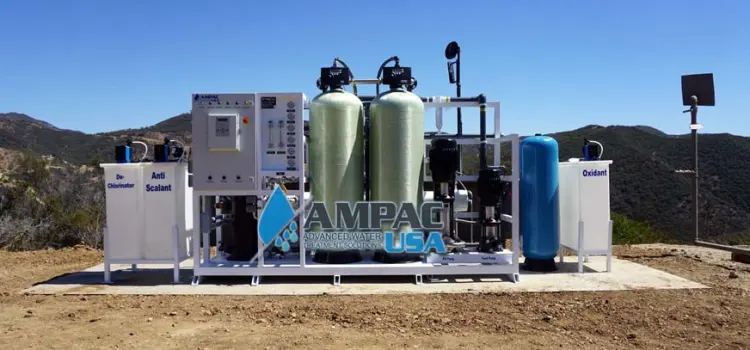
AMPAC USA’s industrial RO systems are deployed in industrial wastewater treatment applications across pharmaceutical, food/beverage, power generation, and manufacturing sectors – delivering compliant discharge or high-quality reuse water for closed-loop operations.
Related: For industrial wastewater treatment and reuse, see the AMPAC USA grey water treatment systems. High-volume industrial applications are covered in our industrial RO buyer guide.
Related: For industrial wastewater treatment and reuse, see AMPAC USA grey water treatment systems. High-volume industrial applications are covered in our industrial RO buyer guide.
Frequently Asked Questions
How does industrial wastewater differ from municipal or residential wastewater?
Industrial wastewater is a by-product of manufacturing processes, containing a higher concentration of hazardous industrial chemicals, heavy metals, and suspended particles. Unlike residential or commercial wastewater, it poses a far greater environmental risk due to its complex composition from processes like cooling, fabricating, and chemical use.
What are the main hazardous constituents found in industrial wastewater?
Industrial wastewater typically contains suspended solids that form sludge, biodegradable organics like proteins and fats, and various industrial chemicals and water conditioners. It also frequently includes pathogens, high levels of nitrogen, phosphorus, carbon, and heavy metals, all of which require specialized treatment to prevent environmental harm.
Why is industrial wastewater treatment essential for environmental protection?
Treating industrial wastewater is critical to prevent severe land, groundwater, and surface water pollution, which has threatened ecosystems since the 1950s. Untreated discharge depletes natural oxygen, creates septic conditions, and introduces harmful chemicals and metals, making water unfit for reuse and exacerbating global water scarcity.
Which industrial sectors are major contributors to wastewater generation?
Industries extensively using water for processes like cooling, cleaning, fabricating, and processing are significant contributors. This includes smelting facilities, chemical industries, petroleum refineries, and food and paper manufacturing plants. AMPAC USA engineers have direct field experience with these diverse applications.
What are the environmental consequences of discharging untreated industrial wastewater?
Discharging untreated industrial wastewater leads to severe land and groundwater pollution, contaminating lakes, rivers, and streams. This causes an imbalance by depleting natural oxygen, creating septic conditions, and introducing hazardous substances like heavy metals and pathogens, which threaten aquatic life and human health.
How does municipal and industrial wastewater engineering actually treat contaminated water?
Municipal and industrial wastewater engineering combines chemical treatment (coagulation, pH adjustment, disinfection) with a biological process that uses microorganisms to break down organic material before final polishing. At a typical wastewater treatment plant, water moves through primary settling, biological treatment, and tertiary filtration or reverse osmosis before discharge or reuse. AMPAC USA designs the treatment and reverse osmosis stage of this process for facilities that need to meet strict discharge limits – see our brackish and industrial water treatment solutions for related configurations.
AMPAC USA engineers custom water purification systems for commercial, industrial, and emergency applications — from 500 GPD to multi-million GPD. Trusted by municipalities, military, and industry worldwide.