

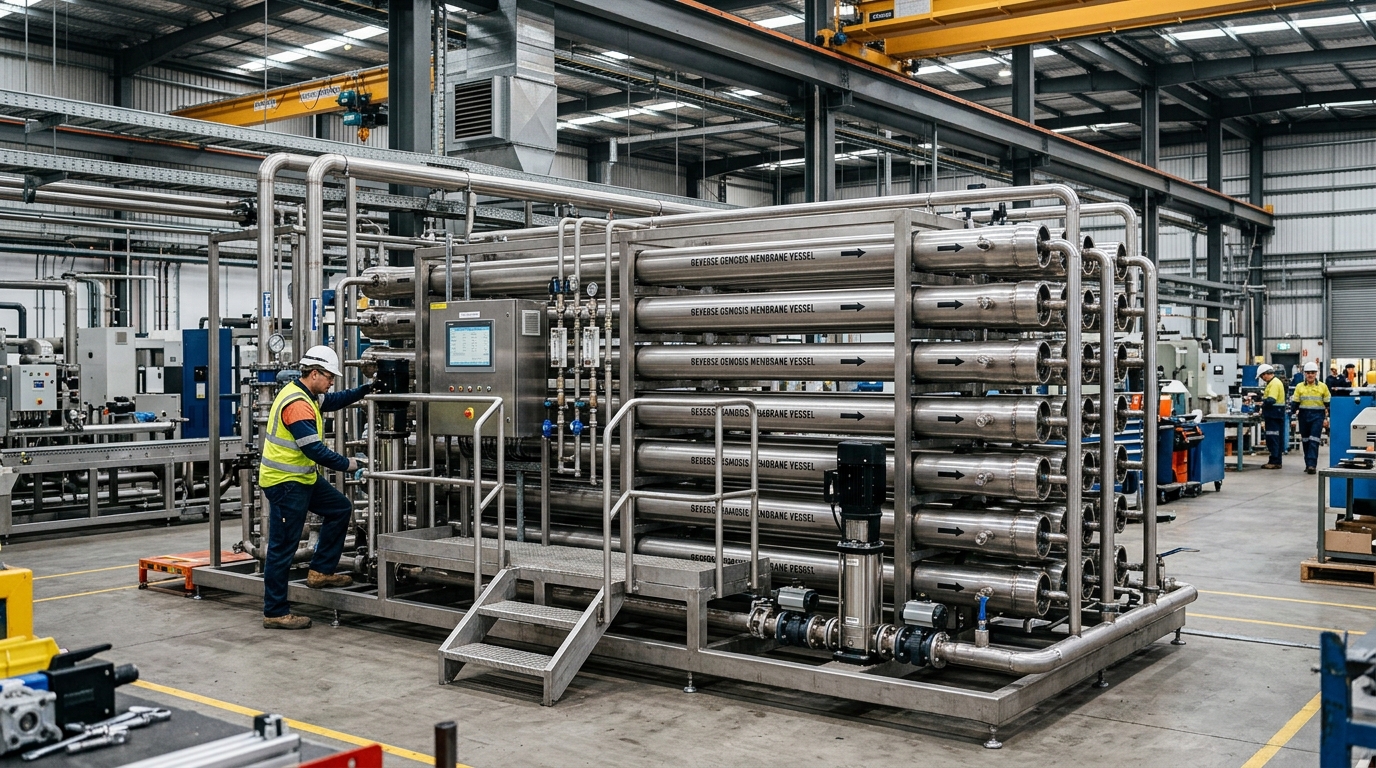

The post appeared first on . Source: Water Feed A Quantitative Microbial Risk Assessment (QMRA) is a systematic process used to evaluate the microbial safety of drinking water. It assesses the potential for infection from specific pathogens, like adenovirus, to ensure compliance with health-based targets, such as less than one infection per 10,000 persons per year. This rigorous assessment helps water suppliers, like those AMPAC USA serves, optimize treatment strategies and maintain public health. The study indicates that UV disinfection alone, at doses of 40 mJ/cm² or 73 mJ/cm², was insufficient to reduce adenovirus levels to meet health-based targets without additional treatment. While UV is a critical component in multi-barrier approaches, AMPAC USA emphasizes that it often requires combination with other disinfection methods, like chlorine dioxide, for comprehensive viral inactivation. Chlorine dioxide was found to be a highly effective treatment step for adenovirus, even at low initial concentrations of 0.05-0.1 mg/l. This study demonstrated that chlorine dioxide at these levels could sufficiently treat water to meet health-based targets on its own. AMPAC USA designs systems that leverage such efficient chemical disinfection for robust water purification across various applications. The health-based target for safe drinking water, as referenced in the Dutch Drinking Water Act, is set at less than one infection per 10,000 persons per year. This stringent standard guides water treatment plants in conducting QMRAs to ensure the continuous microbial safety of their water supply. AMPAC USA’s systems are engineered to help clients consistently achieve and surpass such critical safety benchmarks globally. For UV irradiation, somatic coliphages were identified as a good, conservative indicator for adenovirus disinfection efficiency. Similarly, bacteriophage MS2 proved to be a reliable, conservative indicator for assessing chlorine dioxide disinfection. These indicators help water treatment specialists, including AMPAC USA’s engineers, evaluate and validate the performance of their purification systems in real-world scenarios. AMPAC USA engineers custom water purification systems for commercial, industrial, and emergency applications — from 500 GPD to multi-million GPD. Trusted by municipalities, military, and industry worldwide.Related Articles
Frequently Asked Questions
What is a Quantitative Microbial Risk Assessment (QMRA) in drinking water?
Is UV disinfection alone effective against adenovirus in drinking water?
What concentration of chlorine dioxide is effective for adenovirus removal in drinking water?
What are the health-based targets for microbial safety in drinking water?
What indicators are used to assess disinfection efficiency for adenovirus in drinking water?
Need a Water Treatment Solution?

About AMPAC USA
AMPAC USA manufactures advanced reverse osmosis and water purification systems for industrial, commercial, marine, and residential applications worldwide.
Visit AMPAC USACategories
Recent Posts
-
 Best Water for Baby Formula: Tap, Distilled, Nursery, Bottled or Filtered?
-
 Commercial RO System Maintenance: The Complete Annual Schedule
-
 Aging Pipes, Rising Advisories: On-Site RO as Business Continuity Insurance
-
 Ultrapure Water Demand Is Outpacing Supply: A Lab Water Guide for GMP Facility Engineers
-
 Zero Liquid Discharge Goes Mainstream: A Practical Entry Point for Manufacturers