
Home Products Industries Applications Solutions Support Insights Contact Us
Back to Blog
May 27, 2019·4 min read
transformation of endocrine disrupting chemicals pharmaceutical and personal care products during drinking water disinfection

Transformation of endocrine disrupting chemicals, pharmaceutical and personal care products during drinking water disinfection

Transformation of endocrine disrupting chemicals, pharmaceutical and personal care products during drinking water disinfection

By:Leusch, FDL (Leusch, Frederic D. L.)1 ] ; Neale, PA (Neale, Peta A.)1 ] ; Busetti, F (Busetti, Francesco)2,3 ] ; Card, M (Card, Marcella)4,9 ] ; Humpage, A (Humpage, Andrew)5 ] ; Orbell, JD (Orbell, John D.)6 ] ; Ridgway, HF (Ridgway, Harry F.)7 ] ; Stewart, MB (Stewart, Matthew B.)6 ] ; van de Merwe, JP (van de Merwe, Jason P.)1 ] ; Escher, BI (Escher, Beate, I)1,4,8 ]

View ResearcherID and ORCID

SCIENCE OF THE TOTAL ENVIRONMENT

Volume: 657

Pages: 1480-1490

DOI: 10.1016/j.scitotenv.2018.12.106

Published: MAR 20 2019

Document Type:Article

Abstract

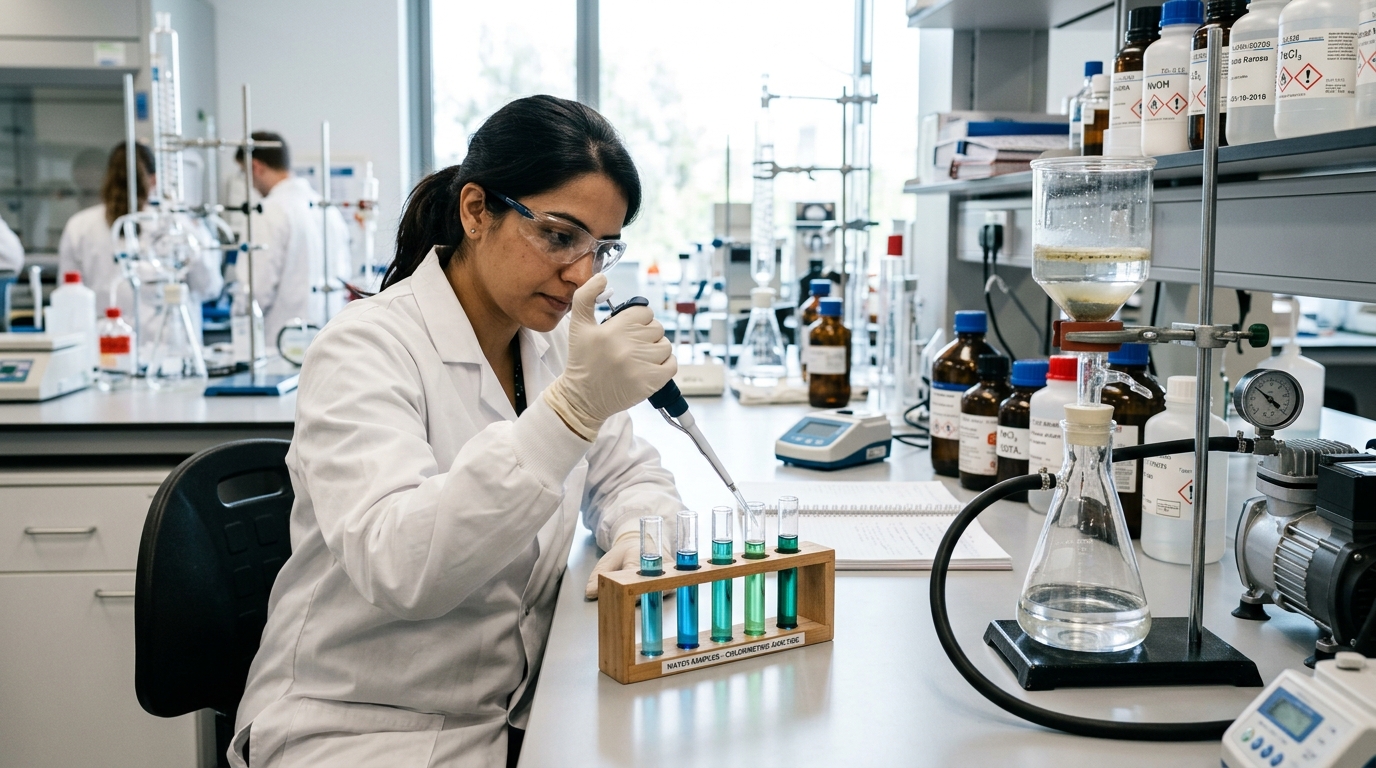
Pharmaceuticals and personal care products (PPCPs) and endocrine disrupting compounds (EDCs) are frequently detected in drinking water sources. This raises concerns about the formation of potentially more toxic transformation products (TPs) after drinking water disinfection. This study applied a combination of computational and experimental methods to investigate the biological activity of eight EDCs and PPCPs commonly detected in source waters (acetaminophen, bisphenol A, carbamazepine, estrone, 17 alpha-ahinylestradiol, gemfibrozil, naproxen and triclosan) before and after disinfection. Using a Stepped Forced Molecular Dynamics (SFMD) method, we detected 911 unique TPs, 36% of which have been previously reported in the scientific literature. We calculated the likelihood that TPs would cause damage to biomolecules or DNA relative to the parent compound based on lipophilicity and the occurrence of structural alerts, and applied two Quantitative Structure-Activity Relationship (QSAR) tools to predict toxicity via receptor-mediated effects. In parallel, batch experiments were performed with three disinfectants, chlorine, chlorine dioxide and chloramine. After solid-phase extraction, the resulting TP mixtures were analyzed by chemical analysis and a battery of eleven in vitro bioassays covering a variety of endpoints. The laboratory results were in good agreement with the predictions. Overall, the combination of computational and experimental chemistry and toxicity methods used in this study suggest that disinfection of the studied EDCs and PPCPs will produce a large number of TPs, which are unlikely to increase specific toxicity (e.g., endocrine activity), but may result in increased reactive and non-specific toxicity. (C) 2018 Elsevier B.V. All rights reserved.

http://cel.webofknowledge.com/InboundService.do?customersID=Alerting&smartRedirect=yes&mode=FullRecord&IsProductCode=Yes&product=CEL&Init=Yes&Func=Frame&action=retrieve&SrcApp=Alerting&SrcAuth=Alerting&SID=7AB9JBL94nddc3l9SEp&UT=WOS%3A000455903400144

The post Transformation of endocrine disrupting chemicals, pharmaceutical and personal care products during drinking water disinfection appeared first on Facts About Water.

Source: Water Feed

Frequently Asked Questions

How quickly can an emergency water purification unit be deployed?

AMPAC USA's EPRO and mobile RO units can be operational within 30–60 minutes of arrival on-site. Trailer-mounted and skid-mounted systems are pre-plumbed and pre-wired, requiring only connection to a power source and water source. Units treat river water, lake water, or brackish groundwater.

What flow rates are available for emergency water treatment?

AMPAC USA's emergency systems range from 1,500 GPD portable units to 50,000+ GPD trailer-mounted systems. Military-specification units are available for forward operating base deployment, producing potable water meeting EPA and WHO drinking water standards from virtually any source.

Are emergency RO systems suitable for disaster relief operations?

Yes. AMPAC USA's emergency systems are used by FEMA, the U.S. military, and international NGOs for disaster relief. They treat flood water, contaminated groundwater, and brackish sources, removing bacteria, viruses, and chemical contaminants to produce safe drinking water on-site.

What power sources can emergency water purification systems use?

AMPAC USA's emergency systems can run on generator power (120/240V or 480V 3-phase), solar panels with battery backup, or vehicle power take-off (PTO). Low-power models consume as little as 0.5 kW, making them viable for off-grid deployment.

How durable are military-grade water purification systems?

AMPAC USA's military systems are built to MIL-SPEC standards with stainless steel frames, powder-coated components, and UV-resistant materials. They are designed to operate in temperatures from -20°F to 120°F and are vibration-tested for transport in military vehicles.

Conclusion

This post highlighted how emergency and military-grade water purification systems provide safe drinking water rapidly in the most challenging field conditions. For organizations requiring deployable water treatment capability, AMPAC USA engineers portable and trailer-mounted systems built to perform wherever they are needed. Contact our team at [email protected] or (909) 548-4900 to discuss your emergency water treatment requirements.

Scroll to Top