

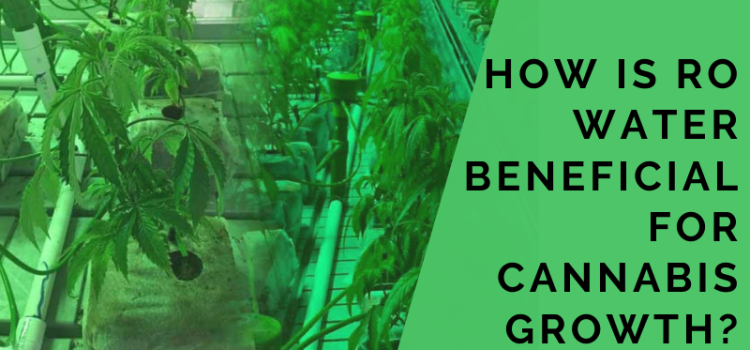

Most folks know reverse osmosis (RO) water as the gold standard for purity. It’s contamination-free, essential for the pharmaceutical industry—think production, preparation, and formulation of countless medicinal products. Given that, it’s hardly a leap to see why RO systems are now critical for planting and growing cannabis.
Are you a cannabis grower aiming for top-tier results? Then you absolutely need to understand the benefits of RO water for cannabis cultivation. It’s a game changer.
Who Needs RO Water for Cannabis Cultivation Most?
Frankly, any region with questionable tap water quality—be it a country, state, or city—stands to gain the most from RO water in cannabis cultivation. Here’s the thing: if you wouldn’t drink the water straight from the tap, why would you feed it to your plants? Your crop relies on you for its entire environment, and that starts with clean water.
How to Check Your Tap Water Quality?
Unsure about your local tap water? Reach out to your water provider. Demand a detailed mineral profile. Beyond that, make sure the water has been tested for radioactivity, chemical pollutants, and any bacterial or microbial contaminants.
On top of that, check for fluoride or chlorine in your local water supply. We’ve seen firsthand how these chemicals can absolutely wreck healthy microbial growth. They’ll kill off beneficial microbes you add in your nutrients, or worse, sterilize your entire grow medium.
How RO Water Helps with Cannabis Cultivation?
The reverse osmosis process is incredibly effective. It strips out virtually everything: pollutants, bacteria, microbes, radioactive elements, chlorine, fluoride, and heavy metals. After all RO stages, you’re left with truly contamination-free water.
Don’t Forget the Mineral Profile
When water runs through the RO process, it strips *all* minerals. That’s why, in our experience, choosing an RO system with a remineralization stage is crucial. It puts back the essential minerals your plants need. Honestly, most first-time buyers overlook this.
Without those added minerals, RO water can actually deplete your plants of vital calcium and magnesium. You don’t want that.
Why is RO Better than Other Water Treatment Methods for Cannabis Cultivation?
RO is hands-down the most reliable water treatment process. It purifies water by forcing it through a semi-permeable membrane — typically around 0.0001 microns. This pressure filtration ensures virtually no contaminants remain, leaving minimal Total Dissolved Solids (TDS).
Why is RO superior? Simple: transparency and control. With RO water, you know exactly what’s in your water—practically nothing. This means you, the grower, are always in complete command of your nutrient profile.
The Bottom Line: RO for Cannabis
Bottom line: The benefits of RO water for cannabis cultivation are undeniable. From clean, thriving clones to robust, healthy flowers, it gives you a distinct advantage. You gain absolute control over your water, directly boosting plant growth and overall quality.
Need an RO System for Your Cannabis Grow? Talk to AMPAC USA.
If you’re ready for a dedicated RO water filter for your cannabis cultivation, contact AMPAC USA. We’ve been designing and manufacturing commercial/industrial systems for over 30 years, serving small and large-scale cannabis growers with customized solutions. We understand your specific water needs. To learn more, visit us here or call our experts directly at 909-548-4900.
Related Articles
- Why Reverse Osmosis Water Is a Must for Cannabis Growers
- The Relation Between Cannabis Growth and Water Quality- Ampac USA
- What is a Mobile Water System and How is it Beneficial?
- RO Water Quality: What TDS, pH, and Conductivity Actually Mean for Your System
Conclusion
Dialing in RO water for cannabis really comes down to control: starting from a low, controlled TDS baseline means every nutrient you add is intentional, not fighting against whatever was already in the tap water. That’s why growers who switch off municipal or well water tend to see more consistent yields and fewer surprises during flowering. Don’t skip the remineralization step, though — plants still need that mineral profile, just one you’re choosing on purpose. Our RO water quality guide breaks down the TDS and pH targets in more detail. Contact our team at info@ampac1.com or (909) 548-4900 to talk about an RO setup for your grow.
Why Cannabis Growers Choose Reverse Osmosis Water
Let’s be direct: water quality is *the* most critical—and controllable—variable in successful cannabis cultivation. Standard municipal tap water typically carries 100-500 ppm of dissolved minerals. We’re talking calcium, magnesium, chlorine, chloramines, sodium—a cocktail that messes with your calibrated nutrient programs. Hard water, especially, is a real headache. High calcium and magnesium can lock out other essential nutrients. Plus, chlorine and chloramines harm beneficial microbial populations crucial for living soil and organic growing media. You want a thriving rhizosphere, not a sterile one.
This is where reverse osmosis shines. RO filtration typically removes 95-99% of dissolved minerals, chlorine, chloramines, heavy metals, and organic compounds. You get water with less than 50 ppm TDS—a true “blank canvas.” This pure water lets cultivators build nutrient solutions from scratch, with absolute accuracy. Professional cannabis operations, in our experience, measure electrical conductivity (EC) to dial in nutrient concentrations. Seedling and clone stages often prefer 0.4-0.8 mS/cm; vegetative growth pushes to 0.8-1.2 mS/cm; and flowering hits 1.4-2.0 mS/cm. With RO water as your foundation, hitting precise EC targets is straightforward, eliminating background mineral interference.
pH management? Equally critical. Cannabis nutrient uptake is incredibly pH-sensitive; hitting the sweet spot is non-negotiable. For hydroponic systems, the optimal range is typically 5.5-6.2; in soil, 6.0-7.0. RO water, while near-neutral pH, boasts very low buffering capacity. This makes pH adjustment surprisingly simple, whether using pH-up (potassium hydroxide) or pH-down (phosphoric acid) solutions. Many commercial facilities we work with pair their AMPAC USA RO systems with automated pH and EC dosing controls. This ensures consistent, round-the-clock nutrient delivery—optimal conditions, no guesswork.
Frequently Asked Questions
What is the ideal TDS for RO water used in cannabis cultivation?
For cannabis cultivation, the ideal TDS (Total Dissolved Solids) for reverse osmosis water is under 50 ppm, often aiming for near-zero. This ultra-pure starting point provides growers unparalleled control, allowing for precise EC/TDS management of nutrient solutions, typically maintained between 600-1400 ppm depending on the plant’s growth stage. This eliminates mineral interference from the water source.
What harmful substances does reverse osmosis remove from water for cannabis plants?
The reverse osmosis process is highly effective at stripping out virtually all harmful substances from water, making it ideal for cannabis. This includes pollutants, bacteria, microbes, radioactive elements, chlorine, fluoride, and heavy metals. After all RO stages, you are left with truly contamination-free water, preventing interference with plant health and nutrient uptake.
Why is a remineralization stage crucial for RO systems used in cannabis cultivation?
A remineralization stage is crucial because while RO effectively strips out contaminants, it also removes all essential minerals. In our experience at AMPAC USA, plants require specific minerals for healthy growth, which must be reintroduced. Choosing an RO system with a remineralization stage ensures your cannabis plants receive the necessary nutrients without relying on the raw water source.
How do common tap water chemicals like chlorine and fluoride impact cannabis growth?
Common tap water chemicals like chlorine and fluoride can severely impact cannabis growth by disrupting the plant’s microbial environment. We’ve seen firsthand how these chemicals can wreck healthy microbial growth, killing off beneficial microbes added in nutrients or even sterilizing the entire grow medium. This compromises nutrient absorption and overall plant vitality.
How can I determine if my tap water is suitable for cannabis cultivation without an RO system?
To assess your tap water’s suitability, first contact your water provider for a detailed mineral profile, including tests for radioactivity, chemical pollutants, and bacterial/microbial contaminants. Specifically check for fluoride or chlorine levels, as these can be detrimental to cannabis. If you wouldn’t drink the water straight from the tap, it’s likely unsuitable for your plants, making an RO system a wise investment.
AMPAC USA engineers custom water purification systems for commercial, industrial, and emergency applications — from 500 GPD to multi-million GPD. Trusted by municipalities, military, and industry worldwide.
