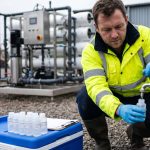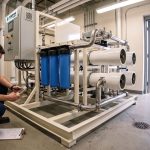

The drought situation in the US and other parts of the world has highlighted the need and worth of installing a seawater desalination plant in the areas that need it the most. As these plants usually need heavy financial investment, every person/organization or government considering this option must know the benefits of a seawater desalination plant, many of which are listed by Ampac USA right here.
Instant Access to Drinking Water
When you have a fully functional plant, you won’t need to worry about access to drinking water. The plant will provide several hundred gallons of pure water every day that can be used for every essential need, be it drinking, cooking, cleaning, sanitization, etc.
Ideal for Droughts and Other Calamities
Having such a plant for pure water also ensures that areas that are prone to droughts and other natural calamities get access to pure water without fail. These plants even work in the remotest areas like deserts as long as the place has some form of water like freshwater, brackish water, or seawater.
Help Preserve Freshwater Sources
Everyone is aware that fresh water sources are scarce, and seawater is available in abundance. So, using a plant for desalination will help convert seawater into pure water and save the already strained freshwater sources for future generations.
Great for Agriculture
Water from a seawater desalination plant can be used for the irrigation of plants and for taking care of livestock. So, it’s a good option for arid regions where farmers don’t have access to a steady supply of pure water and can’t halt their operations and ruin their crops or harm their livestock.
Ampac USA-How to Get Your Own Seawater Desalination Plant
Now, if the points mentioned above have convinced you that you need your own seawater desalination plant, then you need to connect with the team of Ampac USA. With over 30 years of experience, we can help you get the most reliable, user-friendly, and long-lasting plant that will meet all your needs and need minimal maintenance. The plant will be fully automated, and someone will need minimal technical training to operate them easily. Call us on 909-548-4900 for more!
Sources
- https://www.ampac1.com/products/seawater-desalination-watermakers/land-based-watermakers
- https://www.sa-green-info.co.za/portal/article/1816/advantages-and-disadvantages-of-desalination-plants
Frequently Asked Questions
How do seawater desalination plants address water scarcity and drought?
Seawater desalination plants provide complete independence from rainfall and drought conditions by tapping into the world’s essentially unlimited ocean water supply. This ensures a reliable, continuous source of freshwater for drinking, agriculture, and industrial use, even in arid regions. AMPAC USA’s advanced reverse osmosis systems are engineered to deliver reliable performance in these critical situations.
What is the typical daily water output of a commercial seawater desalination plant?
The daily water output of a commercial seawater desalination plant varies significantly based on its size and design capacity. However, even smaller commercial systems can produce several hundred gallons of pure water every day, suitable for drinking, cooking, cleaning, and sanitation. AMPAC USA designs scalable systems to meet the specific capacity requirements of diverse commercial and industrial applications.
Is desalinated water suitable for agricultural use and livestock?
Yes, water produced by a seawater desalination plant is highly suitable for agricultural irrigation and for taking care of livestock. It provides a consistent and pure water supply, which is crucial for farmers in arid regions to maintain crop health and prevent harm to their animals. AMPAC USA’s systems ensure the water quality meets the specific demands for agricultural applications.
What advanced technologies are used in commercial seawater desalination?
Commercial seawater desalination primarily relies on advanced water treatment technologies, with reverse osmosis (RO) being the most prominent. This process effectively removes salts, minerals, and other impurities from seawater, transforming it into high-quality potable water. AMPAC USA engineers specialize in designing and manufacturing robust, high-performance RO systems tailored for demanding commercial and industrial environments.
Can seawater desalination plants operate in remote or non-coastal areas?
While often associated with coastal regions, desalination plants can be deployed in remote areas, including deserts, as long as there is access to a suitable water source like seawater, brackish water, or even certain freshwater sources. AMPAC USA’s commercial and industrial systems are engineered for diverse environments, with installations on offshore oil rigs, military bases, and remote municipalities.
Related Articles
- Seawater Desalination System Cost Guide 2026: From Portable to Industrial Scale
- How to Choose the Right Seawater Desalination System: Complete Buyer's Guide 2026
- Seawater Desalination in 2026: Technologies, Costs, and the Future of Fresh Water
- Seawater Desalination Systems: Turning the Tide on Global Water Scarcity
Conclusion
A seawater desalination plant solves a problem that stockpiling water never can: it gives drought-prone and remote areas a source that doesn’t run dry, whether that’s a coastal desert or an agricultural region leaning on strained freshwater. The upfront investment is real, but so is the cost of a community or farm with no reliable water supply. AMPAC USA designs and builds these plants for exactly that kind of long-term dependability. Check out our seawater desalination buyer’s guide to see what sizing and setup makes sense for your situation, or call (909) 548-4900 to talk to our team.
AMPAC USA engineers custom water purification systems for commercial, industrial, and emergency applications — from 500 GPD to multi-million GPD. Trusted by municipalities, military, and industry worldwide.