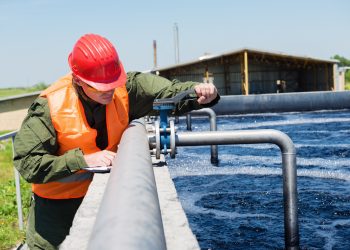

In the modern world, ensuring access to clean water is more crucial than ever. With the advent of advanced water treatment technologies, we have developed effective methods to purify water, making it safe for consumption and use. Among these technologies, ultrafiltration (UF), nanofiltration (NF), and reverse osmosis (RO) play pivotal roles. This article delves into each of these processes, explaining their mechanisms, applications, and benefits.
Introduction to Ultrafiltration (UF)
Ultrafiltration is a membrane filtration process that effectively removes particles and macromolecules from water to produce high-quality potable water. It operates under low pressure and can separate substances based on their size, making it an efficient method for removing bacteria, viruses, and larger contaminants.
How Ultrafiltration Works
The UF process involves the use of a semipermeable membrane with pores small enough to retain particles and substances larger than a specific size, while allowing water and smaller solutes to pass through. It’s commonly used as a pretreatment step before nanofiltration or reverse osmosis.
Applications of Ultrafiltration
Ultrafiltration is widely used in drinking water purification, wastewater treatment, and the food and beverage industry. It serves as an effective barrier against pathogens and particulates, ensuring the safety and quality of the water.
Exploring Nanofiltration (NF)
Nanofiltration, a membrane process that sits between ultrafiltration and reverse osmosis in terms of selectivity, is adept at removing divalent ions, organic substances, and certain salts from water.
How Nanofiltration Works
NF utilizes membranes with slightly larger pores than those used in RO, allowing it to selectively remove specific contaminants. This selective permeability makes it ideal for applications requiring the softening of hard water or the removal of specific pollutants.
Applications of Nanofiltration
Nanofiltration is beneficial in water softening, treatment of industrial wastewater, and the dairy industry for whey concentration and desalting. Its ability to selectively remove contaminants while retaining valuable minerals makes it a versatile tool in water treatment.
The Role of Reverse Osmosis (RO)
Reverse osmosis is the most refined filtration method among the three, capable of removing up to 99% of all dissolved salts, particles, organics, and bacteria from water, making it indispensable for producing high-purity water.
How Reverse Osmosis Works
In RO, water is forced through a semipermeable membrane at high pressure, leaving contaminants behind. This process is effective in reducing a wide array of water impurities, including dissolved salts and microscopic pollutants.
Applications of Reverse Osmosis
RO is extensively used in desalination plants, bottled water production, and industries requiring ultra-pure water, such as pharmaceuticals and semiconductors. Its ability to provide the highest purity level of water makes it crucial in various applications.
What Are the Advantages of Using Ultrafiltration, Nanofiltration, or Reverse Osmosis to Treat Water?
The adoption of ultrafiltration (UF), nanofiltration (NF), and reverse osmosis (RO) in water treatment processes is not just a technological preference but a necessity for modern water treatment solutions. These methods offer numerous advantages over traditional water treatment technologies, making them indispensable in ensuring water safety and quality. Here’s a detailed look at the benefits of each.
Advantages of Ultrafiltration (UF)
- Superior Quality Water: UF effectively removes bacteria, viruses, and particulates, providing water that is safe for consumption without the need for chemical disinfectants.
- Energy Efficiency: Operating under lower pressure compared to NF and RO, UF systems consume less energy, making them cost-effective for large-scale applications.
- Flexibility and Scalability: UF systems can be easily scaled up or down based on water demand, offering flexibility for various applications, from small community supplies to large industrial processes.
Advantages of Nanofiltration (NF)
- Selective Contaminant Removal: NF is adept at removing specific impurities such as heavy metals, hardness-causing minerals, and certain organic compounds, while allowing beneficial minerals to pass through, enhancing water quality without stripping it of essential nutrients.
- Lower Operating Pressure: Compared to RO, NF operates at lower pressures, resulting in lower energy consumption and operational costs.
- Water Softening Capability: NF is particularly effective in softening hard water, preventing scale buildup in pipes and appliances, which can extend their lifespan and improve efficiency.
Advantages of Reverse Osmosis (RO)
- Removal of Dissolved Salts and Impurities: RO can remove up to 99% of dissolved salts (ions), particles, organics, bacteria, and other contaminants, providing the highest purity level of water, which is crucial for sensitive applications such as pharmaceuticals and semiconductor manufacturing.
- Desalination: RO is the cornerstone of modern desalination technologies, enabling the conversion of seawater into potable water, which is vital for regions facing freshwater scarcity.
- Versatility: RO systems can be used in various settings, from small-scale home systems to large-scale municipal and industrial applications, showcasing their versatility in meeting diverse water treatment needs.
Conclusion
The choice between ultrafiltration, nanofiltration, and reverse osmosis depends on the specific water treatment requirements, including the quality of the feed water and the desired quality of the product water. Each technology offers unique advantages, from energy efficiency and selective contaminant removal to the capability of producing ultra-pure water. By leveraging these advanced filtration methods, we can address the challenges of water scarcity, pollution, and the need for sustainable water management practices, ensuring access to clean, safe water for all.
Frequently Asked Questions
How quickly can an emergency water purification unit be deployed?
AMPAC USA's EPRO and mobile RO units can be operational within 30–60 minutes of arrival on-site. Trailer-mounted and skid-mounted systems are pre-plumbed and pre-wired, requiring only connection to a power source and water source. Units treat river water, lake water, or brackish groundwater.
What flow rates are available for emergency water treatment?
AMPAC USA's emergency systems range from 1,500 GPD portable units to 50,000+ GPD trailer-mounted systems. Military-specification units are available for forward operating base deployment, producing potable water meeting EPA and WHO drinking water standards from virtually any source.
Are emergency RO systems suitable for disaster relief operations?
Yes. AMPAC USA's emergency systems are used by FEMA, the U.S. military, and international NGOs for disaster relief. They treat flood water, contaminated groundwater, and brackish sources, removing bacteria, viruses, and chemical contaminants to produce safe drinking water on-site.
What power sources can emergency water purification systems use?
AMPAC USA's emergency systems can run on generator power (120/240V or 480V 3-phase), solar panels with battery backup, or vehicle power take-off (PTO). Low-power models consume as little as 0.5 kW, making them viable for off-grid deployment.
How durable are military-grade water purification systems?
AMPAC USA's military systems are built to MIL-SPEC standards with stainless steel frames, powder-coated components, and UV-resistant materials. They are designed to operate in temperatures from -20°F to 120°F and are vibration-tested for transport in military vehicles.
Related Articles
- What Is Reverse Osmosis? The Complete 2026 Guide to RO Water Purification
- Brackish Water Reverse Osmosis Systems: Enhancing Water Purification
- How Does Reverse Osmosis Work In The Water Purification Process?
- Reverse Osmosis Water Purification Systems
Conclusion
This post highlighted how emergency and military-grade water purification systems provide safe drinking water rapidly in the most challenging field conditions. For organizations requiring deployable water treatment capability, AMPAC USA engineers portable and trailer-mounted systems built to perform wherever they are needed. Contact our team at info@ampac1.com or (909) 548-4900 to discuss your emergency water treatment requirements.
AMPAC USA engineers custom water purification systems for commercial, industrial, and emergency applications — from 500 GPD to multi-million GPD. Trusted by municipalities, military, and industry worldwide.