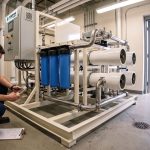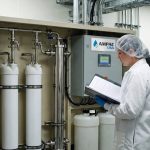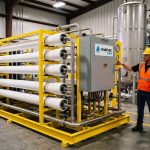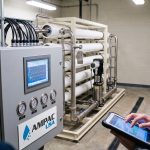

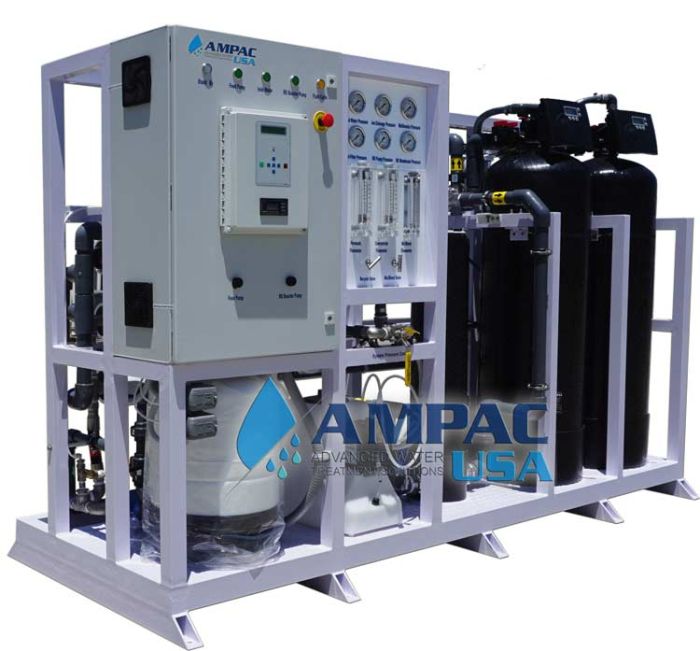

The much hyped phenomenon called Reverse Osmosis is quickly becoming a part of every home. RO is the reason that many of us get to consume safe water. While everybody know that this a surefire technique for water purification, but only some would know exactly what goes into purifying water so effectively with a reverse osmosis system.
Starting with the technique; first, let us understand that this is not a super complicated process that you will get a migraine while trying to comprehend. In fact, it is pretty straightforward and has been in use for quite a few years now.
So, Reverse Osmosis was developed after analyzing the effects of the Osmosis principle. In Osmosis, a low concentrated solution or a less salty one (for ease of understanding) is converted into a high concentration solution by passing it through a semi-permeable membrane. For purification, the objectives are exactly the opposite and that is why the scientist turned the process around to see what comes out. Well what came out was a great purification technique. When tried in the lab, the reverse process turned salty solution into a less salty one. The core technology has remained the same but has seen a substantial amount of evolution in terms of components which facilitate the process.
You must have figured by now that something called “a semi-permeable membrane” is a very important part. However, that is not the only thing that makes it successful. There are several other components which make a reverse osmosis system efficient, easy to use, durable and much more. Let us now explore everything that works backstage:
- Water Supply Line Valve: This is where the system gets the raw water from. One end is connected with the supply and the other goes into the system.
- Pre-treatment mechanism: Very often, the raw water supply needs to be pre-filtered in order to be all-set to be treated further by RO. Generally in form of a filter, the sediment pre-filter removes heavier particles and impurities from the raw water, then the carbon pre-filter remove, chlorine, organics, bacteria, improving taste odor and clarity of the raw water
- Semi-Permeable Membrane: The heart of the system; the membrane does most of the purification. It absorbs impurities and releases pure, drinkable water for consumption.
- Post-Treatment Mechanism: The membrane is not where the filtration stops. To further eliminate taste and odors, water goes through another carbon polishing post-filter. This stage is determined according to the unique filtration needs of a supply
- Check Valve Assembly: The purpose of this part is to prevent treated water from running back towards the membrane. It is generally placed at the outlet of the membrane.
- Flow Restrictor: Uneven flow can interfere with the quality of water purification. This is where flow restrictor helps; it allows upkeep of just the right volume required for membrane to process optimal amount of water
- Automatic Shut-off-valve: This valve stops further purification once it senses that the storage tank is full to prevent the RO system from wasting water.
- Faucet/Tap: This is the medium that finally delivers water treated from various stages. It is required to be easily operated and durable.
- Drain Saddle Connection: The separated impure water runs to an outlet or drain through this component.
- Storage Tank: Depending upon the needs of your home or office, RO systems come in various storage capacity configurations.
With the above information, you can surely make an intelligent decision while buying an RO system for your home. Understanding the purpose of each component will give you a fair idea of what exactly you would need to ensure highly pure water from your supply.
Frequently Asked Questions
How does a reverse osmosis system purify water?
A reverse osmosis system purifies water by applying hydraulic pressure, typically ranging from 50 to 1,000 PSI depending on the application, to force raw water through a dense polymeric membrane. This membrane physically blocks dissolved ions, molecules, and pathogens, resulting in ultra-pure permeate water on one side and a concentrated brine reject stream on the other.
What is the difference between osmosis and reverse osmosis?
Osmosis is a natural process where a low-concentration solution passes through a semi-permeable membrane to equalize with a high-concentration solution. Reverse osmosis, conversely, applies external pressure to force water from a high-concentration solution through the membrane to a low-concentration, purified side, effectively reversing the natural osmotic flow to achieve water purification.
What are the essential components of a reverse osmosis system?
Beyond the critical semi-permeable membrane, an efficient reverse osmosis system includes a Water Supply Line Valve to feed raw water and a robust pre-treatment mechanism. This pre-treatment typically involves a sediment pre-filter to remove heavier particles and a carbon pre-filter to eliminate chlorine, organics, and bacteria, improving taste and clarity before the RO membrane.
Why is pre-treatment important for a reverse osmosis system?
Pre-treatment is crucial for a reverse osmosis system to protect the delicate RO membrane and ensure optimal performance and longevity. Sediment pre-filters remove larger particles, while carbon pre-filters eliminate chlorine, organic compounds, and bacteria. This prevents membrane fouling, degradation, and extends the system’s operational lifespan, ensuring consistent water quality.
What types of impurities does a reverse osmosis membrane remove?
A reverse osmosis membrane is engineered to physically block a wide array of impurities, including dissolved ions, various molecules, and pathogens. This dense polymeric barrier effectively separates these contaminants from the water stream, producing ultra-pure permeate suitable for demanding applications like those on offshore oil rigs, military bases, and food & beverage plants.
Related Articles
- Reverse Osmosis System Maintenance Guide: Service Intervals and Procedures
- How Reverse Osmosis Works: The Complete Technical Guide | AMPAC USA
- Water Softener vs Reverse Osmosis: Which Do You Need? | AMPAC USA
- What Is Reverse Osmosis? The Complete 2026 Guide to RO Water Purification
Conclusion
Once you see all nine or so components working together — from the pre-filter protecting the membrane to the auto shut-off valve that stops the system from wasting water once the tank’s full — it’s clear an RO system is really a small assembly line, not a single magic filter. Any one weak link, especially a skipped pre-treatment stage, shortens the life of the membrane that does the actual work. AMPAC USA builds reverse osmosis systems with every one of these stages engineered to work together rather than sold as separate add-ons. Reach out to our team at info@ampac1.com or (909) 548-4900 if you want help picking the right setup for your home.
AMPAC USA engineers custom water purification systems for commercial, industrial, and emergency applications — from 500 GPD to multi-million GPD. Trusted by municipalities, military, and industry worldwide.