
In short: researchers have repeatedly detected antibiotic resistance genes (ARGs) in treated drinking water, including water that comes out of a household tap, because conventional treatment plants weren’t designed to strip DNA fragments out of water. Chlorination kills most bacteria but can leave resistance genes intact, and in some documented cases even helps spread them further down the distribution line. Reverse osmosis membranes work differently. They filter by physical size, not by killing organisms, and studies on RO/nanofiltration systems have logged ARG removal in the range of 99.79% and up to a 9.5-log reduction compared to untreated water. That’s the practical difference between a treatment method that manages the problem and one that removes it.
Antimicrobial resistance isn’t an abstract lab concern. The CDC’s Antibiotic Resistance Threats Report puts more than 2.8 million resistant infections and 35,000 deaths a year in the United States alone, a number that climbs past 48,000 deaths once C. difficile infections tied to antibiotic use are counted in. Globally, a 2024 Lancet analysis from the GRAM Project projects 39 million deaths from antimicrobial resistance between 2025 and 2050, with the annual death toll nearly doubling to 1.91 million by mid-century. Water isn’t the only pathway resistance genes travel through, but it’s one researchers are paying closer attention to, and it’s one homeowners and facility operators can actually do something about.
What Are Antibiotic Resistance Genes, and Why Would They Be in Water?
Antibiotic resistance genes are snippets of bacterial DNA that let a microbe survive exposure to a drug that would normally kill it. Bacteria don’t just develop resistance in a vacuum. They also swap these genes with each other through a process called horizontal gene transfer, which means resistance can spread between different species of bacteria, not just down a single bacterial family line.
Water becomes a carrier because human and animal waste, pharmaceutical runoff, and agricultural discharge all funnel resistant bacteria and free-floating genetic material into rivers, groundwater, and municipal source water. A 2024 systematic scoping review published in Science of the Total Environment found ARGs turning up in tap water samples across multiple countries, and a study out of a university system in the Peruvian Amazon detected genes tied to resistance against erythromycin, ampicillin, and ciprofloxacin, plus a multidrug-resistance marker, in drinking water actively being consumed on campus. This isn’t a fringe finding from one lab. It’s a pattern showing up across the literature.
Does Standard Water Treatment Remove Resistance Genes?
Not reliably, and that’s the part most people don’t expect. Chlorination is excellent at killing bacterial cells, which is why it’s been the backbone of municipal water safety for over a century. But killing a bacterium doesn’t necessarily destroy its DNA. Resistance genes can survive as extracellular fragments and pass into surviving or downstream bacterial populations, sometimes through the disinfection process itself.
Research tracking ARGs from source water through full treatment plants and out to household taps has found the genes persisting at every stage, and a 2026 study specifically examined how ARG concentrations increased along the distribution line after chlorination, rather than declining as expected. That’s a genuinely uncomfortable finding for a treatment step everyone assumes is the final word on water safety. It isn’t a failure of chlorination doing its job; it’s a mismatch between what chlorination was built to do (kill live pathogens) and what a resistance gene actually is (a molecule, not an organism).
How Do You Even Test for This in a Home or Business Water Supply?
You generally don’t, at least not with a home test kit. Detecting ARGs requires molecular techniques like PCR or metagenomic sequencing, the kind of lab work universities and public health agencies run, not something available at a hardware store. That’s part of why this issue stays under the radar. A water sample can pass a standard coliform test, look and taste completely normal, and still carry resistance genes that a genetic assay would pick up.
Practically, this means the sensible move isn’t trying to test your way to certainty. It’s choosing a filtration method that removes the category of contaminant regardless of whether you can confirm its presence on a given day.
How Does Reverse Osmosis Actually Remove These Genes?
Reverse osmosis filters by physical exclusion. Water gets forced through a semi-permeable membrane with pores fine enough to block dissolved salts, so anything larger, including bacterial cells and the DNA fragments that carry resistance genes, gets rejected along with them. ARGs are described in the research as biomacromolecules, with molecular weights running from tens of thousands up into the millions, well above what an RO membrane lets through.
The lab numbers back this up. Studies applying nanofiltration and reverse osmosis to wastewater have reported ARG removal between roughly 5 and 9.5 log units compared to untreated influent, and one study on swine wastewater using combined ultrafiltration and two-stage RO measured 99.79% removal of total ARGs. Separate work on membrane bioreactor systems found no detectable antibiotic-resistant bacteria at all in the filtered permeate. The mechanism doesn’t care whether the organism is resistant or not, and it doesn’t rely on a chemical reaction that a gene fragment can simply survive. It’s a physical barrier sized to the problem.
This is where a properly maintained residential reverse osmosis system makes a real difference for a household relying on municipal tap water, and it’s a big part of why RO has become the standard, not just an upgrade, for facilities that can’t treat this as a gamble.
Is This Only a Concern for Well Water or Older Infrastructure?
No, and that’s the finding that tends to surprise people most. The studies cited above weren’t testing wells in areas with no treatment infrastructure. They were testing municipal drinking water systems, including tap water actively being served to a population, in systems that met conventional safety standards. Resistance genes moving through the distribution line after chlorination is specifically a municipal-system finding, not a rural or unregulated-source one.
That matters for how facilities think about their water supply. A building on a modern city water connection isn’t automatically in the clear. The contaminant class in question doesn’t correlate cleanly with infrastructure age or source type the way turbidity or heavy metals often do.
What Should Facilities and Businesses With High Water-Use Do About This?
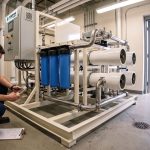
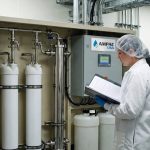
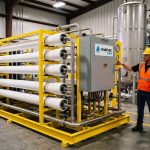
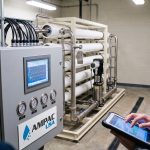
For hospitals, food and beverage production, labs, and any facility where water quality carries downstream health stakes, this is a case for point-of-use RO treatment rather than relying solely on municipal disinfection. A commercial reverse osmosis water purification system sized to actual facility volume gives an operator a final physical barrier that doesn’t depend on whether upstream chlorination happened to catch everything that day.
This is exactly the design problem AMPAC USA builds around: consistent water quality that doesn’t rely on assumptions about what a municipal system already handled. A facility processing thousands of gallons a day needs a system engineered for that throughput with membrane performance that holds up under real operating conditions, not a retrofit bolted on after a compliance concern surfaces.
The Bottom Line
Antibiotic resistance genes in tap water are a documented, published finding, not speculation, and conventional chlorination-based treatment wasn’t built to remove them the way it removes live pathogens. Reverse osmosis, by contrast, filters by molecular size, which happens to catch resistance genes along with everything else RO is already known for removing. Given that antimicrobial resistance is already tied to tens of thousands of U.S. deaths a year and a projected 39 million more worldwide by 2050, treating drinking water filtration as a meaningful line of defense, not an optional upgrade, is a reasonable read of where the science currently stands.
Frequently Asked Questions
Can antibiotic resistance genes actually make me sick from drinking water?
The genes themselves aren’t infectious the way a live pathogen is, but they can transfer into bacteria already present in the body or environment, potentially making future infections harder to treat with standard antibiotics. The concern is less about a single glass of water and more about cumulative exposure contributing to the broader resistance problem researchers are tracking.
Does boiling water remove antibiotic resistance genes?
Boiling kills live bacteria but doesn’t reliably destroy resistance genes, since they can persist as DNA fragments even after the organism carrying them is dead. It’s a similar limitation to chlorination for this specific contaminant class.
Are ARGs regulated by the EPA in drinking water standards?
Not currently. The EPA regulates specific pathogens, chemicals, and disinfection byproducts, but there’s no standard drinking water regulation targeting antibiotic resistance genes as their own category, which is part of why the research community has been raising this independently.
Does a standard carbon filter pitcher remove resistance genes?
No. Carbon filtration is designed to absorb chlorine, sediment, and some organic compounds, but it doesn’t have the pore size or mechanism to reject dissolved biomacromolecules like DNA fragments the way a reverse osmosis membrane does.
How is this different from antibiotic residue in water, which also gets discussed?
Antibiotic residue refers to actual drug compounds that make it into water supplies, often from pharmaceutical or agricultural runoff. Resistance genes are a separate issue: genetic material that confers resistance, present whether or not any antibiotic residue is detectable in the same sample. RO filtration is effective against both, but they’re distinct contaminants with distinct origins.
Sources: CDC 2019 Antibiotic Resistance Threats Report; The Lancet — Global burden of bacterial antimicrobial resistance 1990-2021, forecasts to 205001867-1/fulltext); Science of the Total Environment — systematic scoping review of antibiotic-resistance in drinking tap water; PMC — Detection of Antibiotic-Resistance Genes in Drinking Water, Peruvian Amazon; ScienceDirect — High removal efficiency of ARGs via nanofiltration and reverse osmosis; ScienceDirect — Removal of ARGs from swine wastewater by membrane filtration; ScienceDirect — Removal of ARB and ARGs in municipal wastewater by membrane bioreactor systems.
AMPAC USA engineers custom water purification systems for commercial, industrial, and emergency applications — from 500 GPD to multi-million GPD. Trusted by municipalities, military, and industry worldwide.