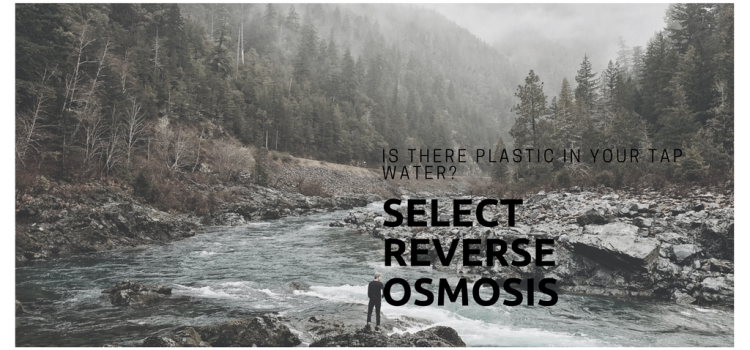

Do you think that your tap water is safe? Do you think that you don’t need reverse osmosis filters? Think again!! A new study has found that many people across the globe are using water contaminated with plastic fibers. In the study samples of tap water from several sources (nations) were tested and about 83 percent had plastic fibers in them.
This is Serious!
Many people don’t realize how serious the presence of plastic fibers in tap water is. This water is not just used for cleaning or washing, in many households, it is used for cooking and drinking too. It is possible drinking plastic fibers that might make you and your family ill, very ill.
This problem is a mammoth one for the US as the contamination rate is 94 percent in the country. Not only common people but political leaders should also worry as tap water sampled at popular sites such as the Trump Tower, the US Environmental Protection Agency’s headquarters, and Congress buildings had high contamination too.
A Global Problem
The presence of plastic fibers is a serious global water contamination threat as nations like India and Lebanon are dealing with high levels too. Though the UK, France, and Germany have lower contamination in comparison, their leaders must also take steps to prevent the future generations. The average numbers of plastic fibers present in every 500 ml sample was 1.9 in Europe but 4.8 in the US.
The First Attempt
This was the first attempt aimed at judging plastic fibers presence in tap water. Before this, the focus was always on plastic pollution levels in oceans which meant that people were eating microplastics when they had seafood.
Waiting is Not Recommended
People who are thinking that there is no concrete research regarding the side effects, primarily health effects of plastic fibers in water should realize that there is ample proof of the fact that this contamination is harming wildlife. Research has shown that plastic fibers can turn toxic when it enters the body of animals. If it can harm wildlife, how can people expect it won’t harm them? Remember the good old saying “Prevention is better than care” and start taking steps like installing reverse osmosis systems to filter water. Don’t wait for more research (which we do need desperately) on whether microplastics harm health or not.
Triple Threat
Though the study only detected the presence of plastic fibers, it failed to map nanoparticles as they are extremely tiny and 2,500 times smaller than particles of a 2.5-micron size, the size of plastic fibers. Another threat worth mentioning is that microplastics often attract bacteria present in sewage.
Not Only Water
Microplastic contamination has been visible for years, but no strict actions have been taken to prevent it yet. In 2015, researchers in Paris found that microplastics were falling from the air. Another research in Germany made it clear that fibers and fragments were present not only in beer but sugar and honey as well.
Where Are They Coming From?
Though there are many sources of the presence of microfabrics, some of the easily identifiable sources are everyday wear and tear of carpets and clothes. Tumble driers are also a source as most of the driers in the US households usually vent in the open air. Some experts also think that cumulative atmospheric input was responsible for contamination of water sources like lakes and sea. Rains were also a reason as they helped in sweeping up microplastic pollution. Even washing machines are found to be responsible for releasing 700,000 fibers into the environment.
Is Bottles Water the Answer?
No, bottled water is not the answer because it’s not only quite expensive, but it’s also not very foolproof. Research on bottled water has shown that microplastics were present in commercial water bottles as well.
The Real Answer: Curb Plastic Waste
A foolproof answer to this new form of pollution is to ensure that plastic waste is disposed of responsibly. About 300 million tonnes of plastic is produced annually, and only 20 percent is incinerated or recycled which means that most of it ends up littering the sea, land and even air. A report has stated that 8.3 billion tonnes of plastic was produced till 2017 from the 1950s and the researchers warned that plastic waste has become omnipresent in the environment.
Though the need for plastic cannot be nullified, there is a need to create a system that responsibly disposes of plastic waste so that it doesn’t end up in the air we breathe or the water we drink.
Water Filtration is the Best Option We Have
The only solution available that can control this problem to a great extent right now is to depend on the reverse osmosis technology for purification of tap water as it is the only technology that can trap all sorts of contaminants so that only the present form of this clear liquid passes through the membranes. If you live in an area where the contamination levels are high, you need a filter that has more stages.
Not even household owners/occupants but all business owners should also realize that the products they are selling could also be contaminated. So, they should consider investing in some industrial or commercial reverse osmosis systems. The focus should also be on ensuring that seawater is not directly used and a seawater desalination system is put in place to purify water that comes from natural water bodies like lakes, ponds, sea, etc.
While seeking the perfect filters that purify this precious resource and provides contamination free filters, you should trust AMPAC USA. We have been pioneers in creating water purification systems that use top of the line technology and ensure you get as many gallons of water you need per day. From 10 gallons to 1 lakh gallons, we can design a custom system that meets your household, commercial or industrial needs with perfection. Once you trust us, no contamination news/research would bother you again!
Frequently Asked Questions
How does reverse osmosis remove contaminants from water?
Reverse osmosis forces water through a semi-permeable membrane with pores as small as 0.0001 microns, physically blocking dissolved salts, heavy metals, bacteria, and viruses. AMPAC USA RO systems achieve up to 99% rejection of total dissolved solids (TDS), producing high-purity water suitable for drinking, industrial processes, and commercial applications.
What is the typical lifespan of an RO membrane?
High-quality RO membranes last 2–5 years depending on feed water quality and maintenance frequency. AMPAC USA systems use thin-film composite (TFC) membranes rated for extended service life. Regular pre-filter replacement and periodic membrane cleaning significantly extend operational longevity.
How much water does an RO system waste?
Standard RO systems recover 50–75% of feed water as permeate (purified output), with the remainder discharged as concentrate. AMPAC USA's high-recovery commercial systems achieve up to 85% recovery using energy recovery devices and optimized flow design, reducing operational costs substantially.
What pressure is required for a reverse osmosis system?
Brackish water RO systems typically operate at 150–600 PSI, while seawater systems require 800–1,200 PSI. AMPAC USA designs each system to match source water salinity and desired flow rate, incorporating energy-efficient high-pressure pumps with variable frequency drives (VFDs) to minimize power consumption.
Can reverse osmosis remove viruses and bacteria?
Yes. RO membranes provide absolute removal of bacteria (>99.9999%) and viruses (>99.99%), making them one of the most effective water purification technologies. AMPAC USA systems exceed NSF/ANSI 58 standards and include pre-treatment stages to protect membrane integrity.
Conclusion
This post explored how reverse osmosis technology delivers high-purity water across a wide range of residential, commercial, and industrial applications. For businesses and organizations requiring reliable RO purification, AMPAC USA engineers custom systems tailored to your specific water quality requirements and flow demands. Contact our team at [email protected] or (909) 548-4900 to discuss your water treatment needs.
AMPAC USA engineers custom water purification systems for commercial, industrial, and emergency applications — from 500 GPD to multi-million GPD. Trusted by municipalities, military, and industry worldwide.

![Reverse Osmosis Membrane Lifespan: How Long Do RO Membranes Last? [Maintenance Guide]](https://www.ampac1.com/blog/wp-content/uploads/2026/03/membrane-lifespan-150x150.png)

![TDS Levels in Drinking Water: What They Mean and Why They Matter [Complete Guide]](https://www.ampac1.com/blog/wp-content/uploads/2026/03/tds-levels-150x150.png)