

Quick Answer: To really measure per- and polyfluoroalkyl substances (PFAS) in drinking water, you need super precise tools. These compounds are tricky because they show up in tiny amounts. That’s where direct injection liquid chromatography paired with tandem mass spectrometry (LC-MS/MS) comes in, it’s the go-to method. And for cleaning water, advanced systems like reverse osmosis are your best bet. AMPAC USA builds commercial and industrial systems specifically for these water treatment challenges. Our systems deliver certified, documented performance.
Author Full Names: Ciofi, Lorenzo; Renai, Lapo; Rossini, Daniele; Ancillotti, Claudia; Falai, Alida; Fibbi, Donatella; Bruzzoniti, Maria Concetta; Juan Santana-Rodriguez, Jose; Orlandini, Serena; Del Bubba, Massimo
Source: TALANTA, 176 412-421; 10.1016/j.talanta.2017.08.052JAN 1 2018
Language: English
Abstract: We looked at how well a direct injection UHPLC-MS/MS method could analyze several perfluoroalkyl acids (PFAAs) in all sorts of water. The method’s simple: just inject 100 µL of centrifuged water, no other steps needed. We got really good detection limits, from 0.014-0.44 µg L-1, and excellent precision, with RSD% values between 1.8-4.4% for within-day tests and 2.7-5.7% for between-day tests. The whole analysis takes just 20 minutes per sample. We ran a lot of samples: 8 drinking waters (DW), 12 ground waters (GW), 13 surface waters (SW), 8 influents and 11 effluents from wastewater treatment plants (WWTPIN and WWTPOUT). We calculated the matrix effect (ME) for each, and most showed a small effect, less than 20%. Occasionally, we saw a bigger effect, over 50%, but only for perfluorooctanesulphonic and perfluorodecanoic acids. Linear discriminant analysis showed that where the sample came from – like drinking water, ground water, surface water, or wastewater plant influent and effluent – really influenced the matrix effect. We also used partial least square regression (PLS) and leave-one-out cross-validation to try and figure out why signals were suppressed or enhanced. We checked this against water parameters like conductivity, hardness, chemical oxygen demand, and background chromatographic area. The PLS approach gave us a rough idea, but its prediction power wasn’t super strong. Still, for most analytes in most samples, the values helped us tell if the matrix effect was higher or lower than 20%. We quantified PFAAs in all those water samples using the standard addition method. It turns out they’re mostly in wastewater treatment plant influents and effluents, sometimes at concentrations as high as one hundred µg L-1.
The post Applicability of the direct injection liquid chromatographic tandem mass spectrometric analytical approach to the sub-ng L-1 determination of perfluoro-alkyl acids in waste, surface, ground and drinking water samples appeared first on Facts About Water.
Source: Water Feed
Frequently Asked Questions
How are PFAS detected in water at low concentrations?
Direct injection liquid chromatography coupled with tandem mass spectrometry (LC-MS/MS) is the standard analytical method for detecting per- and polyfluoroalkyl substances (PFAS) in water. This sophisticated approach allows for accurate measurement of these compounds even at very low, sub-microgram per liter concentrations. The method involves direct injection of a centrifuged water sample without extensive pre-treatment, making it efficient.
What are the typical detection limits for PFAS using advanced analytical methods?
Advanced direct injection UHPLC-MS/MS methods can achieve method detection limits (MDLs) for perfluoroalkyl acids (PFAAs) ranging from 0.014 to 0.44 µg L-1. These methods also demonstrate excellent precision, with intra-day relative standard deviation (RSD%) values between 1.8-4.4% and inter-day RSD% values between 2.7-5.7%. A typical analysis takes approximately 20 minutes per sample.
Can reverse osmosis systems remove PFAS from water?
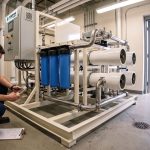
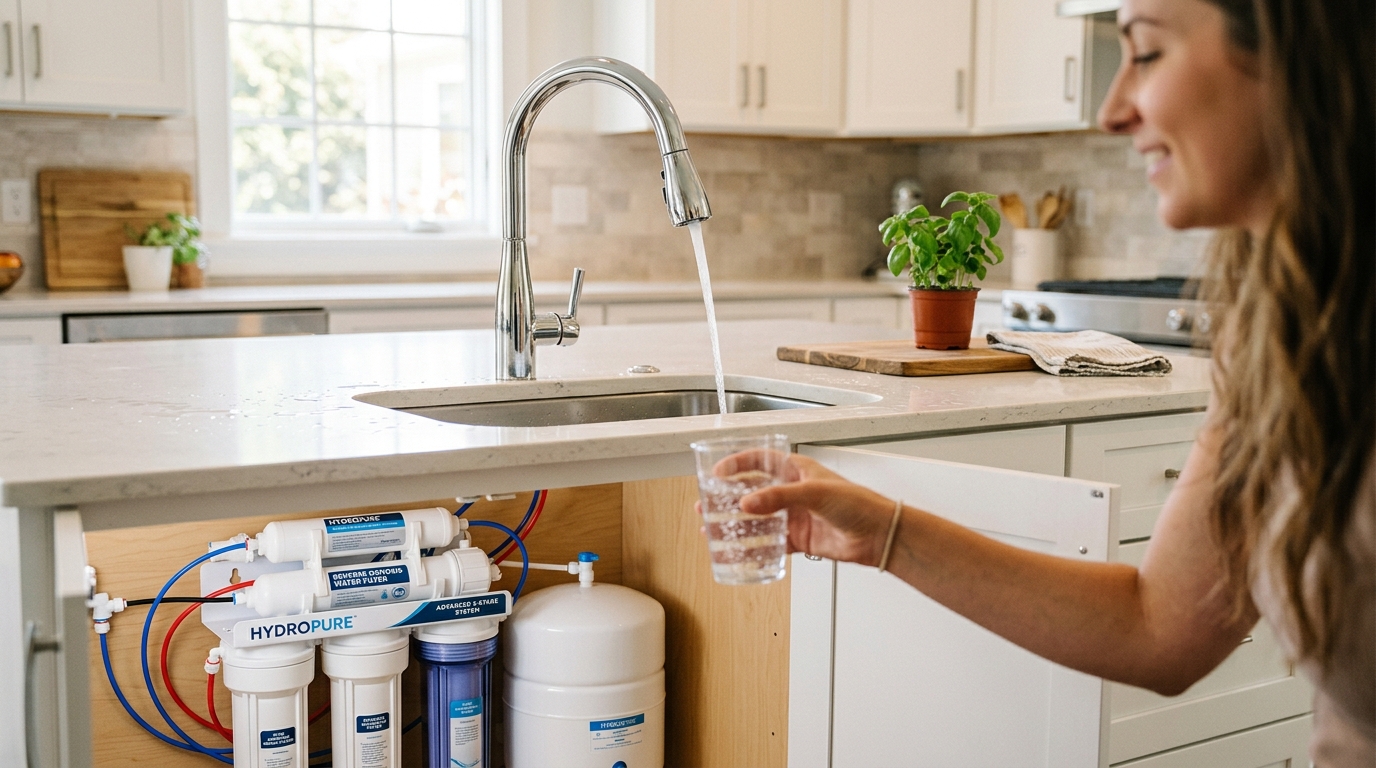
Yes, advanced water treatment technologies, particularly reverse osmosis (RO), are highly effective solutions for removing PFAS from water. AMPAC USA designs and manufactures commercial and industrial RO systems specifically engineered to address these water quality challenges. Our systems provide certified, documented performance in purifying water from contaminants like PFAS.
What is the matrix effect in PFAS water analysis?
The matrix effect (ME) in PFAS water analysis refers to the influence of other components in the water sample on the analytical signal, potentially causing suppression or enhancement. Research shows that for most perfluoroalkyl acids, the matrix effect is typically low, with over 80% of samples exhibiting |ME| < 20%. However, sample origin (e.g., drinking water vs. wastewater) significantly contributes to the extent of this effect.
What types of water samples can be analyzed for PFAS using direct injection LC-MS/MS?
The direct injection UHPLC-MS/MS method is applicable to a wide range of water matrices for PFAS analysis. This includes drinking water, ground water, surface water, and both influent and effluent samples from wastewater treatment plants. This broad applicability allows for comprehensive monitoring of PFAS contamination across various environmental and municipal water sources.
AMPAC USA engineers custom water purification systems for commercial, industrial, and emergency applications — from 500 GPD to multi-million GPD. Trusted by municipalities, military, and industry worldwide.