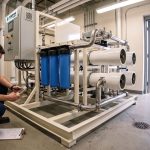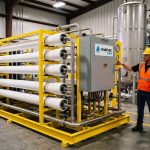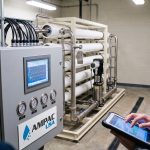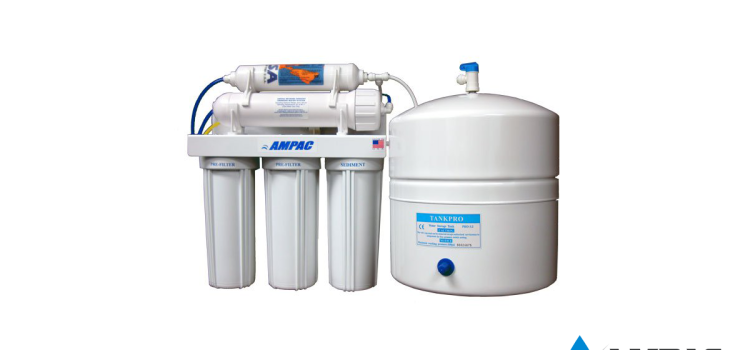

Water treatment technologies have taken a huge turn in the past few years. From a simple sedimentary filtration process, these technologies have come a long way to become more advanced and provide the best possible quality of water. Reverse Osmosis Filter Systems have gained popularity over the past decade and still have no competition to be the best technology yet. But what are these systems exactly?
Reverse Osmosis works on the basic concept of different levels of pressures. This process involves transferring a solvent from one side of a porous membrane to other in a direction opposite to the natural osmosis. This is done with the help of external hydrostatic pressure which is more than normal osmotic pressure. This passage of the solvent through the membrane is filtered where the contaminants are trapped on the side of the porous material. The process has proven to be effective in eliminating lead, chlorine, organic particles and undesirable salts.
The effectiveness of this process has given birth to a horde of applications for industrial, commercial and household uses. In commercial and household fields, the system eliminates particles to make the water safe for consumption. For industrial purposes, however, this process is used to attain a water quality that can be used in machines and equipment. Aerospace, Marine, Mining, Military, Energy, food and Dairy are just some of the industries where this process finds importance. For every industry, there is a certain water profile required with relevant substances to make the job easier. These different profiles are achieved by different types of porous membranes, levels of hydrostatic conditions and external factors.
This property of the process has led to the development of various types of Reverse Osmosis Filter Systems across the industries based on their requirements which are accommodated by the equipment.
Frequently Asked Questions
How does reverse osmosis purify water at a microscopic level?
Reverse osmosis purifies water by forcing it under high pressure through a semi-permeable TFC polyamide membrane. This membrane features extremely fine pores, typically 0.0001 µm, which are small enough to block 90–99% of dissolved contaminants. Pure water molecules pass through, leaving impurities behind.
What specific contaminants can reverse osmosis systems remove from water?
Reverse osmosis systems are highly effective at removing a wide range of dissolved contaminants. These include lead, chlorine, various organic particles, and undesirable salts. This process ensures water is safe for consumption or meets specific industrial quality requirements.
What industries commonly utilize commercial and industrial reverse osmosis systems?
Commercial and industrial reverse osmosis systems are vital across numerous sectors requiring precise water quality. Key industries include Aerospace, Marine, Mining, Military, Energy, and Food & Dairy. AMPAC USA engineers design systems to meet the unique water profile requirements for machinery and processes in these diverse fields.
How many stages are typically involved in a complete reverse osmosis water treatment system?
A complete reverse osmosis water treatment system typically involves 4 to 7 stages of filtration. These stages often begin with sediment pre-filtration to protect the delicate RO membrane. This multi-stage approach ensures comprehensive contaminant removal and extends system longevity.
What distinguishes AMPAC USA’s commercial and industrial RO systems from others?
AMPAC USA’s commercial and industrial RO systems are distinguished by over 30 years of engineering expertise and direct field experience. Our systems are custom-engineered for specific water treatment needs, with certified and documented performance in demanding environments like offshore oil rigs and military bases across 150+ countries. We provide practical, trusted solutions for complex water challenges.
Related Articles
- How Does a Home Reverse Osmosis System Work? A Simple Explanation
- How Does a Commercial Reverse Osmosis System Work?
- Reverse Osmosis System Maintenance Guide: Service Intervals and Procedures
- How Reverse Osmosis Works: The Complete Technical Guide | AMPAC USA
Conclusion
Reverse osmosis comes down to that pressure differential across a semi-permeable membrane, and it’s why the process works just as well pulling salts out of seawater as it does prepping process water for a food plant. Every industry mentioned above needs a different membrane setup and pressure profile, which is why off-the-shelf units rarely fit industrial jobs. AMPAC USA’s industrial reverse osmosis systems are built around the specific water profile a facility actually has, not a generic spec sheet. If you’re trying to figure out what your operation needs, contact our team at info@ampac1.com or (909) 548-4900 and we’ll walk through it with you.
AMPAC USA engineers custom water purification systems for commercial, industrial, and emergency applications — from 500 GPD to multi-million GPD. Trusted by municipalities, military, and industry worldwide.