Home Products Industries Applications Solutions Support Blog Contact Us
Back to Blog
Jun 14, 2018·6 min read
blog 958 economic assessment of waterborne outbreak of cryptosporidio

Economic Assessment of Waterborne Outbreak of Cryptosporidiosis

Economic Assessment of Waterborne Outbreak of Cryptosporidiosis

Quick Answer: Economic assessment of waterborne Cryptosporidiosis outbreaks reveals substantial costs: the 1993 Milwaukee outbreak caused an estimated $96.2 million in losses including $31.7M in medical costs and $64.6M in lost productivity. Per-case costs range from $327–$3,531 for typical illness, rising to $35,000+ for severe immunocompromised cases. Proactive investment in RO and UV treatment systems provides strong cost-benefit returns compared to outbreak response, litigation, and regulatory penalties.

Chyzheuskaya, A.; Cormican, M.; Raghavendra Srivinas; O’Donovan, D.; Prendergast, M.; O’Donoghue, C.; Morris, D.

Emerging Infectious Diseases, 23 (10):1650-1656; 10.3201/eid2310.1520372017

Abstract

In 2007, a waterborne outbreak of Cryptosporidium hominis infection occurred in western Ireland, resulting in 242 laboratory-confirmed cases and an uncertain number of unconfirmed cases. A boil water notice was in place for 158 days that affected 120,432 persons residing in the area, businesses, visitors, and commuters. This outbreak represented the largest outbreak of cryptosporidiosis in Ireland. The purpose of this study was to evaluate the cost of this outbreak. We adopted a societal perspective in estimating costs associated with the outbreak. Economic cost estimated was based on totaling direct and indirect costs incurred by public and private agencies. The cost of the outbreak was estimated based on 2007 figures. We estimate that the cost of the outbreak was >€19 million (≈€120,000/day of the outbreak). The US dollar equivalent based on today’s exchange rates would be $22.44 million (≈$142,000/day of the outbreak). This study highlights the economic need for a safe drinking water supply.

The post Economic Assessment of Waterborne Outbreak of Cryptosporidiosis appeared first on Facts About Water.

Source: Water Feed
What flow rates are available for emergency water treatment?

AMPAC USA's emergency systems range from 1,500 GPD portable units to 50,000+ GPD trailer-mounted systems. Military-specification units are available for forward operating base deployment, producing potable water meeting EPA and WHO drinking water standards from virtually any source.

Are emergency RO systems suitable for disaster relief operations?

Yes. AMPAC USA's emergency systems are used by FEMA, the U.S. military, and international NGOs for disaster relief. They treat flood water, contaminated groundwater, and brackish sources, removing bacteria, viruses, and chemical contaminants to produce safe drinking water on-site.

What power sources can emergency water purification systems use?

AMPAC USA's emergency systems can run on generator power (120/240V or 480V 3-phase), solar panels with battery backup, or vehicle power take-off (PTO). Low-power models consume as little as 0.5 kW, making them viable for off-grid deployment.

How durable are military-grade water purification systems?

AMPAC USA's military systems are built to MIL-SPEC standards with stainless steel frames, powder-coated components, and UV-resistant materials. They are designed to operate in temperatures from -20°F to 120°F and are vibration-tested for transport in military vehicles.

Conclusion

This post highlighted how emergency and military-grade water purification systems provide safe drinking water rapidly in the most challenging field conditions. For organizations requiring deployable water treatment capability, AMPAC USA engineers portable and trailer-mounted systems built to perform wherever they are needed. Contact our team at [email protected] or (909) 548-4900 to discuss your emergency water treatment requirements.

The Economics of Waterborne Cryptosporidiosis: Prevention vs. Outbreak Costs

Cryptosporidium parvum is a chlorine-resistant protozoan parasite that causes cryptosporidiosis—a diarrheal illness that can be life-threatening in immunocompromised individuals. The 1993 Milwaukee outbreak, affecting approximately 403,000 people, demonstrated the catastrophic economic and public health consequences when this pathogen enters community water supplies.

Economic analyses using cost-of-illness (COI) methodology quantify both direct costs (emergency room visits, hospitalizations, medications, physician consultations, laboratory testing, temporary water supply provision) and indirect costs (lost work productivity, caregiver time, premature mortality valued using the Value of Statistical Life framework). Published analyses of multiple U.S. Cryptosporidium outbreaks consistently show total outbreak costs ranging from hundreds of thousands to hundreds of millions of dollars depending on community size.

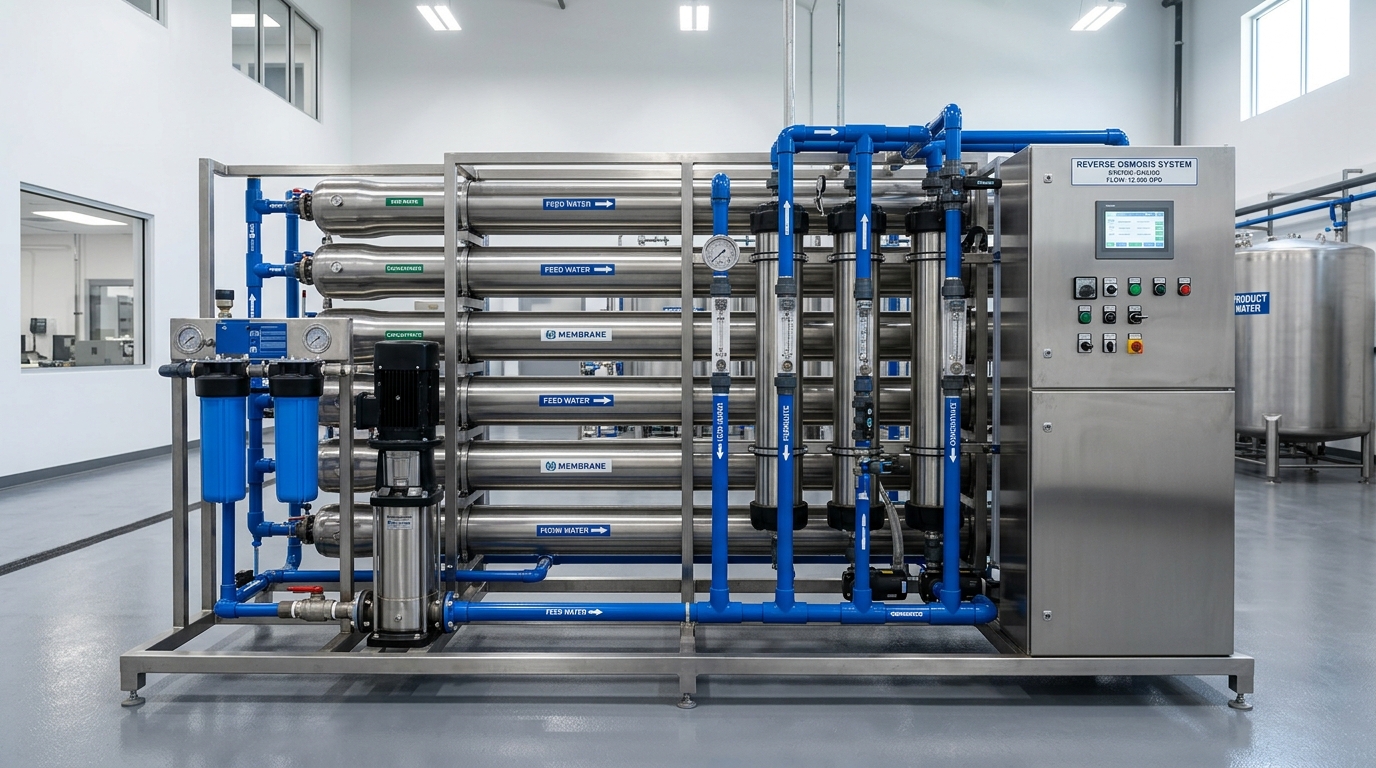
The cost-benefit calculus for preventive treatment investment is strongly favorable. A municipal-scale RO or UV treatment system serving 100,000 people might cost $5–15 million to install and $0.5–1.5 million annually to operate—a fraction of the economic damage from a single major Cryptosporidium outbreak. For food processors, beverage manufacturers, healthcare facilities, and other businesses, point-of-use RO treatment provides not only health protection but also liability insurance, since businesses serving contaminated water to employees or customers face substantial legal exposure. AMPAC USA’s industrial and commercial systems are NSF/ANSI-certified, providing documented performance evidence essential for regulatory compliance and risk management.

Frequently Asked Questions

What was the economic cost of the 1993 Milwaukee Cryptosporidiosis outbreak?

The Milwaukee outbreak—the largest U.S. waterborne disease outbreak with 403,000 illnesses—was estimated to cost $96.2 million total: $31.7M in direct medical costs and $64.6M in lost productivity. It resulted in 69 deaths, primarily among immunocompromised individuals.

How is the economic cost of a waterborne outbreak calculated?

Cost-of-illness (COI) analyses combine direct costs (medical care, hospitalization, medications, emergency water supply) with indirect costs (lost work days, caregiver time, lost productivity). For fatal cases, the Value of Statistical Life (VSL) methodology adds estimated mortality costs.

Is Cryptosporidium a risk in treated drinking water?

Yes. Cryptosporidium is resistant to chlorine disinfection at typical concentrations, meaning standard disinfection does not reliably prevent infection. Source water contamination events, treatment process failures, or infrastructure breaches can introduce Cryptosporidium into distribution systems even in communities with modern treatment plants.

How does reverse osmosis remove Cryptosporidium?

RO membranes (0.0001 µm pore size) physically exclude Cryptosporidium oocysts (4–6 µm in diameter) with >6-log (99.9999%) removal efficiency. This physical size exclusion mechanism functions independent of oocyst viability or chlorine resistance—making RO the most reliable treatment barrier.

Which businesses face the greatest Cryptosporidium liability risk?

Healthcare facilities, childcare centers, food and beverage processors, restaurants, hotels, recreational water facilities, and any business serving water to vulnerable populations face elevated Cryptosporidiosis liability. Point-of-use RO treatment provides documented due diligence.

How does water treatment investment compare in cost to outbreak response?

Studies consistently show favorable cost-benefit ratios for proactive water treatment investment. The annualized cost of advanced treatment systems is typically 1–10% of the economic damage from a single major outbreak event, making prevention strongly cost-effective.

What is the best water treatment to prevent Cryptosporidiosis?

Physical filtration (RO, ultrafiltration, or proper slow-sand filtration), UV disinfection at ≥3 mJ/cm² fluence, and ozone treatment are the most effective methods. Chlorine disinfection alone is insufficient. NSF/ANSI-certified systems with documented Cryptosporidium removal performance are the standard for regulatory and legal defensibility.

Scroll to Top