
Home Products Industries Applications Solutions Support Insights Contact Us
Back to Blog
Jun 14, 2018·5 min read
Bottled aqua incognita: microbiota assembly and dissolved organic matter diversity in natural mineral waters

Bottled aqua incognita: microbiota assembly and dissolved organic matter diversity in natural mineral waters

Bottled aqua incognita: microbiota assembly and dissolved organic matter diversity in natural mineral waters

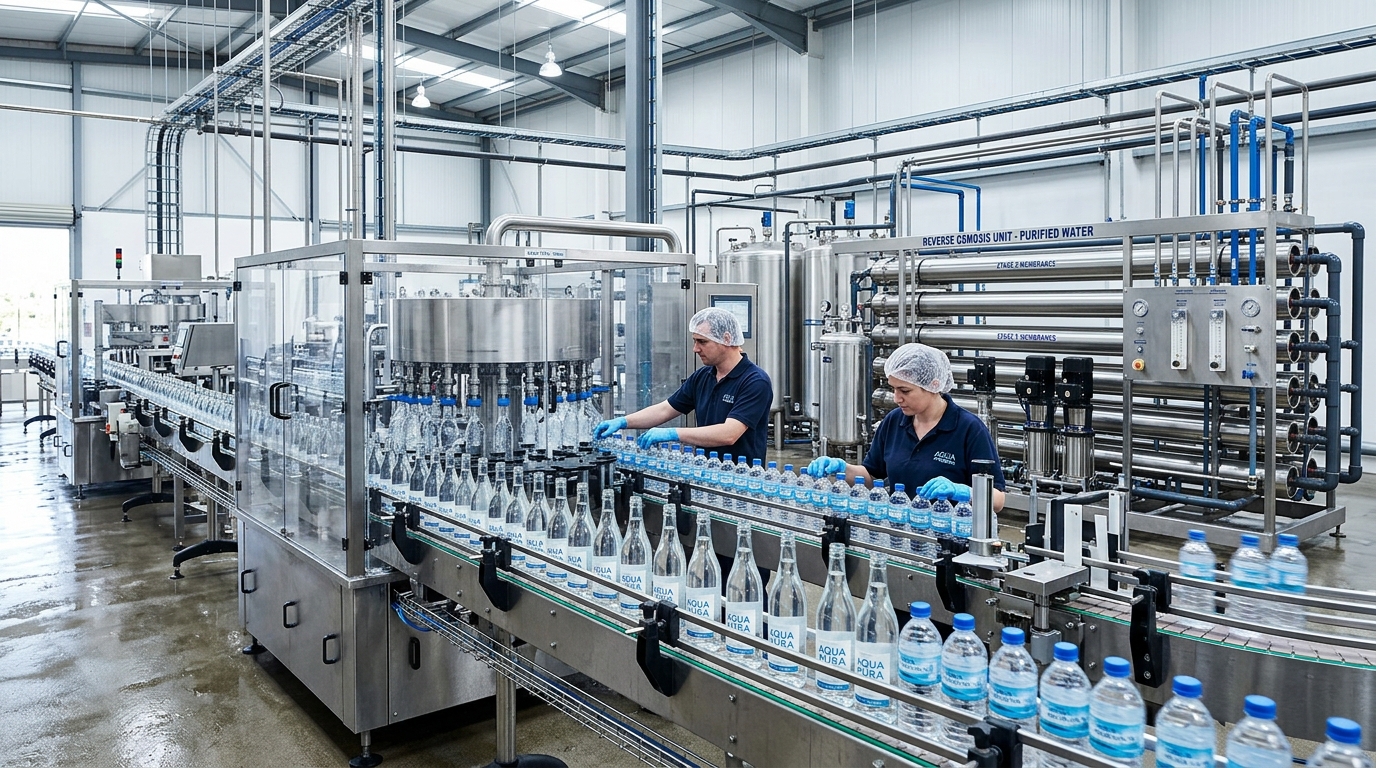
Bottled Water Microbiota Mineral Water is a critical aspect of modern water treatment. AMPAC USA provides industry-leading solutions that ensure safe, clean water for residential, commercial, and industrial applications. Our systems are engineered for maximum contaminant removal and long-term reliability.

Lesaulnier, Celine C.; Herbold, Craig W.; Pelikan, Claus; Berry, David; Gerard, Cedric; Le Coz, Xavier; Gagnot, Sophie; Niggemann, Jutta; Dittmar, Thorsten; Singer, Gabriel A.; Loy, Alexander

MICROBIOME, 5 10.1186/s40168-017-0344-9SEP 22 2017

Abstract

Background

Non-carbonated natural mineral waters contain microorganisms that regularly grow after bottling despite low concentrations of dissolved organic matter (DOM). Yet, the compositions of bottled water microbiota and organic substrates that fuel microbial activity, and how both change after bottling, are still largely unknown.

Results

We performed a multifaceted analysis of microbiota and DOM diversity in 12 natural mineral waters from six European countries. 16S rRNA gene-based analyses showed that less than 10 species-level operational taxonomic units (OTUs) dominated the bacterial communities in the water phase and associated with the bottle wall after a short phase of post-bottling growth. Members of the betaproteobacterial genera CurvibacterAquabacterium, and Polaromonas (Comamonadaceae) grew in most waters and represent ubiquitous, mesophilic, heterotrophic aerobes in bottled waters. Ultrahigh-resolution mass spectrometry of DOM in bottled waters and their corresponding source waters identified thousands of molecular formulae characteristic of mostly refractory, soil-derived DOM.

Conclusions

The bottle environment, including source water physicochemistry, selected for growth of a similar low-diversity microbiota across various bottled waters. Relative abundance changes of hundreds of multi-carbon molecules were related to growth of less than ten abundant OTUs. We thus speculate that individual bacteria cope with oligotrophic conditions by simultaneously consuming diverse DOM molecules.

https://microbiomejournal.biomedcentral.com/articles/10.1186/s40168-017-0344-9

The post Bottled aqua incognita: microbiota assembly and dissolved organic matter diversity in natural mineral waters appeared first on Facts About Water.

Source: Water Feed

What flow rates are available for emergency water treatment?

AMPAC USA's emergency systems range from 1,500 GPD portable units to 50,000+ GPD trailer-mounted systems. Military-specification units are available for forward operating base deployment, producing potable water meeting EPA and WHO drinking water standards from virtually any source.

Are emergency RO systems suitable for disaster relief operations?

Yes. AMPAC USA's emergency systems are used by FEMA, the U.S. military, and international NGOs for disaster relief. They treat flood water, contaminated groundwater, and brackish sources, removing bacteria, viruses, and chemical contaminants to produce safe drinking water on-site.

What power sources can emergency water purification systems use?

AMPAC USA's emergency systems can run on generator power (120/240V or 480V 3-phase), solar panels with battery backup, or vehicle power take-off (PTO). Low-power models consume as little as 0.5 kW, making them viable for off-grid deployment.

How durable are military-grade water purification systems?

AMPAC USA's military systems are built to MIL-SPEC standards with stainless steel frames, powder-coated components, and UV-resistant materials. They are designed to operate in temperatures from -20°F to 120°F and are vibration-tested for transport in military vehicles.

Conclusion

This post highlighted how emergency and military-grade water purification systems provide safe drinking water rapidly in the most challenging field conditions. For organizations requiring deployable water treatment capability, AMPAC USA engineers portable and trailer-mounted systems built to perform wherever they are needed. Contact our team at info@ampac1.com or (909) 548-4900 to discuss your emergency water treatment requirements.

Understanding Bottled Water Microbiota Mineral Water

Water quality directly impacts health, productivity, and equipment longevity. Bottled Water Microbiota Mineral Water represents one of the most important considerations for facility managers and homeowners alike. AMPAC USA engineers water treatment systems that address the full spectrum of contaminants—from dissolved solids and heavy metals to biological threats and emerging compounds.

Reverse osmosis technology forms the core of most advanced water treatment applications. RO membranes reject up to 99% of dissolved contaminants, including lead, arsenic, nitrates, fluoride, and chlorine byproducts. The semipermeable membrane allows only water molecules to pass, resulting in exceptionally pure water at the point of use.

System sizing depends on daily volume requirements, source water TDS, temperature, and recovery rate targets. Industrial systems range from 500 GPD to multi-million GPD capacity, while residential units typically operate at 50–200 GPD. Proper pre-treatment—including sediment filtration, activated carbon, and antiscalant dosing—extends membrane life and maintains peak performance. Regular monitoring of TDS rejection, pressure differential, and flow rate ensures systems operate within design parameters.

Frequently Asked Questions

What is bottled water microbiota mineral water?

Bottled water microbiota mineral water refers to the technology and processes used to ensure water meets safety and quality standards for drinking, industrial, and environmental use. Reverse osmosis and advanced filtration are core methods.

How does reverse osmosis improve water quality?

Reverse osmosis forces water through a semipermeable membrane that blocks dissolved salts, heavy metals, bacteria, and other contaminants—delivering water with TDS as low as 5–10 ppm compared to tap water at 150–500 ppm.

What contaminants does RO remove?

RO systems remove lead, arsenic, nitrates, fluoride, chlorine, VOCs, bacteria, and most dissolved solids—providing comprehensive protection against regulated and emerging contaminants.

How often should RO filters be replaced?

Pre-filters (sediment and carbon) should be replaced every 6–12 months. RO membranes typically last 2–5 years depending on source water quality and system usage. Annual TDS testing confirms membrane performance.

Is AMPAC USA a reliable water treatment provider?

AMPAC USA has over 25 years of experience designing and manufacturing commercial, industrial, and residential water treatment systems. All systems meet NSF/ANSI standards and are backed by technical support and extended warranties.

Scroll to Top