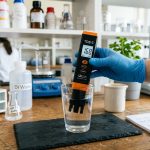

Over 43 million people in the U.S. get their drinking water from private wells. That’s a huge number, and here’s the kicker: these wells don’t get any mandatory federal quality checks. This makes private wells one of the biggest unregulated drinking water risks out there.
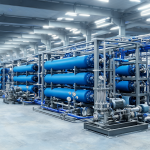
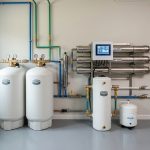
States have tried to pass laws making private well testing a must. We’ve seen how advanced water treatment, like reverse osmosis, can really help with water quality issues in these situations. AMPAC USA builds commercial and industrial systems specifically for these needs, and our performance is certified and documented.
Flanagan, Sara V.; Zheng, Yan
ENVIRONMENTAL SCIENCE & POLICY, 85 40-46; SI 10.1016/j.envsci.2018.03.022 JUL 2018
Abstract: A big problem in reducing exposure to natural arsenic in unregulated private well water is that people just aren’t testing their wells. The New Jersey Private Well Testing Act (PWTA), passed in 2002, requires testing during real estate sales. It turns out that state-wide testing rules like this really help cut down on exposure, especially since we can’t always count on individual well owners to take action. This study looks at the New Jersey PWTA as a success story for testing rules that became law, and then compares it to Maine’s failed attempts to pass similar requirements.
New Jersey had a long history of bad drinking water, thanks to its dense population, industrial past, and vulnerable aquifers. These issues were the root of the PWTA and even earlier local testing rules. But what really sealed the deal were a few high-profile events right before the PWTA passed. These events grabbed public and legislator attention, and environmental groups rallied to get political support across the state. Using Kingdon’s Multiple Streams framework, the PWTA happened because the problem, the policy, and the politics all lined up perfectly during a rare and important political window.
Things were different in Maine. There, natural arsenic, not industrial pollution, was the main worry. Private businesses pushed back, and a conservative government didn’t want to get involved in “private” well water. All these factors stopped legislative attempts to require testing. Maine did pass a modest education and outreach bill in 2017, but it didn’t include testing mandates. That bill came about after different groups compromised. If we want policy to truly make universal well water screening happen, we might need a change in how we think about the government’s role in private water.
https://www.sciencedirect.com/science/article/pii/S146290111830176X?via%3Dihub
The post Comparative case study of legislative attempts to require private well testing in New Jersey and Maine appeared first on Facts About Water.
Source: Water Feed
AMPAC USA engineers custom water purification systems for commercial, industrial, and emergency applications — from 500 GPD to multi-million GPD. Trusted by municipalities, military, and industry worldwide.