
drinking-water-quality-analysing-current-practices/”>Emerging Contaminants Drinking Water Toxicology is a big deal in today’s water treatment world. Here at AMPAC USA, we build top-tier systems that give you safe, clean water for your home, business, or industry. Our systems are designed to pull out the most contaminants and keep working reliably for years.
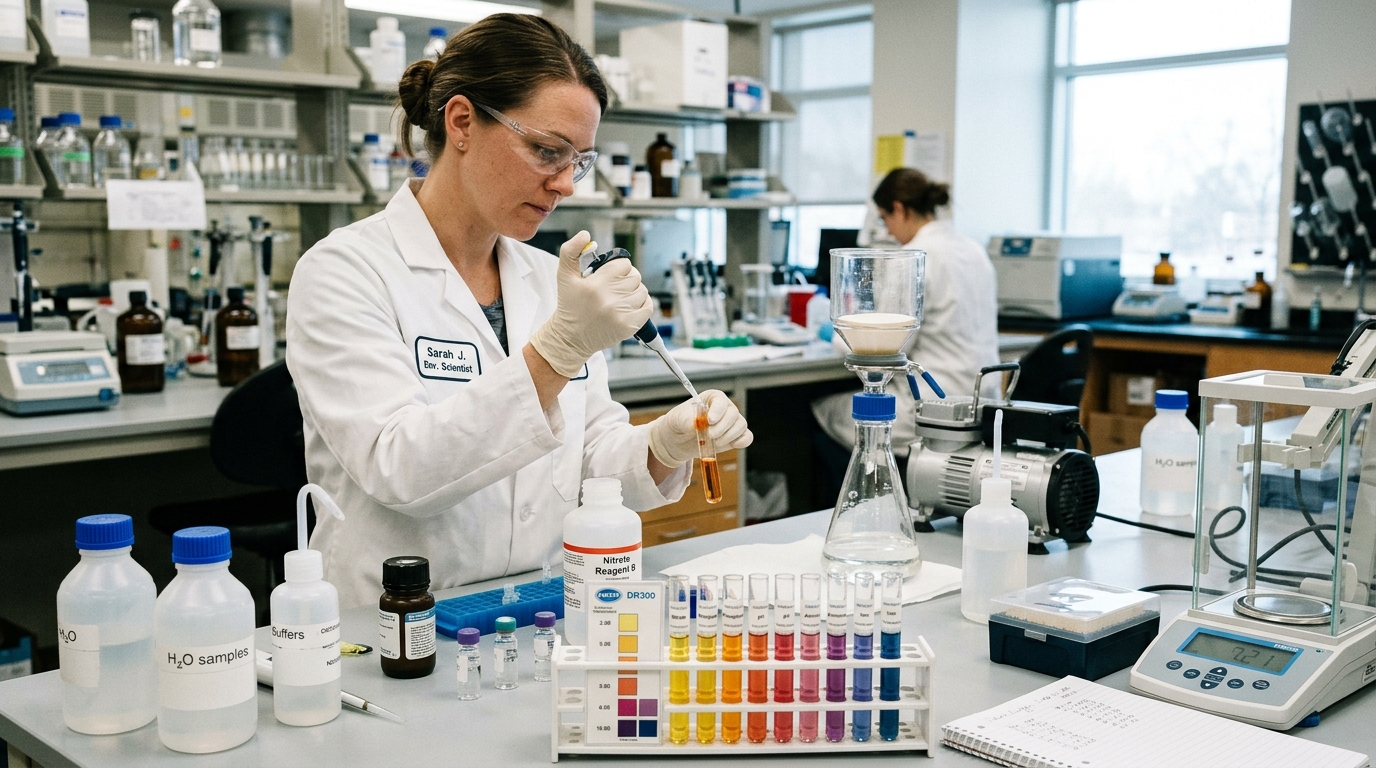
\\n\\nBaken, Kirsten A.; Sjerps, Rosa M. A.; Schriks, Merijn; van Wezel, Annemarie P.\\n\\nENVIRONMENT INTERNATIONAL, 118 293-303; 10.1016/j.envint.2018.05.006 SEP 2018\\n\\nAbstract: We need to assess the toxic risks of emerging contaminants, or CEC, in drinking water sources. This helps us spot potential health risks and decide which chemicals to focus on for removal or monitoring. Usually, we compare chemical concentrations in water to official drinking water guidelines, temporary guidelines from recent toxicity data, or general target values when no toxicity data exists. For this study, we looked at 163 CECs that matter for drinking water. We picked them because they show up in drinking water, groundwater, and surface water in the downstream parts of the Rhine and Meuse rivers. Their concentration levels and physical properties also played a role. We found official and temporary drinking water guidelines for 142 of these CECs from public toxicological information. Based on our measurements, most of these substances don’t show up in concentrations that would individually cause a noticeable human health risk. However, we couldn’t rule out health concerns for vinylchloride, trichloroethene, bromodichloromethane, aniline, phenol, 2-chlorobenzenamine, mevinphos, 1,4-dioxane, and nitrolotriacetic acid. For some of the chosen substances, we couldn’t do a toxicological risk assessment because we lacked either toxicity data or actual drinking water concentrations. When toxicity data is missing, we can use the Threshold of Toxicological Concern, or TTC, approach for a quick screening. We used the toxicological information we had on these substances to see if drinking water target values based on existing TTC levels really protect us from relevant CECs. We came up with general drinking water target levels of 37 µg/L for Cramer class I substances and 4 µg/L for Cramer class III substances. These levels align with earlier reported general drinking water target levels based on original TTC values. They seem to protect against health effects from most emerging contaminants we looked at in this study. Many chemicals in our water cycle haven’t been studied enough. That’s why these general drinking water target levels are useful. They act as an early warning and help us prioritize CECs with unknown toxicity in drinking water and its sources for future monitoring.\\n\\nISSN:0160-4120\\n\\nhttps://www.sciencedirect.com/science/article/pii/S0160412018302721?via%3Dihub\\n\\n \\n\\nThe post Toxicological risk assessment and prioritization of drinking water relevant contaminants of emerging concern appeared first on Facts About Water.\\n\\nSource: Water Feed
AMPAC USA engineers custom water purification systems for commercial, industrial, and emergency applications — from 500 GPD to multi-million GPD. Trusted by municipalities, military, and industry worldwide.