
2021 was not a good year for California as the state faced many water woes. It was a very dry year that ended with some hope with heavy rainfall and snow. Does that mean that California’s water challenges are over? Let’s find out.
The Good News
In 2021, California saw it all. From drought to wildfire and even water restrictions, the state and the people living in it didn’t have it easy. Things changed when dryness was replaced with a deluge at the end of the year. Back-to-back storms dumped around 7 inches of rain in downtown LA in December. According to the National Weather Service, it tripled the normal rainfall of the month of 2.03 and placed it among the top 10 wettest Decembers.
The LA river that was reduced to near a trickle in November surged to reach about 10 feet in some areas, and a flash flood in Malibu hamstrung at least 50 campers who were rescued from raging muddy waters.
Even inside the downtown LA’s Union Station, the central passageway was flooded with many inches of water, and a crew of workers used squeegees to push water toward several pumps. Some people reported that they had never seen such a scene before and that they were afraid of slipping and injuring themselves.
Don’t Be Too Optimistic
Experts say that though the rainfall and snow are good news, and it was one of the soggiest months in the recent past, ending the drought is a huge expectation. The 2021 water year was the driest in a century. It ended on September 30. So, the sudden rainfall and snow are not quick fixes.
A few of the worst moments of 2021 were reservoirs like Lake Mead shrinking to historic lows, the wildfires that were fueled by drought-dried vegetation consumed over 2.5 million acres across the state. Even the heat waves killed hundreds of people in California. Another sad event was the shutting down of a hydroelectric power plant at Lake Oroville due to low water.
Though the storms gave a boost to the state’s water supplies, drought conditions persist. Also, the reservoirs are seeing a boost, but that doesn’t mean that everything is okay now. The storms also wreaked havoc and caused over US$ 22 million in damages. Life on the streets is also drearier and dangerous.
Things were better in December, and we can just hope that January, February, and March will be just as good.
Still, we should not halt the water conservation method and focus on saving as much water as we can. A smart move to save water could be to trust the right water purification systems that waste less water and ensure water reuse. One name you can trust is AMPAC USA.
Trust AMPAC USA
Trust AMPAC USA for the best reverse osmosis systems for residential, commercial, and industrial needs. They help ensure the water is tasteless, colorless, and odorless.
AMPAC USA water systems are well equipped and fully capable of converting any water into a product that meets the requirement of the end-user. Capable of performing flawlessly in harsh environments, our products assist the exploratory labs at the Arctic Circle to Oil rigs in Deserts, urban communities, and war zones. AMPAC USA water treatment systems are proven solutions to water treatment problems across the globe.
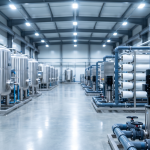
AMPAC USA advanced water purification systems are built to solve the most complex challenges related to water purification, treatment, provisioning, and Seawater Desalination, meant to work in the harshest environments around the globe. Our water treatment systems use the best Reverse Osmosis, Seawater Desalination, and water technologies of International standards for industrial, On-shore, and Offshore applications.
AMPAC USA designs and manufactures some of the world’s most reliable Commercial Reverse Osmosis Water Treatment Systems to treat water even in the toughest environments. We additionally strive for quality of international standards and excellent after-sales service. Our engineers are available to support your water treatment applications anywhere around the world. To know more, call us on 909-548-4900 or visit us here.
Reference:
https://www.latimes.com/california/story/2021-12-31/powerful-storm-pounds-california-after-year-of-drought
What flow rates are available for emergency water treatment?
AMPAC USA's emergency systems range from 1,500 GPD portable units to 50,000+ GPD trailer-mounted systems. Military-specification units are available for forward operating base deployment, producing potable water meeting EPA and WHO drinking water standards from virtually any source.
Are emergency RO systems suitable for disaster relief operations?
Yes. AMPAC USA's emergency systems are used by FEMA, the U.S. military, and international NGOs for disaster relief. They treat flood water, contaminated groundwater, and brackish sources, removing bacteria, viruses, and chemical contaminants to produce safe drinking water on-site.
What power sources can emergency water purification systems use?
AMPAC USA's emergency systems can run on generator power (120/240V or 480V 3-phase), solar panels with battery backup, or vehicle power take-off (PTO). Low-power models consume as little as 0.5 kW, making them viable for off-grid deployment.
How durable are military-grade water purification systems?
AMPAC USA's military systems are built to MIL-SPEC standards with stainless steel frames, powder-coated components, and UV-resistant materials. They are designed to operate in temperatures from -20°F to 120°F and are vibration-tested for transport in military vehicles.