Facebook X-twitter Youtube Linkedin
  • 909-548-4900
Ampac USA logo
  • Home
  • Products
  • Industries
  • Solutions
  • Contact Us
  • Home
  • Products
  • Industries
  • Solutions
  • Contact Us
Home Water Filter

Toxicological risk assessment and prioritization of drinking water relevant contaminants of emerging concern

Sammy Farag by Sammy Farag
August 14, 2018
Share on FacebookShare on Twitter

Baken, Kirsten A.; Sjerps, Rosa M. A.; Schriks, Merijn; van Wezel, Annemarie P.

ENVIRONMENT INTERNATIONAL, 118 293-303; 10.1016/j.envint.2018.05.006 SEP 2018

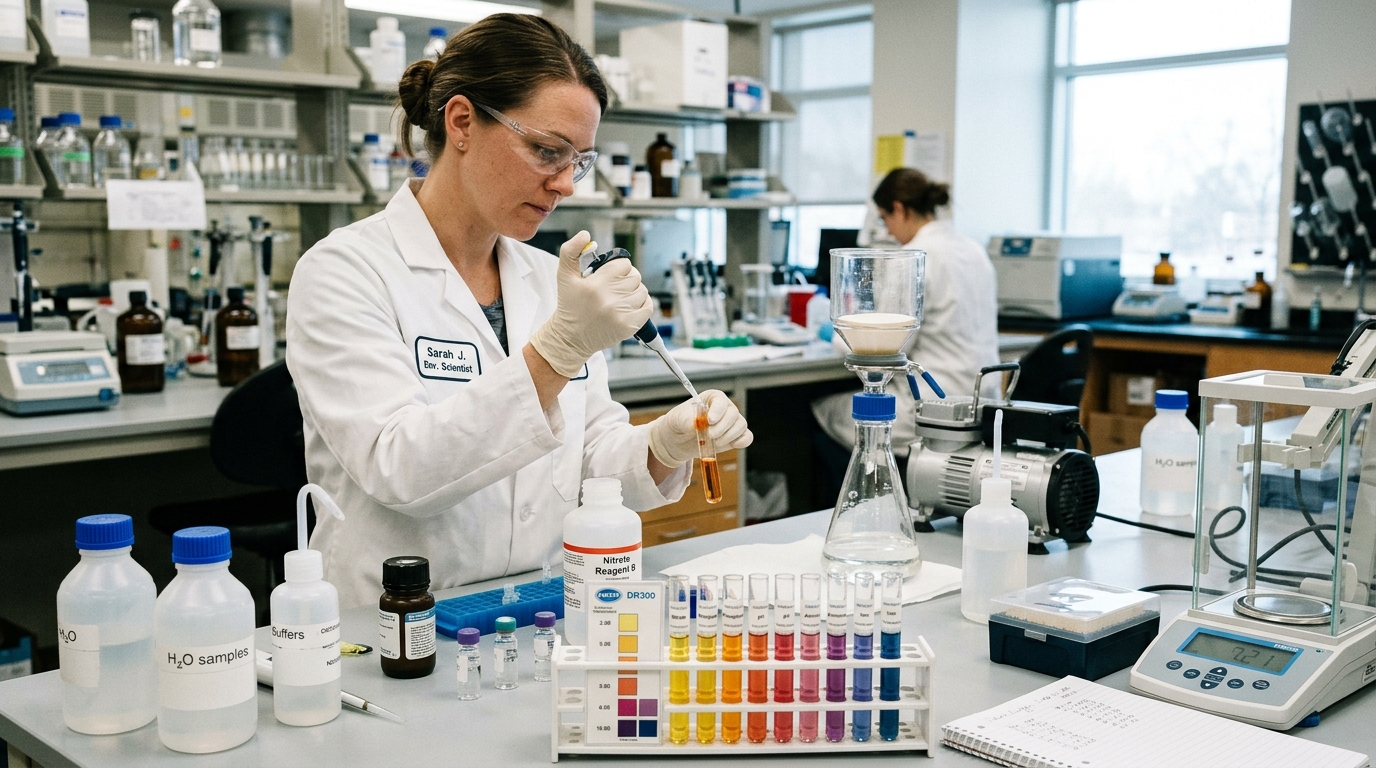
Abstract: Toxicological risk assessment of contaminants of emerging concern (CEC) in (sources of) drinking water is required to identify potential health risks and prioritize chemicals for abatement or monitoring. In such assessments, concentrations of chemicals in drinking water or sources are compared to either (i) health-based (statutory) drinking water guideline values, (ii) provisional guideline values based on recent toxicity data in absence of drinking water guidelines, or (iii) generic drinking water target values in absence of toxicity data. Here, we performed a toxicological risk assessment for 163 CEC that were selected as relevant for drinking water. This relevance was based on their presence in drinking water and/or groundwater and surface water sources in downstream parts of the Rhine and Meuse, in combination with concentration levels and physicochemical properties. Statutory and provisional drinking water guideline values could be derived from publically available toxicological information for 142 of the CEC. Based on measured concentrations it was concluded that the majority of substances do not occur in concentrations which individually pose an appreciable human health risk. A health concern could however not be excluded for vinylchloride, trichloroethene, bromodichloromethane, aniline, phenol, 2-chlorobenzenamine, mevinphos, 1,4-dioxane, and nitrolotriacetic acid. For part of the selected substances, toxicological risk assessment for drinking water could not be performed since either toxicity data (hazard) or drinking water concentrations (exposure) were lacking. In absence of toxicity data, the Threshold of Toxicological Concern (TTC) approach can be applied for screening level risk assessment. The toxicological information on the selected substances was used to evaluate whether drinking water target values based on existing TTC levels are sufficiently protective for drinking water relevant CEC. Generic drinking water target levels of 37 mu g/L for Cramer class I substances and 4 mu g/L for Cramer class III substances in drinking water were derived based on these CEC. These levels are in line with previously reported generic drinking water target levels based on original TTC values and are shown to be protective for health effects of the majority of contaminants of emerging concern evaluated in the present study. Since the human health impact of many chemicals appearing in the water cycle has been studied insufficiently, generic drinking water target levels are useful for early warning and prioritization of CEC with unknown toxicity in drinking water and its sources for future monitoring.

ISSN:0160-4120

https://www.sciencedirect.com/science/article/pii/S0160412018302721?via%3Dihub


The post Toxicological risk assessment and prioritization of drinking water relevant contaminants of emerging concern appeared first on Facts About Water.

Source: Water Feed

Tags: RO
Sammy Farag

Sammy Farag

Next Post

Comparative case study of legislative attempts to require private well testing in New Jersey and Maine

Comments 1

  1. Binance 註冊 says:
    1 month ago

    Your article helped me a lot, is there any more related content? Thanks!

    Reply

Leave a Reply Cancel reply

Your email address will not be published. Required fields are marked *

Recommended.

Commercial Water Purification

Commercial Water Purification

September 6, 2016
Reasons why you should improve your home water – Reverse Osmosis

How Does a Residential Reverse Osmosis System Work?

December 4, 2022

Subscribe.

Trending.

Which US States Have the Best Water Quality? Get the Answer Here

Which US States Have the Best Water Quality? Get the Answer Here

August 25, 2021
Reverse Osmosis system Troubleshooting: Fix 7 Common Problems

Reverse Osmosis system Troubleshooting: Fix 7 Common Problems

December 30, 2024
Conductivity of RO Water

Conductivity of RO Water: Understanding Purity and Performance with AMPAC USA

September 8, 2025
What Happens If My Water Softener Runs Out of Salt

What Happens If My Water Softener Runs Out of Salt?

July 15, 2025
Tannin in Water

Understanding Tannin in Water: Causes, Effects, and Effective Filtration Solutions

July 16, 2025

AMPAC USA
2262 S 1200 W Suite #103,
Woods Cross, UT 84087

US Phone: (909) 548-4900

ABOUT US

Ampac USA’s sophisticated water purification systems, which are designed to tackle the most challenging water purification, water supply, wastewater treatment, and seawater desalination challenges in the world’s harshest settings.

KNOW MORE ABOUT

  • Home
  • Products
  • Industries
  • Solutions
  • Contact Us
  • Home
  • Products
  • Industries
  • Solutions
  • Contact Us

INFORMATION LINKS

  • About Us
  • Privacy Policy
  • Disclaimer Policy
  • Terms & Conditions
  • Delivery Information
  • Sitemap
  • About Us
  • Privacy Policy
  • Disclaimer Policy
  • Terms & Conditions
  • Delivery Information
  • Sitemap

CUSTOMER SUPPORT

Get updates on special events and receive your first drink on us!

Facebook X-twitter Youtube Linkedin
No Result
View All Result
  • Home
  • Review
  • Apple
  • Applications
  • Computers
  • Gaming
  • Gear
    • Audio
    • Camera
    • Smartphone
  • Microsoft
  • Photography
  • Security

© 2025 JNews - Premium WordPress news & magazine theme by Jegtheme.