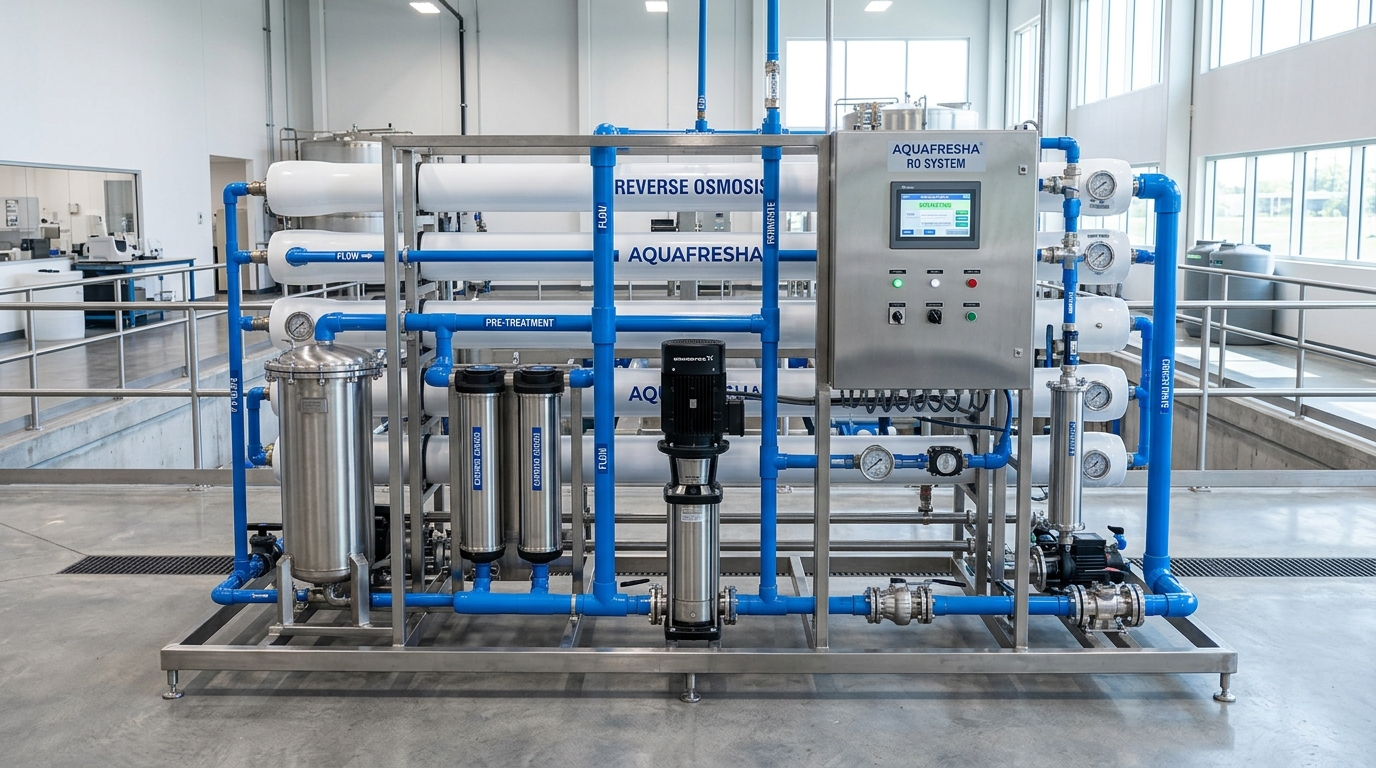

Quick Answer: Legionnaires’ disease is a nasty form of pneumonia, caused by Legionella pneumophila. It’s responsible for 75% of water-conservation-methods-used-in-the-usa/”>water-purification-ro-vs-distillation-uv-uf/”>waterborne disease deaths in the U.S. The old way of detecting it, using culture-based methods, takes 7-10 days. Plus, it can miss Legionella that’s alive but just won’t grow in a lab. Metagenomic next-generation sequencing is changing that. Really good water treatment, like reverse osmosis, helps a lot with water quality issues here. AMPAC USA builds commercial and industrial systems specifically for these water treatment needs, and they come with certified, documented performance.
\\nBorthong, Jednipit; Omori, Ryosuke; Sugimoto, Chihiro; Suthienkul, Orasa; Nakao, Ryo; Ito, Kimihito\\n\\nFRONTIERS IN MICROBIOLOGY, 9 10.3389/fmicb.2018.01272 JUN 19 2018\\n\\nAbstract: Metagenomic analysis is a powerful way to look at bacterial communities in environmental samples. But finding a specific bacterial species with it can be tricky. You often get false positives from sequences that different bacteria share. This study used 16S rRNA amplicon and shotgun metagenomic analyses on samples from a stream and ponds at Hokkaido University. We compared different database search methods for finding bacteria, focusing on Legionella pneumophila. We used L. pneumophila-specific nested PCR as our “gold standard” to check the metagenomic analysis results.\\n\\nComparing it with the nested PCR showed that a blastn search of shotgun reads against the NCBI-NT database gave false positive results. It just wasn’t specific enough. But we also found that a blastn search of shotgun reads against a database of the catalase-peroxidase (katB) gene detected L. pneumophila with the best accuracy. This means searching against the katB gene database was better for diagnosis than other search methods. Our results suggest that to find a specific bacterial species in environmental samples using metagenomic analyses, you really need to target long genes that are unique to that bacteria.\\n\\nhttps://www.frontiersin.org/articles/10.3389/fmicb.2018.01272/full\\n\\nThe post Title: Comparison of Database Search Methods for the Detection of Legionella Pneumophila in Water Samples Using Metagenomic Analysis appeared first on Facts About Water.\\n\\nSource: Water Feed
AMPAC USA engineers custom water purification systems for commercial, industrial, and emergency applications — from 500 GPD to multi-million GPD. Trusted by municipalities, military, and industry worldwide.