
\n\nUrszulaSzyma?skaaMarekWiergowskibIreneuszSo?tyszewskicJaros?awKuzemkodGabrielaWiergowskaefMateusz KacperWo?niak\n
Abstract
\n
When antibiotics and their byproducts show up in our aquatic-risks-from-human-pharmaceuticals-modelling-temporal-trends-of-carbamazepine-and-ciprofloxacin-at-the-global-scale/”>water, it’s bad news for all living things. And if these substances easily make their way into our drinking water, we could face serious public health issues, like drug resistance. We find antibiotics and their leftovers in surface waters and wastewater, but we still don’t have good, consistent ways to stop this pollution. Usually, to measure antibiotics, we use solid-phase extraction (SPE), then an instrumental analysis, often liquid chromatography with tandem mass spectrometry (LC-MS/MS). This method gives us accurate, reliable results. So, we really need to figure out what levels of antibiotics are truly critical. This will help us keep things safe for both nature and people. This paper looks at what we knew from 2009 to 2018 about antibiotics and their byproducts in Poland and Europe’s water, and how we measure them in different types of water, like surface water and wastewater. We also talked about the main ways we try to get rid of antibiotics during wastewater treatment, considering how much antibiotic is present.
\nhttps://www.sciencedirect.com/science/article/pii/S0026265X18318617?via%3Dihub\n\n
\nThe post Presence of antibiotics in the aquatic environment in Europe and their analytical monitoring: Recent trends and perspectives appeared first on Facts About Water.\n\nSource: Water Feed
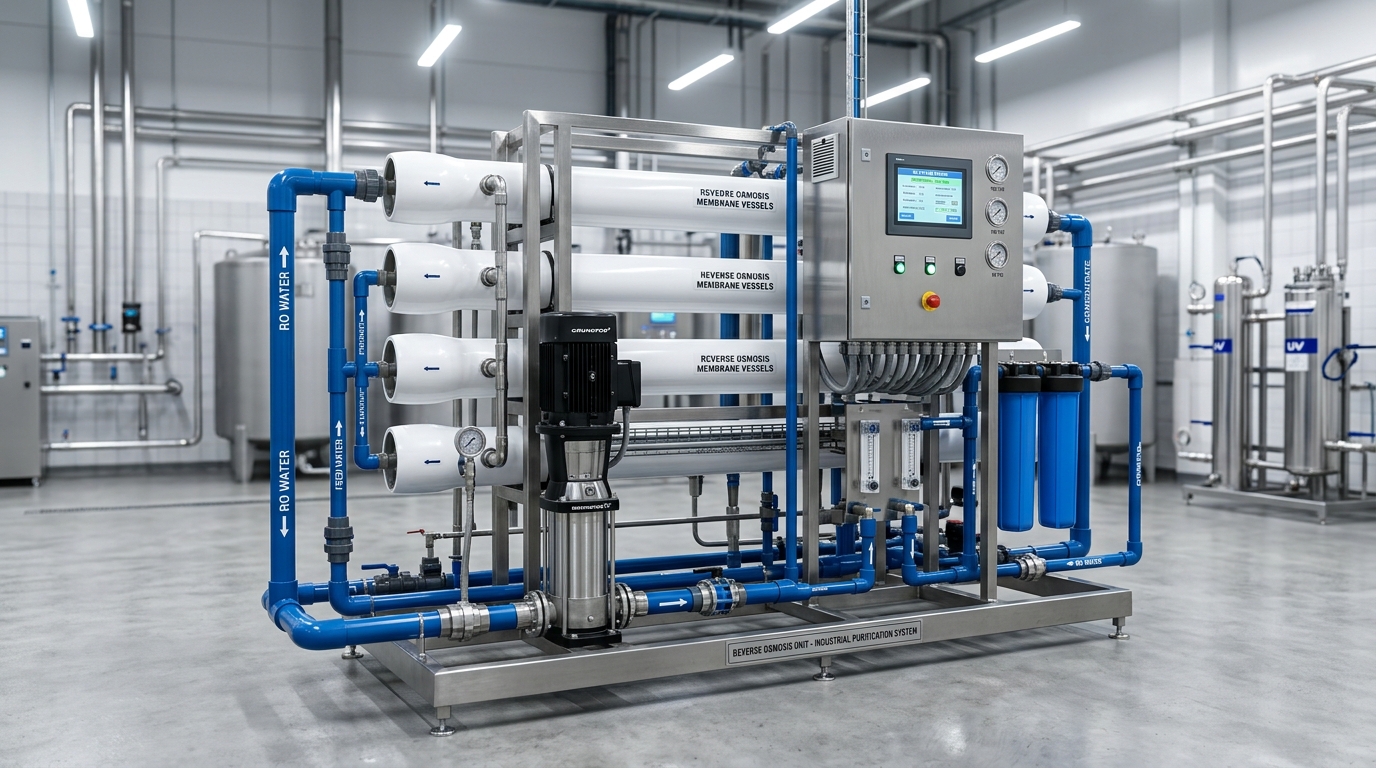
AMPAC USA engineers custom water purification systems for commercial, industrial, and emergency applications — from 500 GPD to multi-million GPD. Trusted by municipalities, military, and industry worldwide.