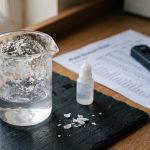

Nile Red (9-diethylamino-5-benzo[a]phenoxazinone) is a fluorescent dye that loves fats. It specifically stains hydrophobic polymer surfaces. This lets us quickly find and measure microplastics in water, sediment, and even biological tissue samples using fluorescence microscopy. We can detect amounts that are too small for regular methods, like weighing or just looking. But there’s a catch: Nile Red can sometimes mistake other organic stuff for microplastics. So, we often use a second dye, like calcofluor white or DAPI, to mark biological material. This “costaining” approach cuts down on false positives, making our results much more accurate. We’re talking about improving specificity from around 70% to over 90% for common plastics like polyethylene, polypropylene, and polystyrene.
Stanton, T., Johnson, M., Nathanail, P., Gomes, R.L., Needham, T., Burson, A., 2019.
ABSTRACT: Microplastic particles (smaller than 5 mm) are everywhere, and people are really worried about them. But finding and identifying all the different kinds of microplastics in the environment is a tough job. Nile Red dye is becoming a popular way to count microplastics, but people don’t always consider how it reacts with all the other particles in environmental samples. Here, we looked at how well Nile Red stains different microplastic particles, as well as common natural and man-made particles you’d find in the environment. To get better microplastic numbers with Nile Red, we also tried using a second stain, 4?,6-diamidino-2-phenylindole (DAPI), which binds to biological material. We applied this costaining method to samples of drinking water and freshwater to see how much microplastic estimates might be inflated if we only used Nile Red. Turns out, using Nile Red dye alone could overestimate microplastic particles by as much as 100%. This is a really big deal, especially when we’re sharing information about such an emotional topic with the public.
https://doi.org/10.1021/acs.estlett.9b00499
The post Exploring the Efficacy of Nile Red in Microplastic Quantification: A Costaining Approach. appeared first on Facts About Water.
Source: Water Feed
Frequently Asked Questions
What is Nile Red and how does it detect microplastics?
Nile Red is a lipophilic fluorescent dye that selectively stains hydrophobic polymer surfaces. This enables rapid detection and quantification of microplastics in water, sediment, and biological tissue samples using fluorescence microscopy, even at concentrations undetectable by conventional methods. Its affinity for polymers makes it a valuable tool for identifying these contaminants.
Why is a costaining approach crucial for accurate microplastic quantification?
A costaining approach, combining Nile Red with a second dye like DAPI or calcofluor white, is crucial to mark biological material. This significantly reduces false-positive identifications of organic particles, which Nile Red alone might mistakenly stain. This method improves the specificity of microplastic detection from approximately 70% to over 90% for common polymer types.
What are the limitations of using Nile Red alone for microplastic analysis?
Using Nile Red alone can lead to significant overestimation of microplastic particles, potentially up to 100% in samples like drinking water and freshwater. This limitation arises because Nile Red can also bind to natural organic matter, leading to false positives if not differentiated through a costaining technique. Accurate analysis is paramount for reliable water quality assessments.
Which common polymer types can Nile Red effectively detect with a costaining method?
With a costaining approach, Nile Red effectively detects common polymer types such as polyethylene (PE), polypropylene (PP), and polystyrene (PS). These are among the most prevalent microplastics found in environmental samples. The enhanced specificity of the costaining method ensures more reliable identification of these specific polymers.
How does costaining improve the reliability of microplastic detection results?
Costaining improves reliability by accurately differentiating microplastics from biological material, which Nile Red might otherwise mistakenly stain. This enhanced specificity, increasing from around 70% to over 90%, ensures that reported microplastic concentrations are more accurate and less prone to overestimation. This precision is vital for informed decision-making in water purification and environmental management, areas where AMPAC USA’s expertise is critical.
AMPAC USA engineers custom water purification systems for commercial, industrial, and emergency applications — from 500 GPD to multi-million GPD. Trusted by municipalities, military, and industry worldwide.