Home Products Industries Applications Solutions Support Blog Contact Us
Back to Blog
Jul 20, 2022·6 min read
blog 2033 comparative effectiveness of membrane technologies and disin

Comparative effectiveness of membrane technologies and disinfection methods for virus elimination in water: A review

Comparative effectiveness of membrane technologies and disinfection methods for virus elimination in water: A review

Quick Answer: For virus elimination in water, reverse osmosis achieves the highest removal (6+ log), followed by nanofiltration (3-5 log), ultrafiltration (0-2 log for non-enveloped viruses), UV at 40+ mJ/cm2 (4 log inactivation), and free chlorine (3-4 log at adequate contact time). Multi-barrier combinations provide the most reliable protection for diverse virus types.

Chao Chen 1Lihui Guo 2Yu Yang 3Kumiko Oguma 4Li-An Hou 5

https://pubmed.ncbi.nlm.nih.gov/34416607/

Abstract

The pandemic of the 2019 novel coronavirus disease (COVID-19) has brought viruses into the public horizon. Since viruses can pose a threat to human health in a low concentration range, seeking efficient virus removal methods has been the research hotspots in the past few years. Herein, a total of 1060 research papers were collected from the Web of Science database to identify technological trends as well as the research status. Based on the analysis results, this review elaborates on the state-of-the-art of membrane filtration and disinfection technologies for the treatment of virus-containing wastewater and drinking water. The results evince that membrane and disinfection methods achieve a broad range of virus removal efficiency (0.5-7 log reduction values (LRVs) and 0.09-8 LRVs, respectively) that is attributable to the various interactions between membranes or disinfectants and viruses having different susceptibility in viral capsid protein and nucleic acid. Moreover, this review discusses the related challenges and potential of membrane and disinfection technologies for customized virus removal in order to prevent the dissemination of the waterborne diseases.

Keywords: Disinfection; Drinking water treatment; Membrane; Virus removal; Wastewater treatment.

The post Comparative effectiveness of membrane technologies and disinfection methods for virus elimination in water: A review appeared first on Facts About Water.

Source: Water Feed

What flow rates are available for emergency water treatment?

AMPAC USA's emergency systems range from 1,500 GPD portable units to 50,000+ GPD trailer-mounted systems. Military-specification units are available for forward operating base deployment, producing potable water meeting EPA and WHO drinking water standards from virtually any source.

Are emergency RO systems suitable for disaster relief operations?

Yes. AMPAC USA's emergency systems are used by FEMA, the U.S. military, and international NGOs for disaster relief. They treat flood water, contaminated groundwater, and brackish sources, removing bacteria, viruses, and chemical contaminants to produce safe drinking water on-site.

What power sources can emergency water purification systems use?

AMPAC USA's emergency systems can run on generator power (120/240V or 480V 3-phase), solar panels with battery backup, or vehicle power take-off (PTO). Low-power models consume as little as 0.5 kW, making them viable for off-grid deployment.

How durable are military-grade water purification systems?

AMPAC USA's military systems are built to MIL-SPEC standards with stainless steel frames, powder-coated components, and UV-resistant materials. They are designed to operate in temperatures from -20°F to 120°F and are vibration-tested for transport in military vehicles.

Conclusion

This post highlighted how emergency and military-grade water purification systems provide safe drinking water rapidly in the most challenging field conditions. For organizations requiring deployable water treatment capability, AMPAC USA engineers portable and trailer-mounted systems built to perform wherever they are needed. Contact our team at [email protected] or (909) 548-4900 to discuss your emergency water treatment requirements.

Membrane Technologies and Disinfection for Waterborne Virus Control

Waterborne viruses present unique treatment challenges due to their small size (20-300 nm), persistence in the environment, low infectious doses (as few as 1-10 particles for norovirus), and variable resistance to chemical disinfection. Effective virus control in drinking water requires understanding the mechanisms by which different treatment technologies achieve inactivation or removal — and the conditions under which each technology’s performance may be compromised.

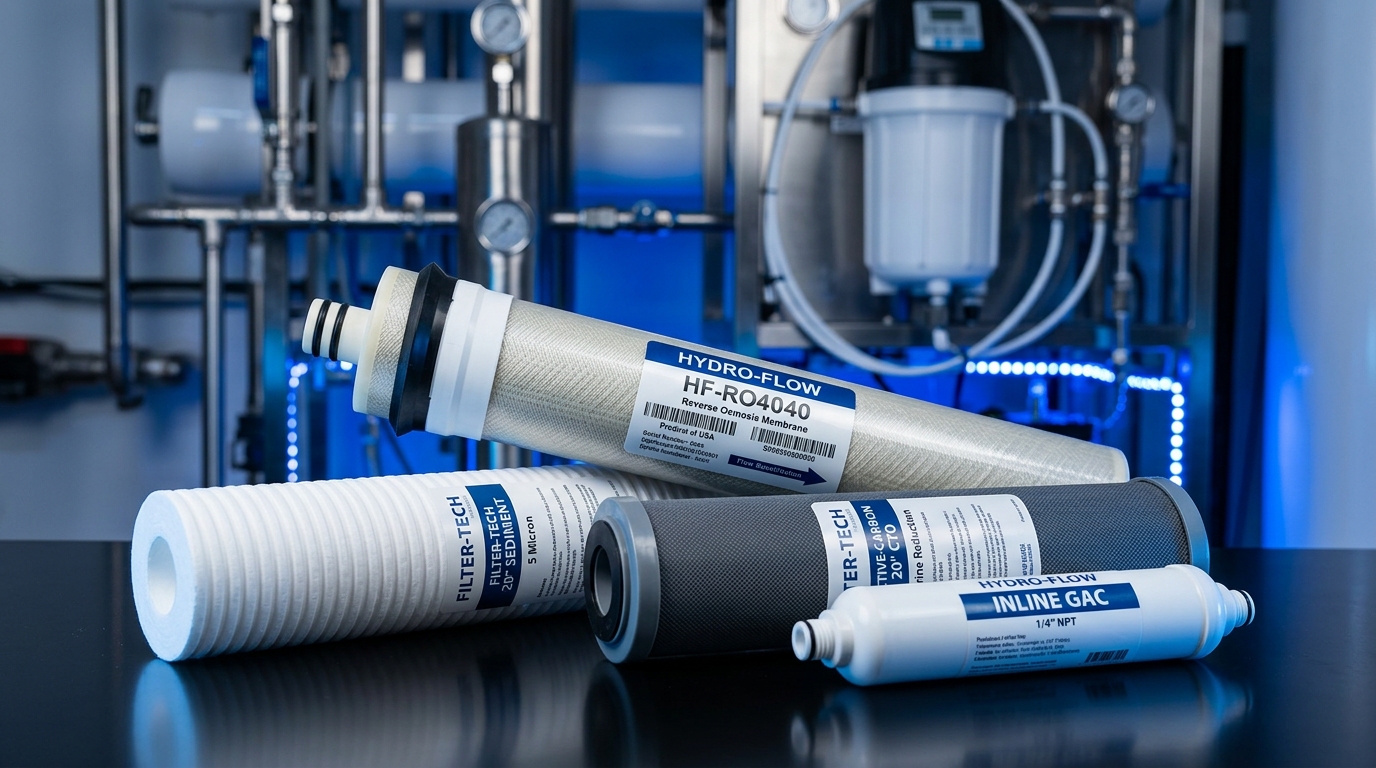
Physical membrane filtration removes viruses through size exclusion and adsorption mechanisms. The effectiveness varies dramatically by membrane type. Microfiltration (MF, 0.1-10 micron pore size) provides no reliable virus removal — virus particles pass freely through MF membranes. Ultrafiltration (UF, 0.01-0.1 micron) can achieve 3-6 log virus removal for many virus types depending on membrane integrity and operational conditions, but non-enveloped enteric viruses (norovirus, adenovirus) are smaller than most UF pore ratings, requiring membrane adsorption mechanisms to achieve adequate removal. Nanofiltration (NF) and reverse osmosis (RO) membranes with pore sizes of 0.001 micron and 0.0001 micron respectively provide near-complete physical exclusion of viruses, with RO achieving greater than 6-log removal when membranes are intact.

Chemical and physical disinfection methods inactivate viruses without removing them physically. Free chlorine at adequate concentration and contact time (CT product) achieves 3-4 log inactivation of most enteric viruses but is less effective against adenovirus (requires much higher CT). UV irradiation at 254 nm is highly effective against all waterborne viruses when adequate dose is achieved (40 mJ/cm2 achieves 4-log inactivation of most enteric viruses including adenovirus, which is UV-sensitive despite being chlorine-resistant). Ozone combines strong oxidation with broad-spectrum microbial inactivation and is used in advanced treatment systems. AMPAC USA designs multi-barrier systems combining RO and UV for the highest level of virus protection in point-of-use applications.

Frequently Asked Questions

Q: Which membrane type best removes viruses from water?

A: Reverse osmosis (RO) provides the highest virus removal — greater than 6 log (99.9999%) for intact membranes. Nanofiltration achieves 3-5 log. Ultrafiltration provides variable removal (0-3+ log) depending on membrane integrity and virus type. Microfiltration does not reliably remove viruses.

Q: Does ultraviolet light kill viruses in water?

A: Yes. UV irradiation at 254 nm at a minimum dose of 40 mJ/cm2 achieves 4-log inactivation of most waterborne enteric viruses including norovirus, rotavirus, and hepatitis A. Adenovirus requires higher UV doses (approximately 186 mJ/cm2 for 4-log inactivation) due to its double-stranded DNA structure.

Q: Is chlorine effective at killing viruses in drinking water?

A: Yes for most viruses. Free chlorine at standard drinking water treatment CT values (0.5 mg/L x 30 minutes = CT 15) achieves 4-log inactivation of most enteric viruses. However, adenovirus is highly chlorine-resistant, requiring CT values 20-100x higher than other viruses. UV is preferred for adenovirus.

Q: What is a multi-barrier approach to virus control in drinking water?

A: Multi-barrier treatment combines sequential technologies so that failure of any single barrier does not result in unsafe water. A typical multi-barrier sequence might be: coagulation/sedimentation (physical removal), filtration (physical removal), chlorination (chemical inactivation), and UV (physical inactivation) — each providing independent virus control.

Q: Can viruses pass through an RO membrane?

A: Intact RO membranes physically exclude viruses through size exclusion (viruses are 20-300 nm; RO pores are approximately 0.1 nm). RO achieves 6+ log virus removal. Membrane integrity monitoring (integrity testing, online turbidity and conductivity) is essential to ensure this protection is maintained.

Q: Why is norovirus particularly challenging to remove from water?

A: Norovirus is extremely small (27-40 nm), non-enveloped (making it more resistant to chemical disinfection and UV than enveloped viruses), highly infectious at very low doses (10-100 particles), and cannot currently be cultured in the laboratory (complicating treatment efficacy testing). Membrane filtration (NF/RO) is the most reliable removal strategy.

Scroll to Top