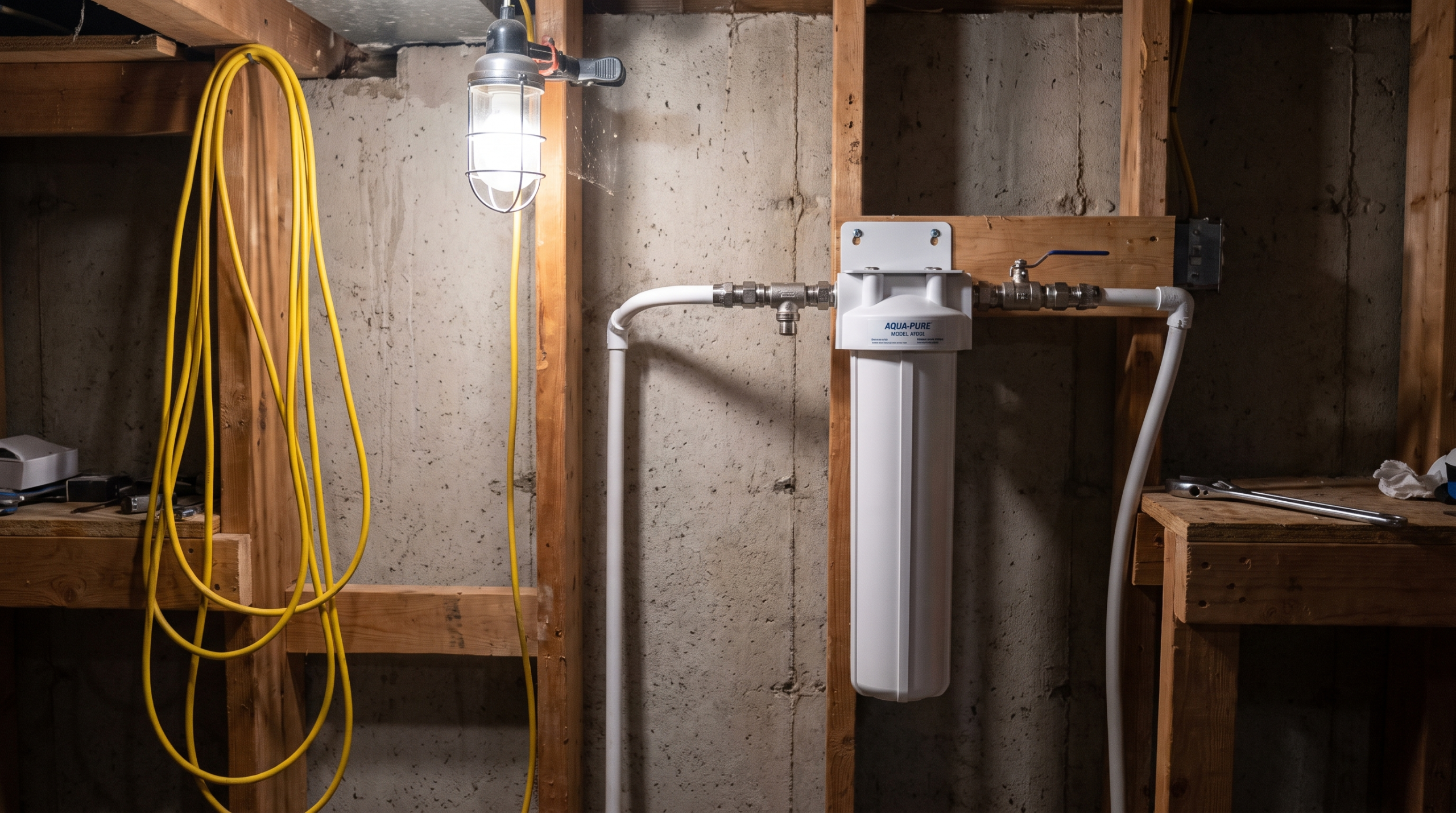

In short: the EPA’s lead action level (15 parts per billion today, dropping to 10 ppb under the 2024 Lead and Copper Rule Improvements) only applies to public water systems. If your water comes from a private well, that rule doesn’t touch you. No agency tests your water, sets a limit for it, or tells you when to worry. An estimated 23 million U.S. households, roughly 43 million people, get their drinking water this way, and most of them have never had it tested for lead. The people least likely to test are often the ones with the oldest plumbing and the fewest resources to fix a problem once they find one.
This isn’t a niche issue. It’s a regulatory blind spot that happens to line up with income and housing age in ways that make it worse for the households who can least absorb the cost of finding out.
Why Doesn’t the EPA Regulate Lead in Private Well Water?
Because the Safe Drinking Water Act, the federal law that sets lead limits, only applies to public water systems, defined as ones serving 15 or more connections or 25 or more people. A private well serving a single household falls outside that definition entirely.
The EPA’s Lead and Copper Rule requires public utilities to sample tap water regularly and take corrosion-control action if more than 10% of samples exceed 15 ppb. The Lead and Copper Rule Improvements, finalized in October 2024, lower that trigger to 10 ppb once compliance begins in 2027. Either number is an action trigger, not a safety threshold. The EPA’s actual health goal for lead is zero, because there’s no dose considered safe, especially for children and pregnant women. But none of that machinery (the sampling schedule, the corrosion control, the public notification) exists for a private well. Testing is the owner’s responsibility, and it’s optional. The EPA’s own guidance for private wells says exactly this: unlike a public system, nobody is checking your water unless you ask someone to.
How Many Households Actually Rely on Private Wells?
More than 23 million households in the U.S., an estimated 43 million people, get their drinking water from a private well rather than a public system, according to EPA and USGS figures. That’s not a rounding error. It’s close to one in eight Americans drinking water that no regulatory body monitors for lead, arsenic, nitrates, or bacteria on any fixed schedule.
Coverage skews rural. Well density is highest in New England, the upper Midwest, and parts of the South, places where public water infrastructure never reached every property, or where drilling a well was simply cheaper than connecting to a municipal line. Rural counties with older housing stock and private wells overlap more than people realize, and that overlap is exactly where lead risk concentrates.
Where Does Lead in Well Water Actually Come From?
Almost never from the aquifer itself. Lead in well water is overwhelmingly a plumbing problem, not a groundwater problem. It comes from lead solder used in copper pipe joints before 1986, lead pipes still in service in homes built before the 1930s, and brass or bronze fittings, including parts inside the well pump itself, that leach lead as they corrode.
Corrosive water speeds this up. Groundwater that’s naturally acidic or low in dissolved minerals, common in parts of New England and the Northeast, is more aggressive at dissolving metal from pipe walls and fixtures than neutral or hard water is. A well can test clean at the source and still deliver elevated lead by the time it reaches the kitchen tap, picked up entirely inside the house’s own plumbing. That’s part of why source testing alone misses the problem. The sample needs to come from the tap, after the water has sat in the pipes, not from the wellhead.
Why Do So Few Private Well Owners Test Their Water?
Because nothing requires it, and most people don’t think to. Public health guidance recommends private well owners test annually for bacteria and periodically for chemical contaminants like lead, nitrates, and arsenic, but compliance is low. Studies estimate that well owners often go years without testing, and many have never tested at all. There’s no reminder postcard, no utility bill line item, no municipal notice. The entire responsibility, and the entire cost, sits with the homeowner.
That gap isn’t distributed evenly. Research out of UNC-Chapel Hill on private wells in North Carolina found that white, higher-income households had roughly 10 times greater odds of testing their well water, and about 4 times greater odds of treating it, than lower-income Black, Indigenous, and other households of color relying on the same kind of water source. Separate research published in PNAS found children living in homes served by private wells had about 25% higher odds of elevated blood lead levels compared with children on community water systems. Put those together and the pattern is uncomfortable but clear: the households most likely to have an aging, lead-bearing plumbing system are also the least likely to know it, and the least likely to have the spare cash to act on a result once they get one.
What Should a Well Owner Actually Do About Lead Risk?
Test the water at the tap, not the wellhead, using a certified lab, and treat the result as informational rather than reassuring if it comes back low. Lead exposure in plumbing systems is intermittent. A sample taken after water has run for a while can look clean while a first-draw sample, water that sat in the pipes overnight, comes back high. One test tells you about one moment, not the whole picture.
If a well’s plumbing predates 1986, or the property has any lead solder, lead pipe, or older brass fittings, testing isn’t really optional information, it’s close to a given that some lead exposure is happening at some point in the day. The practical fix at that stage is usually treating the water at the taps you drink and cook from, and replacing the worst plumbing over time.

Where Should a Lead Filter Go: Point of Entry or Point of Use?
Reverse osmosis is one of the few technologies that reliably removes lead down to non-detectable levels, typically in the 95 to 99% range. The membrane’s pore size is small enough to block dissolved lead ions along with most other heavy metals, so it works on the actual contaminant rather than just masking taste or odor the way a basic carbon filter does.
Where the unit sits matters. A point-of-entry system treats water as it enters the house, before it reaches the solder, pipe, and brass fittings that add most of the lead in a well-water home, so it can’t remove lead picked up after that point. Water from a whole-house RO system is also low in minerals and more corrosive, which can pull more lead out of downstream plumbing unless it’s remineralized. For lead, the standard advice is a point-of-use unit at the kitchen tap and any other tap used for drinking or cooking, certified to NSF/ANSI 53 or 58 for lead reduction.
This is where AMPAC USA’s residential reverse osmosis systems come in for well-water households specifically, installed at the tap after the water has passed through the house plumbing. Think about every tap someone drinks from: the kitchen, the ice maker line, the bathroom sink a toddler uses. For rural properties running a shared well or small private system serving more than one household, our commercial reverse osmosis equipment is built to treat that higher-volume source water, but lead from each home’s own plumbing still needs treatment at the tap.
None of that replaces testing. Filtration without knowing what’s actually in the water is a guess. But once a well owner has a result, RO is the technology that actually does something about lead rather than just filtering out the taste of it.
The Bottom Line
Private well water sits completely outside the system that protects municipal customers from lead exposure. No agency samples it, sets a limit for it, or forces a fix when it’s found. That absence falls hardest on rural, older-housing, and lower-income households, the same households already less likely to test in the first place. Testing at the tap is the only way to know what’s actually coming out of a well’s plumbing, and a certified point-of-use reverse osmosis unit at the drinking and cooking taps is the most reliable fix once lead shows up.
Frequently Asked Questions
Does the EPA’s 15 ppb lead action level apply to my private well?
No. That number comes from the Lead and Copper Rule, which only governs public water systems. Private wells aren’t covered by the Safe Drinking Water Act, so there’s no federal lead limit, testing requirement, or oversight body for them at all. (For public systems, that trigger drops to 10 ppb under the 2024 Lead and Copper Rule Improvements.)
How many U.S. households actually drink well water?
More than 23 million households, an estimated 43 million people, rely on private wells rather than a public water system, according to EPA and USGS estimates. That’s roughly one in eight Americans.
Can lead get into well water even if the well itself is clean?
Yes, and this is the most common way it happens. Lead solder, lead pipe, and corroding brass fittings inside a home’s own plumbing can add lead to water that left the aquifer completely lead-free. Testing at the kitchen tap, not the wellhead, is what actually catches this.
Why do lower-income and rural households face more lead risk from well water?
They’re more likely to live in older housing with lead solder or lead pipe still in place, and research shows they’re significantly less likely to test their water in the first place. One North Carolina study found white and higher-income well owners tested at far higher rates than lower-income and BIPOC households using the same type of water source. Less testing means problems go unfound longer.
Does reverse osmosis actually remove lead, or just filter taste?
Reverse osmosis removes lead directly, typically 95 to 99% of it, because the membrane physically blocks dissolved lead ions regardless of source. That’s different from a basic carbon filter, which mainly targets chlorine taste and odor and isn’t designed or certified for heavy metal removal. Put the RO unit at the tap you drink from: a whole-house unit can’t remove lead that your plumbing adds afterward.
Sources: U.S. Environmental Protection Agency (Lead and Copper Rule; Private Drinking Water Wells); U.S. Geological Survey (Domestic Supply Wells); Centers for Disease Control and Prevention (Environmental Health Services, Groundwater Corrosivity and Lead in Wells); NSF International (NSF/ANSI 53 and 58 lead reduction standards); PNAS (Children drinking private well water have higher blood lead than those with city water); University of North Carolina at Chapel Hill private well testing/treatment disparity research.
AMPAC USA engineers custom water purification systems for commercial, industrial, and emergency applications — from 500 GPD to multi-million GPD. Trusted by municipalities, military, and industry worldwide.