Home Products Industries Applications Solutions Support Insights Contact Us
Back to Blog
Nov 12, 2013·7 min read
cropped-Ampac-Pics

Reverse Osmosis Water Purification

Reverse Osmosis Water Purification

Quick Answer: Residential reverse osmosis systems provide homeowners with near-laboratory-quality drinking water at the tap, removing 90–99% of dissolved contaminants through semi-permeable membrane filtration. Modern residential RO systems are compact, efficient, and reliable—requiring only annual filter changes. Advanced water treatment technologies including reverse osmosis provide effective solutions for water quality challenges in this area. AMPAC USA’s commercial and industrial systems are engineered to address these specific water treatment needs with certified, documented performance.

With the world’s water consumption doubling every 20 years and the droughts that have plagued parts of

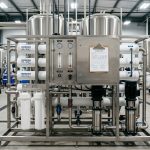
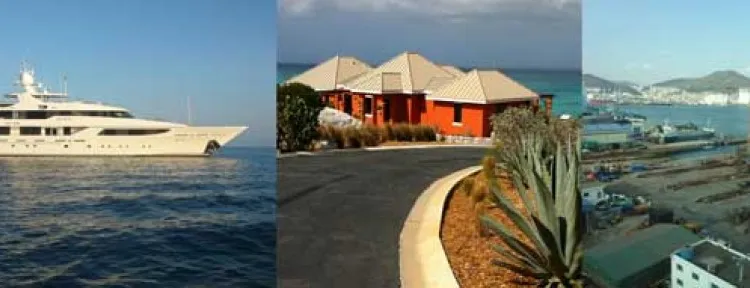
Reverse osmosis systems typically use two to three gallons of water to reject the contaminants. This type of system is extremely useful for seawater desalinization. Seawater is pumped into the system, pushed through the finest membrane available, the salt is rejected and purified water is produced. This water is now suitable for drinking and irrigation. Since 97% of the world’s water is seawater, a seawater desalinization system provides some of the answers to providing clean drinking water where there is a short supply. the world in the recent years, seawater desalinization through reverse osmosis water filtering may provide the answers that people need. Water filtration through reverse osmosis is one of the best ways to filter water. It is also called hyper-filtration because of the fine level at which water is purified. This is the process used by water bottling companies that produce the highest quality of bottled water and the perfect system for any water filtration system at home. Reverse osmosis works by starting with
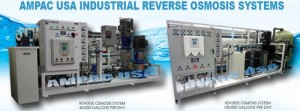
cropped-Slider-Ind-300x111a semi-permeable membrane that allows for water to flow through but castoffs the contaminants in the water. These contaminants are then flushed out of the system. Reverse osmosis water filtration systems eliminate bacteria, viruses, foul taste and odor, chlorine, arsenic, fluoride, metal, nitrates, sediment and iron in the water completely. These systems also heavily reduce the level of hydrogen sulfide in drinking water. Reverse osmosis systems have a rate of rejection for a large scope of contaminants. Over the long-term, these systems are also quite cost efficient coming in at around $0.05 per gallon with all costs of maintenance, membrane replacements, energy and installation accounted for. These systems are actually very energy efficient as they use osmotic pressure to purify water. Essentially this means that the membrane must stay in balance and when enough pressure from water is applied, it must filter the water through the membrane.

Ampac USA, a Los Angeles based advance water solution design and Development Manufacturer supplies various capacity quality Brackish Water and Seawater desalination reverse osmosis systems for Industrial and Commercial user. Ampac USA also caters to house hold clients through their Residential Reverse Osmosis lines of products.
What flow rates are available for emergency water treatment?

AMPAC USA's emergency systems range from 1,500 GPD portable units to 50,000+ GPD trailer-mounted systems. Military-specification units are available for forward operating base deployment, producing potable water meeting EPA and WHO drinking water standards from virtually any source.

Are emergency RO systems suitable for disaster relief operations?

Yes. AMPAC USA's emergency systems are used by FEMA, the U.S. military, and international NGOs for disaster relief. They treat flood water, contaminated groundwater, and brackish sources, removing bacteria, viruses, and chemical contaminants to produce safe drinking water on-site.

What power sources can emergency water purification systems use?

AMPAC USA's emergency systems can run on generator power (120/240V or 480V 3-phase), solar panels with battery backup, or vehicle power take-off (PTO). Low-power models consume as little as 0.5 kW, making them viable for off-grid deployment.

How durable are military-grade water purification systems?

AMPAC USA's military systems are built to MIL-SPEC standards with stainless steel frames, powder-coated components, and UV-resistant materials. They are designed to operate in temperatures from -20°F to 120°F and are vibration-tested for transport in military vehicles.

Conclusion

This post highlighted how emergency and military-grade water purification systems provide safe drinking water rapidly in the most challenging field conditions. For organizations requiring deployable water treatment capability, AMPAC USA engineers portable and trailer-mounted systems built to perform wherever they are needed. Contact our team at info@ampac1.com or (909) 548-4900 to discuss your emergency water treatment requirements.

Reverse Osmosis Water Purification Residential Guide: Technical Analysis and Solutions

Residential reverse osmosis systems provide homeowners with near-laboratory-quality drinking water at the tap, removing 90–99% of dissolved contaminants through semi-permeable membrane filtration. Modern residential RO systems are compact, efficient, and reliable—requiring only annual filter changes and membrane replacement every 2–5 years to maintain peak performance. Under-sink installation with a dedicated faucet is the most popular configuration, providing filtered water for drinking, cooking, and ice making.

Understanding the science behind water quality challenges in this area enables selection of appropriately engineered treatment solutions. Water treatment technology selection should be based on comprehensive source water analysis, contaminant characterization, and performance-verified system design.

Reverse osmosis systems from AMPAC USA provide multi-contaminant treatment capability through TFC polyamide membranes achieving 90–99% rejection of dissolved contaminants, combined with sediment pre-filtration, activated carbon treatment, and UV disinfection options. Our commercial and industrial systems are NSF/ANSI certified, providing documented performance evidence for regulatory compliance and quality assurance programs.

For specific water quality challenges in this application area, AMPAC USA’s engineering team provides source water analysis review, system sizing recommendations, and complete treatment train design to ensure water quality objectives are reliably achieved. Contact AMPAC USA to discuss your specific water treatment requirements.

Frequently Asked Questions

What is reverse osmosis water purification?

Reverse osmosis forces water under pressure through a semi-permeable membrane (0.0001 µm pores) that rejects 90–99% of dissolved contaminants while allowing pure water molecules to pass through. It is widely considered the most effective point-of-use water treatment technology.

What contaminants does reverse osmosis remove?

RO removes dissolved salts (TDS), heavy metals (lead, arsenic, chromium), nitrates, fluoride, PFAS, pharmaceuticals, bacteria, viruses, and most organic contaminants through a combination of size exclusion, charge repulsion, and hydrophobic rejection mechanisms.

How does water quality affect public health?

Access to safe, clean drinking water is fundamental to human health. Contaminated water causes an estimated 500,000 diarrheal deaths annually worldwide and contributes to chronic health conditions through long-term exposure to heavy metals, nitrates, PFAS, and other regulated and unregulated contaminants.

When should I consider a water purification system?

Consider water purification if your water has detectable lead, nitrates, arsenic, PFAS, or other contaminants; if you have a private well; if your water tastes or smells off; if you have immunocompromised family members; or if you want to reduce your dependence on bottled water.

What is the difference between water filtering and water purification?

Filtration physically removes particles and some dissolved compounds from water. Purification (including RO) achieves more comprehensive removal of dissolved contaminants through pressure-driven membrane separation. RO is considered purification because it removes dissolved ionic species that filtration alone cannot address.

How often does a water purification system need maintenance?

Reverse osmosis systems require pre-filter replacements every 6–12 months, membrane replacement every 2–5 years, and annual system sanitization. Well-maintained systems provide consistent, high-quality water for 10–15+ years with these routine service intervals.

Does AMPAC USA offer water treatment systems for this application?

Yes. AMPAC USA provides residential, commercial, and industrial water treatment systems including reverse osmosis, UV disinfection, and multi-stage treatment solutions designed for specific water quality challenges. Our systems are NSF/ANSI certified for performance verification and customer confidence.

Scroll to Top