Home Products Industries Applications Solutions Support Insights Contact Us
Back to Blog
Mar 9, 2022·9 min read
World-Water-Day-2022-to-Focus-on-Groundwater-Making-the-Invisible-Visible

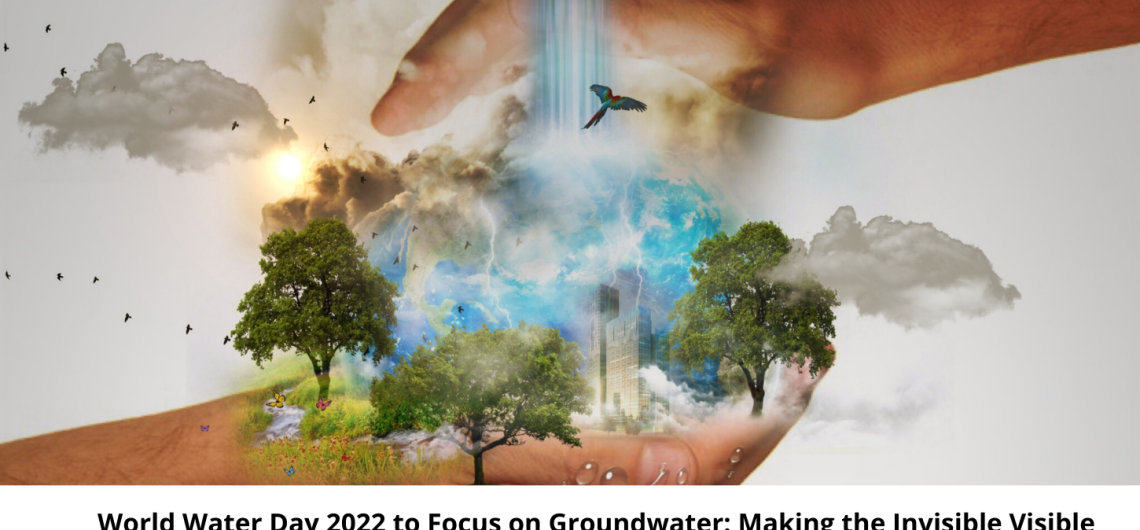
World Water Day 2022 to Focus on Groundwater: Making the Invisible Visible

World Water Day 2022 to Focus on Groundwater: Making the Invisible Visible

Quick Answer: Groundwater provides nearly half of all drinking water globally and supports 40% of irrigated agriculture, yet it remains largely invisible in public discourse. World Water Day 2022 focused on making this invisible resource visible — recognizing that groundwater depletion, contamination, and over-extraction threaten water security for billions of people worldwide.

The World Water Day 2022 is just a few days away. This year, the theme for the special day is Groundwater: Making the Invisible Visible. Every year, World Water Day highlights a specific aspect of freshwater or a resource that we should all cherish before it depletes completely. Here’s what you need to know about it.

How is the World Water Day Theme Decided?

The theme of World Water Day is decided every year after a set process. UN-Water Members and partners propose the annual theme about two to three years in advance. This year, the theme was finalized in Rome last week. The theme finalized this year was proposed by IGRAC. The 30th meeting of UN-Water was held in Rome, Italy, at the headquarters of the International Fund for Agricultural Development (IFAD). More than 50 delegates of UN-water members and partners and 23 observers from different governments and organizations marked their presence at the meeting. 

The theme wasn’t decided in one day. A brainstorming session was conducted at a previous UN-water meeting held in Stockholm. Even an online poll was conducted among the UN water organizations. 15 proposed themes were discussed during these meetings, and the poll was also conducted to shortlist a few names. After the voting, the top two themes were “Valuing Water” and “Groundwater: Making the Invisible Visible.”

The former was selected as the World Water Day theme for 2021, while the latter was chosen for World Water Day 2022. 

Why is Groundwater the Focus?

Many of you might be wondering why groundwater is the focus of the World Water Day 2022 theme. The simple answer is that groundwater is an essential resource that provides about half of all drinking water across the globe. Also, about 40% of all water for irrigated agriculture is groundwater. Even 1/3 of water used for industries is groundwater.

Groundwater is also a vital resource because it sustains ecosystems, prevents land subsidies and seawater intrusion. It also maintains the baseflow of rivers. Groundwater is also a key component of the climate change adaption process. Also, it is the best solution for many people on the planet who don’t have access to safe water via their taps. 

Groundwater plays a key role in our day-to-day lives, but still, it is out of sight and out of mind for most people. Human activities like population, economic growth, and climate variability constantly increase the pressure on groundwater resources. Excessive depletion and pollution issues are also reported from many parts of the world.

So, focusing on the invisible groundwater is a wise move for everyone on the planet. It is hoped that the World Water Day 2022 theme will help people focus more on this invisible resource, enhance their knowledge about it, and begin to collaborate on how to take care of the groundwater, which helps most people on the planet survive and thrive.

AMPAC USA Always Supports Water Awareness

As always, AMPAC USA supports water awareness and encourages the promotion of clean and pure water. We also do our bit by creating and deploying the best water treatment solutions available. 

AMPAC USA provides the best-in-class reverse osmosis water treatment systems you can trust. We are providers of various water treatment solutions that help you get clean and contamination-free water every day. We provide the best reverse osmosis systems for residential, commercial, and industrial needs. They help ensure the water is tasteless, colorless, and odorless. 

AMPAC USA water systems are well equipped and fully capable of converting any water into a product that meets the requirement of the end-user. Capable of performing flawlessly in harsh environments, our products assist the exploratory labs at the Arctic Circle to Oil rigs in Deserts, urban communities, and war zones. AMPAC USA water treatment systems are proven solutions to water treatment problems across the globe.

AMPAC USA advanced water purification systems are built to solve the most complex challenges related to water purification, treatment, provisioning, and Seawater Desalination, meant to work in the harshest environments around the globe. Our water treatment systems use the best Reverse Osmosis, Seawater Desalination, and water technologies of International standards for industrial, On-shore, and Offshore applications.

AMPAC USA designs and manufactures some of the world’s most reliable Commercial Reverse Osmosis Water Treatment Systems to treat water even in the toughest environments. We additionally strive for quality of international standards and excellent after-sales service. Our engineers are available to support your water treatment applications anywhere around the world. To know more, call AMPAC USA on 909-548-4900 or visit us here

What flow rates are available for emergency water treatment?

AMPAC USA's emergency systems range from 1,500 GPD portable units to 50,000+ GPD trailer-mounted systems. Military-specification units are available for forward operating base deployment, producing potable water meeting EPA and WHO drinking water standards from virtually any source.

Are emergency RO systems suitable for disaster relief operations?

Yes. AMPAC USA's emergency systems are used by FEMA, the U.S. military, and international NGOs for disaster relief. They treat flood water, contaminated groundwater, and brackish sources, removing bacteria, viruses, and chemical contaminants to produce safe drinking water on-site.

What power sources can emergency water purification systems use?

AMPAC USA's emergency systems can run on generator power (120/240V or 480V 3-phase), solar panels with battery backup, or vehicle power take-off (PTO). Low-power models consume as little as 0.5 kW, making them viable for off-grid deployment.

How durable are military-grade water purification systems?

AMPAC USA's military systems are built to MIL-SPEC standards with stainless steel frames, powder-coated components, and UV-resistant materials. They are designed to operate in temperatures from -20°F to 120°F and are vibration-tested for transport in military vehicles.

Conclusion

This post highlighted how emergency and military-grade water purification systems provide safe drinking water rapidly in the most challenging field conditions. For organizations requiring deployable water treatment capability, AMPAC USA engineers portable and trailer-mounted systems built to perform wherever they are needed. Contact our team at info@ampac1.com or (909) 548-4900 to discuss your emergency water treatment requirements.

Groundwater: The Invisible Foundation of Global Water Security

Groundwater — water stored in the pores and fractures of underground rock and sediment formations called aquifers — is the world’s largest reservoir of fresh liquid water, containing approximately 100 times more fresh water than all the world’s rivers and lakes combined. Despite its fundamental importance, groundwater remains largely invisible in public awareness. The 2022 World Water Day theme, “Making the Invisible Visible,” recognized this awareness gap and called for greater public understanding, political attention, and management resources to protect groundwater systems that most people have never seen and never consider.

The scale of human dependence on groundwater is difficult to overstate. Globally, groundwater provides approximately 2 billion people with their primary drinking water source. Groundwater supports 40% of irrigated agriculture worldwide, including major production areas in India, China, the US Great Plains, and the Middle East. Groundwater-fed springs and baseflow maintain dry-season river flows in many regions — when aquifers are depleted, rivers that people assume to be surface water systems can cease to flow during dry seasons, collapsing both aquatic ecosystems and downstream water supply. The interconnection between groundwater and surface water is a fundamental hydrological principle that is often overlooked in water management frameworks that treat these systems as separate.

Threats to groundwater are multiple and often act simultaneously: physical depletion through extraction exceeding natural recharge rates (affecting the Ogallala Aquifer, North China Plain, India’s Punjab, and California’s Central Valley among major cases); chemical contamination from agricultural chemicals (nitrates, pesticides), industrial sources (chlorinated solvents, heavy metals, PFAS), and naturally occurring contaminants (arsenic, fluoride, uranium in certain geological settings); saltwater intrusion in coastal aquifers from sea-level rise and over-pumping; and thermal pollution from land-use change and climate warming. AMPAC USA’s water treatment systems serve communities worldwide where groundwater quality challenges — whether natural or anthropogenic — require treatment solutions to ensure safe supply.

Frequently Asked Questions

Q: What is groundwater and how does it form?

A: Groundwater is water that has percolated through soil and rock to accumulate in saturated zones (aquifers) below the water table. It forms through the slow infiltration of precipitation, snowmelt, and surface water over months to millennia. Aquifer recharge rates range from days (highly permeable gravel aquifers) to millennia (deep, confined fossil aquifers).

Q: Why is groundwater called invisible water?

A: Unlike rivers and lakes, groundwater is not directly visible — it exists underground in pores, fractures, and voids in rock and sediment. Its extraction, depletion, and contamination are not visible to the public eye without monitoring wells and scientific analysis, making it easy to exploit unsustainably without awareness.

Q: What percentage of drinking water comes from groundwater?

A: Globally, approximately 50% of all drinking water comes from groundwater sources (wells, springs). In rural areas and low-income countries, the percentage is much higher — often 80-100%. In the US, groundwater provides drinking water for approximately 120 million people (37% of the population).

Q: How does groundwater depletion affect rivers and streams?

A: Groundwater and surface water are hydraulically connected. Aquifer depletion reduces baseflow — the groundwater contribution that keeps rivers flowing during dry periods. As aquifers are depleted, rivers in groundwater-dependent regions have experienced reduced dry-season flows or complete summer intermittency, affecting aquatic ecosystems and downstream communities.

Q: What is the Ogallala Aquifer and why is its depletion significant?

A: The Ogallala (High Plains) Aquifer underlies 174,000 square miles of the central US and supports approximately 30% of all US groundwater irrigation. It is being depleted at rates far exceeding natural recharge in many areas. Portions of Kansas, Texas, and Oklahoma will see significant depletion within decades, threatening agricultural production in one of the world's most productive farming regions.

Q: How can individuals support groundwater protection?

A: Use water efficiently to reduce overall extraction demand. Properly dispose of hazardous chemicals to prevent contamination. Maintain septic systems to prevent bacterial and nutrient contamination of shallow aquifers. Report suspected groundwater contamination to regulatory authorities. Support policies that fund aquifer monitoring, contamination cleanup, and sustainable extraction management.

Q: What water treatment is needed for groundwater contaminated with natural arsenic?

A: Naturally occurring arsenic in groundwater (found in New England, the Mountain West, and Bangladesh, India, and many other regions) requires specific treatment: coagulation/filtration, activated alumina adsorption, or reverse osmosis all achieve effective arsenic removal. RO achieves 95-99% arsenic reduction across both As(III) and As(V) forms, making it the most reliable treatment option for arsenic-contaminated private wells.

Scroll to Top