

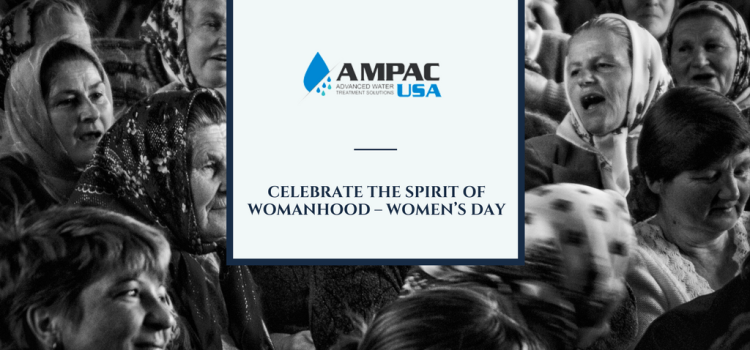

International Women’s Day began over 110 years ago. It has transformed. What started as a push for recognition for a marginalized gender is now, rightly, a global celebration every March 8th. It’s a day to acknowledge the social, cultural, political, and economic strides women have made. We’ve come a long way, it’s true. However, the fight isn’t over. As awareness grows, we need to address persistent problems. Women still face wage gaps, discrimination, and are often seen as second-class citizens in many places. That’s unacceptable.
- The UN reports women earn just 77 cents for every dollar men make for the same job.
- In 2016, only 4.2% of Fortune 500 companies had women CEOs.
- Globally, women constitute half the world’s population, yet hold only 23% of parliament seats.
- Many women still struggle with poverty, poor healthcare, and lack of education worldwide.
“The fastest way to change society is to mobilize the women of the world.” – Charles Malik
Businesses and International Women’s Day
Businesses are finally paying serious attention to the critical role women play in the workforce. This is not merely about appearances. Studies show diverse teams are more productive, boost financial returns, and increase employee engagement. Our experience working with clients, from offshore oil rigs to luxury resorts, shows that industries now recognize equal rights affect everyone. Having women represented isn’t just important; it’s essential for a thriving operation.
Promoting Gender Diversity in the Workplace
Globally, women’s labor force participation rates are often lower than men’s, leading to an imbalance in the workforce. We can change this. Empowering women across industries builds stronger economies. Indeed, the specific industry doesn’t matter; strong policies protecting everyone’s rights prevent discrimination. This isn’t just fairness; it’s beneficial. Reports and studies worldwide prove gender diversity in the workplace brings clear advantages. Does it really make a difference? Absolutely.
- A 2012 study of 2,360 companies worldwide found that those with at least one woman on the board performed 26% better over six years. A 2015 McKinsey report linked gender equality to higher performance.
- A company known for gender diversity — a reputation we value at AMPAC USA — doubles its talent pool. This attracts more investors and customers.
- A Scientific American study showed diverse groups spark creativity, innovation, and encourage harder work.
Holding women back means developing at half the speed possible. Promoting women and equal rights for everyone helps us grow faster, no matter the business. Celebrating Women’s Day means speaking up, pushing for real change, and making equal rights a reality.
About AMPAC USA:
At AMPAC USA, we design and build commercial and industrial reverse osmosis and water purification systems used globally. Our 30+ years of direct field experience means our engineers know what works — from offshore oil rigs and military bases to luxury resorts and municipalities. We engineer solutions with the latest membrane technology and advanced controls, ensuring reliable systems deliver clean water, whether it’s 500 GPD for a small community or 1,000,000 GPD for a city. We partner with experts worldwide, because in our line of work, failure isn’t an option.
References
- UNICEF. “Gender and water: The hidden burden.” UNICEF, 2016. https://www.unicef.org/press-releases/women-and-girls-spend-200-million-hours-day-collecting-water-unicef
- UN Women. “Facts and Figures: Economic Empowerment.” UN Women. https://www.unwomen.org/en/what-we-do/economic-empowerment/facts-and-figures
- Catalyst. “Women CEOs of the Fortune 500 (2016).” Catalyst.org. https://www.catalyst.org/research/women-ceos-fortune-500/
- Inter-Parliamentary Union (IPU) and UN Women. “Women in Politics 2017 Map.” IPU. https://www.ipu.org/resources/publications/maps/2017-03/women-politics-2017-map
- Credit Suisse Research Institute. “Gender Diversity and Corporate Performance.” Credit Suisse, 2012. https://www.credit-suisse.com/media/assets/corporate/docs/about-us/responsibilities/research-institute/gender-diversity-and-corporate-performance.pdf
- McKinsey & Company. “Diversity Matters.” McKinsey & Company, 2015. https://www.mckinsey.com/capabilities/people-and-organizational-performance/our-insights/why-diversity-mattesr
- Phillips, K. W. “How Diversity Makes Us Smarter.” Scientific American, 2014. https://www.scientificamerican.com/article/how-diversity-makes-us-smarter/
Related reading: Are Women The Link To Water Security – International Women’s Day 2019, Women Own Close To 10 Million Businesses, Do You Believe? International Women’s Day 2019, The Fight For Clean Water: Women’s Day Special.
Related Articles
- World Water Day: It’s Now or Never – Act Now for Environment
- Water Crisis Everywhere, Not A Drop To Drink – World Water Day
- More Than Giving a Raise, Say Thank You – Employee Appreciation Day
- The Fight For Clean Water Women’s Day Special
Frequently Asked Questions
What is the link between clean water access and women’s rights?
Access to reliable clean water is a fundamental women’s rights issue because it directly impacts women’s and girls’ education, economic opportunities, and health. When water sources are distant or unreliable, women and girls disproportionately bear the burden of water collection, diverting time from schooling, work, or other productive activities. Providing clean water near homes, often through advanced purification systems like those designed by AMPAC USA, frees them to pursue education and economic independence.
How many hours do women and girls spend collecting water daily worldwide?
UNICEF estimates that women and girls collectively spend a staggering 200 million hours per day globally collecting water. This immense time commitment prevents them from attending school, engaging in economic activities, or accessing healthcare. Reliable, localized water purification solutions are crucial to alleviate this burden and unlock their potential.
How does promoting gender diversity benefit businesses?
Studies consistently show that promoting gender diversity significantly benefits businesses by increasing productivity, improving financial returns, and boosting employee engagement. Diverse teams bring varied perspectives and problem-solving approaches, leading to innovation and better decision-making. Companies like AMPAC USA, operating globally across 150+ countries, recognize the value of inclusive policies in fostering a robust and successful workforce.
What role do advanced water purification systems play in empowering women globally?
Advanced water purification systems, such as the commercial and industrial reverse osmosis systems manufactured by AMPAC USA, are critical in empowering women by providing reliable access to clean water near their homes. This eliminates the arduous daily task of water collection, freeing women and girls for education, economic participation, and improved health outcomes. Our engineers’ field experience, from offshore oil rigs to municipalities, ensures robust solutions for diverse global needs.
What economic disparities do women still face globally?
Despite progress, women globally still face significant economic disparities. The UN estimates women earn only 77 cents for every dollar earned by men for equal work. Furthermore, in 2016, only 4.2% of Fortune 500 companies had women CEOs, and globally, there is only 23% female representation in parliament. These figures highlight the ongoing need for systemic change and empowerment.
AMPAC USA engineers custom water purification systems for commercial, industrial, and emergency applications — from 500 GPD to multi-million GPD. Trusted by municipalities, military, and industry worldwide.
