
Most US households have access to tap water that meets federal safety standards. But “meeting the minimum” is not the same as being clean, and many homeowners discover — through testing, taste, or health concern — that an additional layer of filtration makes a meaningful difference. Here are eight specific, measurable benefits of installing a home water filtration system.
1. Removal of Lead and Heavy Metals
The EPA has established that there is no safe level of lead in drinking water. Lead enters the tap not from the treatment plant but from lead service lines and plumbing fixtures in homes built before 1986. A quality reverse osmosis system removes 97–99% of lead in a single pass. Activated carbon block filters also reduce lead significantly when properly rated. For households with older plumbing, this is the most direct health benefit of filtration — particularly for homes with children under six, who face the highest developmental risk from lead exposure.
2. Reduction of PFAS (Forever Chemicals)
Per- and polyfluoroalkyl substances (PFAS) have contaminated drinking water supplies near thousands of military bases, airports, and manufacturing facilities. In 2024, the EPA finalized the first federal Maximum Contaminant Level for PFAS at 4 parts per trillion for PFOA and PFOS — a level that confirms how seriously these compounds are taken as a health concern. A high-quality reverse osmosis system removes 90–99% of PFAS compounds. Activated carbon also reduces PFAS, particularly at longer contact times, but RO provides the most consistent protection. The EPA PFAS website maintains a map of known contamination sites.
3. Better Taste and Odor
Chlorine and chloramines added by utilities for disinfection create the characteristic “pool water” taste and odor that many households find objectionable. These compounds also react with organic matter in distribution pipes to form disinfection byproducts (DBPs), which carry their own health concerns at elevated concentrations. Carbon filtration — whether as a whole-house system, under-sink unit, or as a pre-filter stage in an RO system — removes chlorine and chloramines effectively, producing noticeably cleaner-tasting water with no chemical aftertaste.
4. Fluoride Reduction for Concerned Households
Water fluoridation at the recommended level of 0.7 ppm is endorsed by the CDC, the ADA, and the American Academy of Pediatrics as safe and beneficial for dental health. However, some households prefer to reduce fluoride intake for personal health reasons. A reverse osmosis system removes 85–95% of fluoride from tap water. Carbon filters do not remove fluoride; RO is the appropriate technology for this specific application.
5. Protection for Vulnerable Household Members
Infants, pregnant women, immunocompromised individuals, and elderly residents face elevated risks from contaminants — particularly nitrates, lead, chlorine byproducts, and microbial pathogens — that are within legal limits but may still present risk at sensitive life stages. The NSF International certifies filters for specific contaminant removal claims under NSF/ANSI Standard 58 (RO) and Standard 42/53 (carbon filtration). Selecting certified systems provides verified protection.
6. Extended Appliance and Plumbing Life
Hard water — water with elevated calcium and magnesium — causes scale buildup inside water heaters, dishwashers, coffee makers, and plumbing fixtures. A tank water heater operating in hard water conditions loses an estimated 25–40% of its useful life compared to one operating on soft or filtered water, according to the Water Quality Association. A whole-house filtration or softening system reduces scale accumulation, extends appliance lifespan, and reduces annual maintenance costs. For homes with TDS above 500 ppm, the appliance protection benefit alone often justifies the system cost.
7. Significant Cost Savings vs. Bottled Water
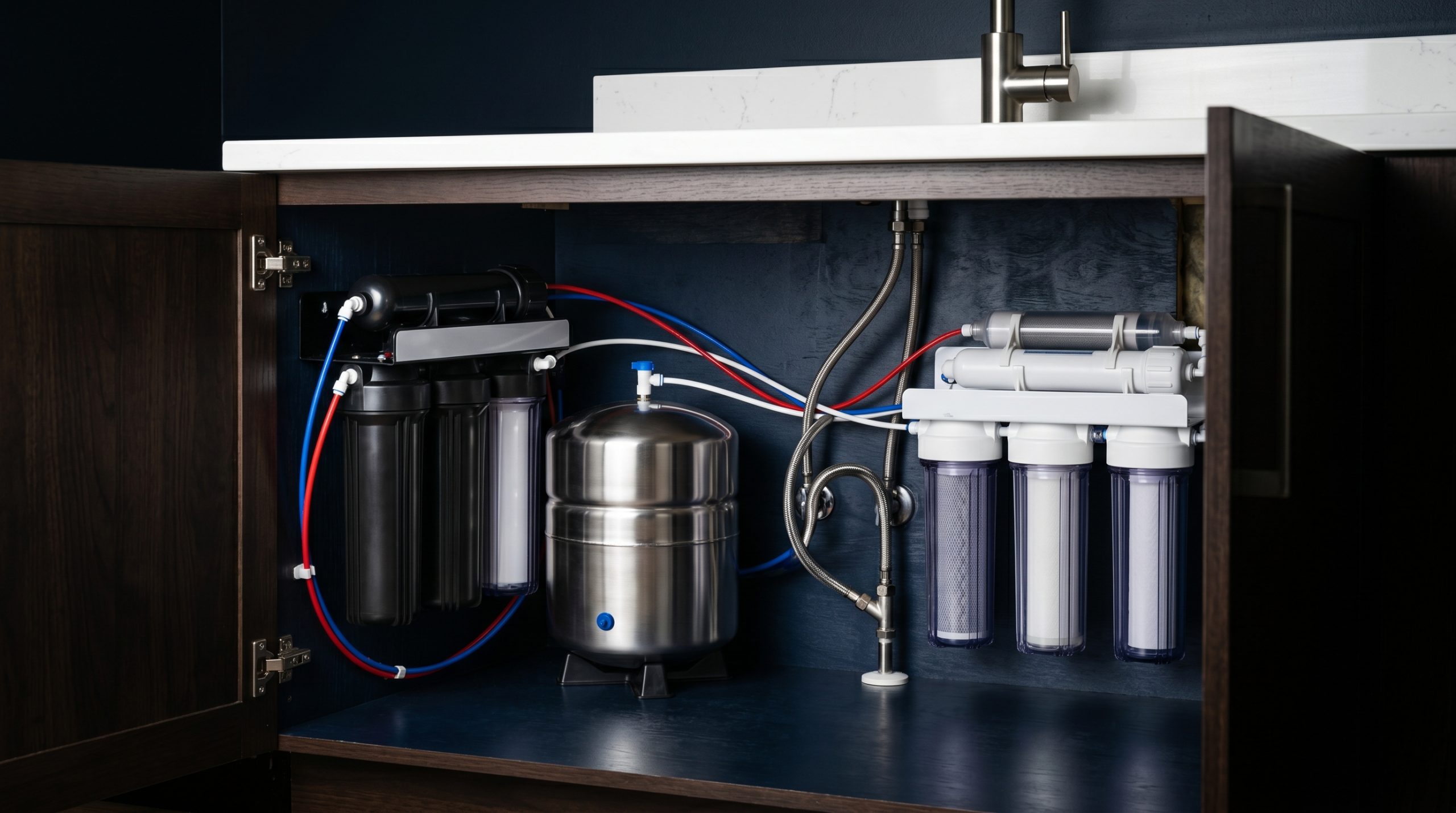
The average American family that relies on bottled water spends $400–$1,200 per year on single-use plastic bottles. A quality under-sink RO system costs $200–$600 installed and produces water at $0.05–$0.15 per gallon — compared to $1.00–$2.00 per gallon for bottled water. Most households recover the system cost within 6–12 months. Beyond the financial savings, eliminating single-use plastic removes hundreds of bottles per year from the household waste stream. The Water Quality Association publishes independent data on cost-per-gallon comparisons across filtration technologies.
8. Peace of Mind During Boil-Water Advisories
The US experiences hundreds of boil-water advisories annually, triggered by infrastructure failures, flooding, or contamination events. Households with reverse osmosis systems maintain access to microbiologically safe water during many of these events — RO membranes remove bacteria and most viruses, and post-UV treatment, where included, provides complete disinfection. This is not a replacement for following boil-water advisories that specifically address severe contamination, but it provides a meaningful buffer during common, short-duration events.
Which Home Filtration System Is Right for You?
The right system depends on your source water. Before purchasing, have your water tested by a certified laboratory — not a free test offered by a filter salesperson. A basic test covering TDS, hardness, chlorine, nitrates, and heavy metals costs $50–$150 and gives you data to select the appropriate filtration approach.
AMPAC USA offers residential reverse osmosis systems, whole-house carbon filtration, and combination RO + softener configurations for homes and small commercial facilities. Our residential systems are NSF-component-certified and engineered for US municipal and well water chemistry. Contact AMPAC USA or visit our product pages at ampac1.com to find the right system for your household.
Frequently Asked Questions
What type of home water filter is best for removing lead?
A high-quality reverse osmosis (RO) system is highly effective, removing 97–99% of lead in a single pass. Activated carbon block filters also significantly reduce lead when properly rated. Lead typically enters tap water from older service lines and plumbing fixtures in homes built before 1986, not the treatment plant.
Can a home water filtration system remove PFAS ‘forever chemicals’?
Yes, a high-quality reverse osmosis (RO) system is very effective at removing PFAS compounds, achieving 90–99% reduction. Activated carbon filters can also reduce PFAS, especially with longer contact times. The EPA has set a Maximum Contaminant Level of 4 parts per trillion for PFOA and PFOS due to serious health concerns.
How can I get rid of the chlorine taste and smell in my tap water?
Carbon filtration effectively removes the chlorine and chloramines that cause the characteristic ‘pool water’ taste and odor in tap water. These compounds are added by utilities for disinfection but can react to form disinfection byproducts. Carbon filters can be found in whole-house systems, under-sink units, or as pre-filter stages in RO systems.
Do home water filters remove fluoride from drinking water?
Yes, certain home water filtration systems, particularly reverse osmosis (RO) systems, are effective at reducing fluoride levels. While water fluoridation at the recommended level of 0.7 ppm is endorsed by health organizations for dental health, some households prefer to reduce or remove it from their drinking water.
Why should I consider a home water filter if my tap water meets EPA standards?
While tap water often meets minimum federal safety standards, these are not always synonymous with optimal cleanliness. An additional layer of filtration can significantly improve water quality by removing contaminants like lead, PFAS, and chlorine that can impact health, taste, and odor, even if present below regulatory limits. This provides an extra layer of protection and peace of mind.
Related Articles
- Car Wash Water Filtration: Spot-Free RO Systems Sizing and Cost Guide
- Factors Related to Water Filter Use for Drinking Tap Water at Home and Its Association With Consuming Plain Water and Sugar-Sweetened Beverages Among U.S. Adults
- Home Water Filtration Systems Which Can Give Your Home Clean, Clear Water
- Reverse Osmosis Water Filtration – Making Home Healthier
Conclusion
From lead and PFAS to the chlorine taste that makes tap water hard to drink, the contaminants a home filtration system handles are the same ones that show up on water quality reports every year. The payoff isn’t just cleaner-tasting water — it’s fewer plumbing repairs, less reliance on bottled water, and one less thing to worry about the next time a boil-water advisory hits your area. If you’re ready to compare options, our reverse osmosis filtration guide breaks down what each stage actually removes. Contact our team at info@ampac1.com or (909) 548-4900 to find the right home filtration setup for your household.
AMPAC USA engineers custom water purification systems for commercial, industrial, and emergency applications — from 500 GPD to multi-million GPD. Trusted by municipalities, military, and industry worldwide.