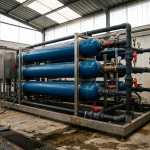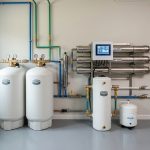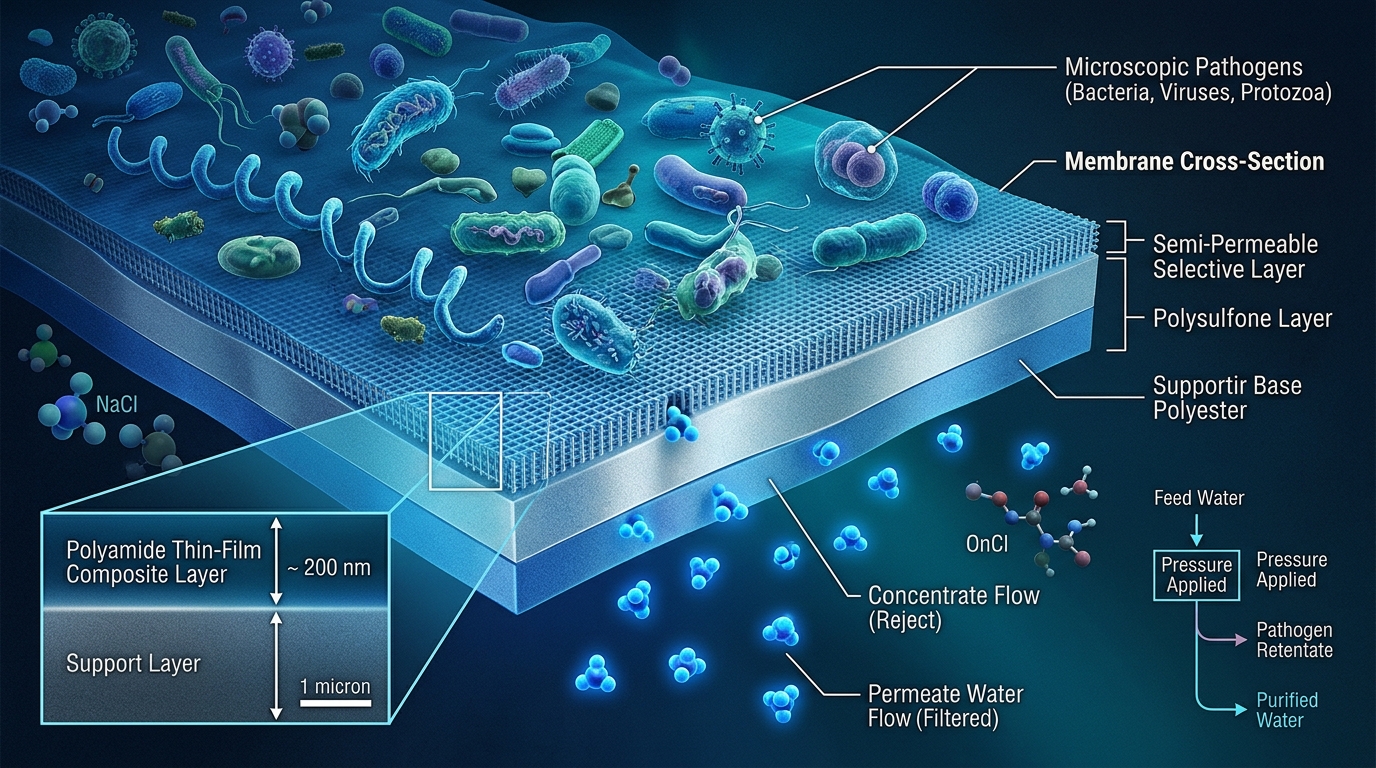

Norovirus and hepatitis A virus are big problems. They’re the main culprits behind acute viral gastroenteritis and illnesses spread through food or detection-of-legionella-pneumophila-in-water-samples-using-metagenomic-analysis/”>water, respectively. To find these tiny invaders in surface water, especially at levels that actually matter for public health, you need super sensitive molecular detection methods. That’s where advanced water treatment, like reverse osmosis, comes in. It offers real solutions for these tough water quality challenges. AMPAC USA’s commercial and industrial systems are built specifically to handle these needs, and we’ve got certified, documented performance to prove it.
\\nBorgmastars, E.; Jazi, M. M.; Persson, S.; Jansson, L.; Radstrom, P.; Simonsson, M.; Hedman, J.; Eriksson, R.\\n\\nFood and Environmental Virology, 9 (4):395-405; 10.1007/s12560-017-9295-32017\\n\\nAbstract: When you’re trying to find waterborne RNA viruses with RT-qPCR, you usually have to concentrate huge amounts of water because there are so few viruses. A common way to do this is dead-end ultrafiltration, followed by precipitation with polyethylene glycol. But, this often brings along PCR inhibitors, which can mess up your detection limit and cause false-negative results. We decided to try “pre-PCR processing” to make RT-qPCR detection better for norovirus genogroup I (GI), genogroup II (GII), and hepatitis A virus (HAV) in tricky water. We improved the RT-qPCR test by finding an inhibitor-tolerant master mix and changing the primers with twisted intercalating nucleic acid molecules. We also created a new method using chaotropic lysis buffer and magnetic silica bead nucleic acid extraction for complex water. We tested this new extraction method on surface and drinking waters. We saw at least a 26-fold improvement in the most complex surface water we looked at. The new method gave us average recoveries of 33% for mengovirus, 13% for norovirus GI, 8% for GII, and 4% for HAV. It also helped us detect norovirus GI and HAV at lower levels. The standard nucleic acid extraction method had RT-qPCR inhibition with C q shifts of 1.6, 2.8, and 3.5 for norovirus GI, GII, and HAV, but our new method completely got rid of that. The standard method did work fine on drinking water, with no RT-qPCR inhibition and average recoveries of 80% for mengovirus, 124% for norovirus GI, 89% for GII, and 32% for HAV.\\n\\nhttps://link.springer.com/article/10.1007%2Fs12560-017-9295-3\\n\\nThe post Improved Detection of Norovirus and Hepatitis A Virus in Surface Water by Applying Pre-PCR Processing appeared first on Facts About Water.\\n\\nSource: Water Feed
AMPAC USA engineers custom water purification systems for commercial, industrial, and emergency applications — from 500 GPD to multi-million GPD. Trusted by municipalities, military, and industry worldwide.